

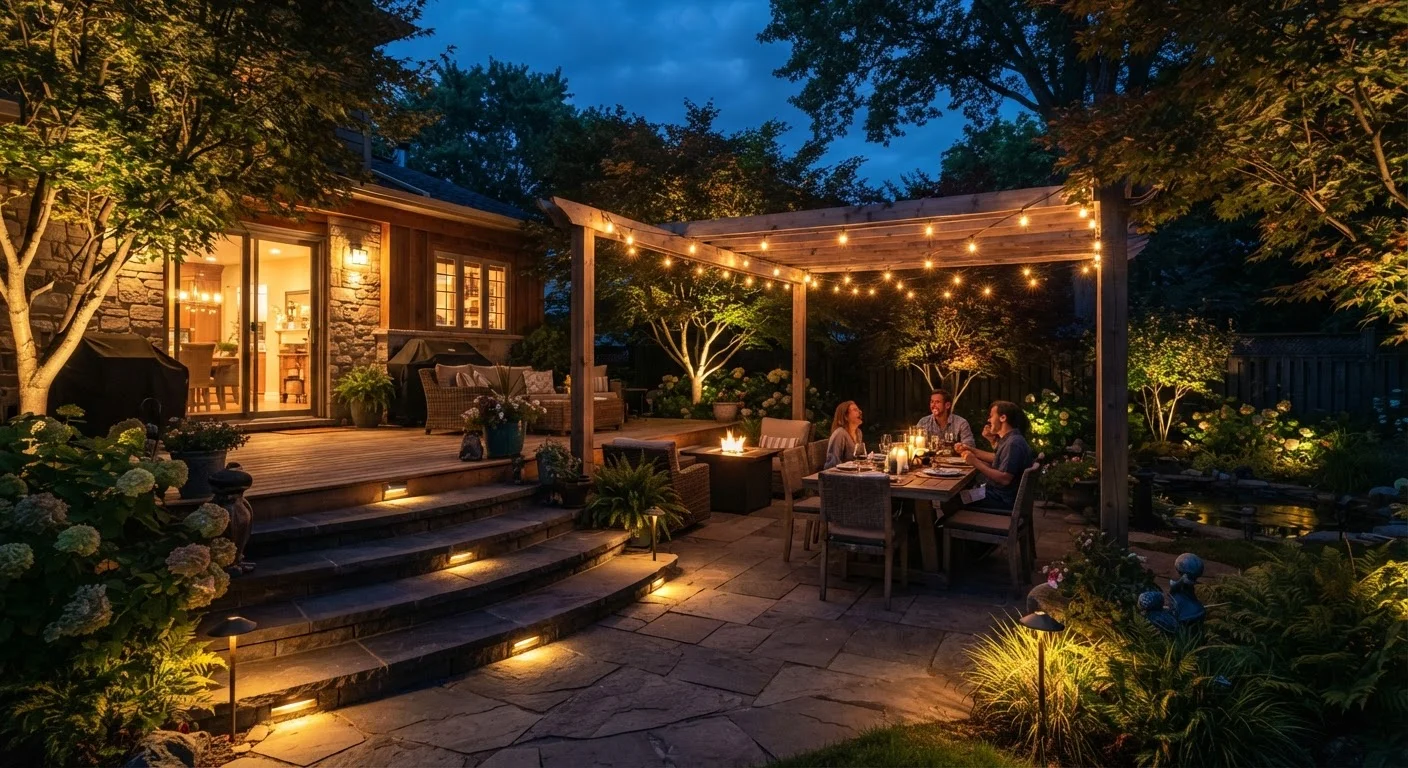
Why Outdoor Lighting Deserves a Strategy
Most homeowners approach outdoor lighting reactively — adding a fixture when a dark corner becomes a problem. A more deliberate approach, however, pays dividends in safety, curb appeal, and evening enjoyment. Just as layered interior lighting relies on separating ambient, task, and accent sources, outdoor spaces benefit from the same structured thinking applied to a different environment.
The goal is not simply to push back darkness, but to create a space that feels intentional and welcoming after sunset. When done well, lighting also contributes meaningfully to a home's curb appeal and first impression from the street.
The Three Layers of Outdoor Lighting
Structuring your lighting plan around three distinct purposes keeps decision-making clear and avoids over-lit or under-lit results.
Layer lighting by function — safety, task, and accent — rather than treating the outdoors as a single zone.
A single overhead light or floodlight creates flat, unflattering illumination with blind spots. Separating purposes ensures every area of the yard is addressed appropriately without over-lighting any one zone.
Prioritize path and step lighting as your first installation or upgrade.
Unlit steps and path edges are a leading cause of outdoor falls, especially for older adults and guests unfamiliar with the layout. This is where lighting earns its keep most directly.
Choose warm-white LEDs for living areas and slightly cooler LEDs for task zones.
Color temperature shapes how a space feels. Warm tones encourage relaxation; cooler tones support visual clarity for work. Matching the temperature to the activity produces a more cohesive experience.
Use timers or smart controls to limit how long lights run each night.
Lights left on all night consume energy unnecessarily and contribute to light pollution. Automated controls remove the reliance on remembering to switch things off manually.
Direct fixtures downward and use full-cutoff designs to minimize light trespass.
Light that spills onto neighboring properties or upward into the sky is wasted and often a source of neighbor friction. Focused, downward-directed light is also more effective at illuminating what you actually need to see.
- Safety lighting addresses pathways, steps, driveways, and entry points. Its job is to prevent trips and falls and guide movement. Low, directed fixtures work better here than broad overhead glare.
- Task lighting serves functional zones: an outdoor kitchen, a grill station, or a reading nook. These fixtures should be brighter and more focused than accent options.
- Accent lighting adds drama and warmth — uplighting a tree, washing a garden wall, or stringing lights above a seating area. This layer shapes atmosphere and is where personal style comes through.
If you're planning a broader outdoor redesign, the fundamentals of patio planning are a useful starting point before committing to fixture placement.
Energy Efficiency and Responsible Illumination
Outdoor lighting left on all night, or aimed carelessly, wastes energy and creates light pollution that affects neighbors, local wildlife, and night-sky visibility. A few straightforward principles address this.
Electrical Work Requires a Licensed Professional
Low-voltage landscape lighting is generally manageable for confident DIYers, but any work involving mains voltage — such as installing new outdoor circuits or junction boxes — should be handled by a licensed electrician. Permits and inspections may be required depending on your municipality. Always verify local electrical codes before beginning any wiring project.
Choose LED wherever possible. LED fixtures use a fraction of the energy of incandescent equivalents and have far longer lifespans, reducing both operating costs and replacement frequency. For low-traffic areas, solar-powered path lights are a practical option that eliminates wiring entirely, though their output depends on available daylight during the day.
Use timers and motion sensors strategically. Security-oriented lights benefit from motion sensors that activate only when needed. Decorative and pathway lighting works well on timers set to turn off at a reasonable hour rather than burning through the night.
Direct light downward. Fixtures angled toward the ground or a specific target rather than broadcasting into the sky or toward a neighbor's property are both more effective and more considerate. Dark-sky-compliant fixtures, which use full-cutoff designs, are worth seeking out if light trespass is a concern in your area.
Ambience, Color Temperature, and Seasonal Use
Color temperature — measured in Kelvins — has a significant effect on mood. Warm white light (roughly 2700K–3000K) creates a relaxed, inviting atmosphere well suited to dining and lounging areas. Cooler whites (4000K and above) feel more clinical and are better suited to task-focused zones like outdoor cooking areas.
Layering warm accent light with slightly cooler task light creates depth and visual interest. Avoid mixing very warm and very cool sources in the same sightline, as the contrast can feel jarring rather than intentional.
For homeowners who use their outdoor spaces through cooler months, thoughtful lighting is an especially important investment. Our guide to making an outdoor space work year-round covers how lighting integrates with heating and structural choices for four-season use.
“Lighting is the single element that most transforms a space after dark. Used thoughtfully, it can make a modest garden feel like a destination.”
— Jamie Durie, Landscape designer and garden presenter
If your garden includes water features, lighting placement around those areas requires extra care. Our overview of garden pond considerations touches on the safety and maintenance realities worth understanding before adding illuminated water elements.
The content on this site is for informational purposes only and is not a substitute for professional advice. Always consult a qualified professional for guidance specific to your situation.