

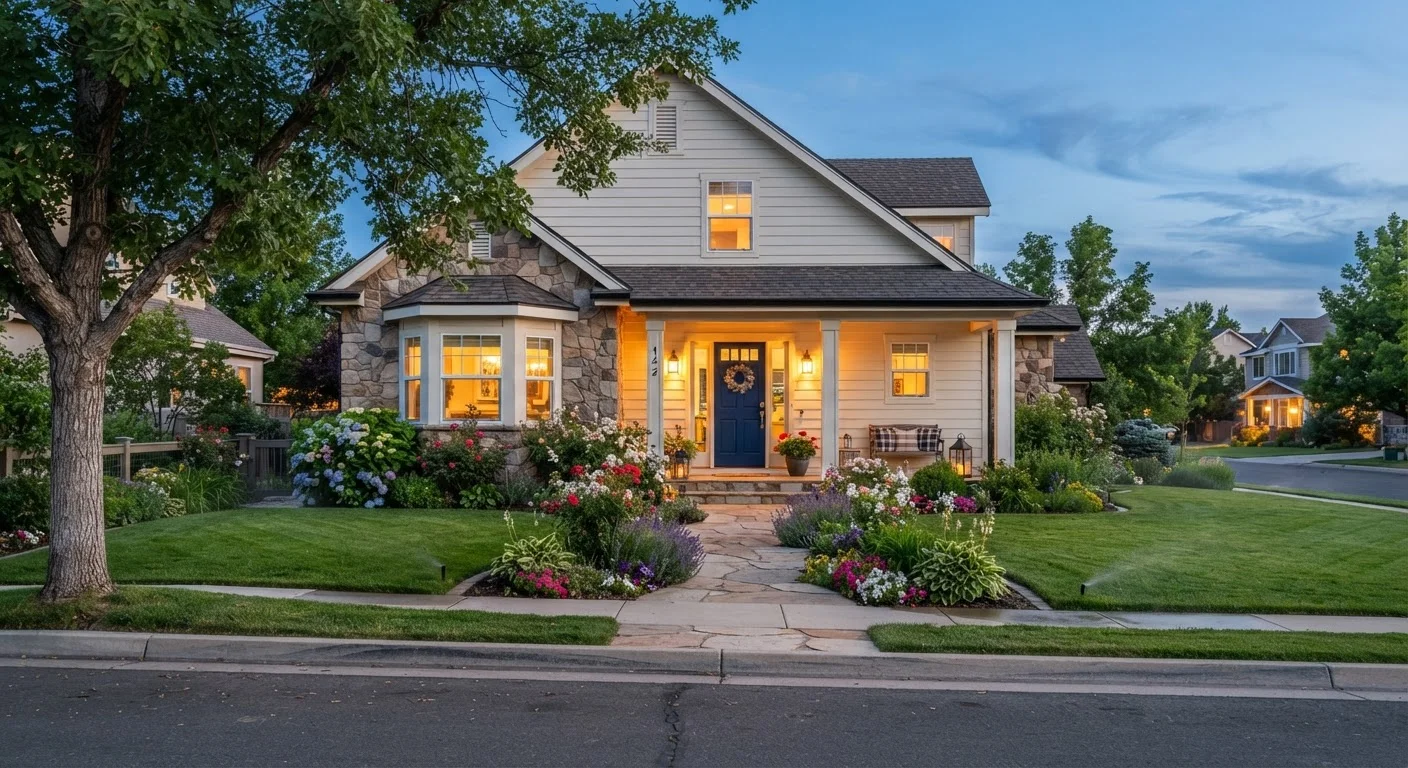
Why Curb Appeal Is More Than Aesthetics
The front of your home does more communicative work than most homeowners realize. Before anyone steps through the door, the street view has already set expectations — about upkeep, personality, and even how the inside might feel. Whether you're preparing to sell or simply want to feel proud pulling into your own driveway, understanding which elements actually move the needle is far more useful than a generic refresh checklist.
Curb appeal isn't about expensive renovations. It's about clarity, proportion, and maintenance — knowing which details observers actually register and which ones they don't. The elements below are consistently noted by landscape designers and real estate professionals as the ones that shape a home's first impression most reliably. For those who want to understand how outdoor design decisions relate to interior ones, our Interior Living hub offers a useful counterpoint.
Curb Appeal and Home Value
Various real estate studies have suggested that strong curb appeal can influence a home's perceived value and time on market, though the exact figures vary by region, market conditions, and property type. The relationship is real but not guaranteed — well-maintained exteriors signal care and attract attention, but local market dynamics ultimately drive outcomes. This article is for general informational purposes and does not constitute real estate or financial advice.
The Elements That Shape Street-Level Perception
The Front Pathway
A clearly defined path from the sidewalk or driveway to the front door does two things simultaneously: it guides movement and signals intentionality. Cracked concrete, uneven pavers, or a path that meanders without logic reads as neglect even when everything else looks tidy. A well-laid pathway — whether in natural stone, brick, or concrete pavers — anchors the entire front yard composition.
Width matters too. Paths narrower than 36 inches can feel unwelcoming or afterthought-like. A 48-inch-wide path allows two people to walk side by side comfortably and projects a more generous entrance. See our patio planning guide for material considerations that apply equally to pathways.
A clearly defined, proportionate pathway signals intentionality before anyone reaches your door.
The Front Door
Real estate and design professionals consistently identify the front door as the focal point of any home's exterior. Its color, condition, and hardware function as a face — they convey personality and maintenance standards in one glance. A freshly painted door in a color that complements the home's existing palette can reframe the entire façade without touching anything else.
Condition is equally important. Faded paint, visible weatherstripping, a tarnished knocker, or a screen door in poor repair undermine even an otherwise tidy exterior. If repainting, consider the architectural style: colonial homes often read well with classic deep tones, while craftsman styles can carry bolder, more saturated hues.
The front door is the face of your home — its color and condition communicate volumes at a glance.
Layered Plantings
A flat lawn bordered by a single row of foundation shrubs is one of the most common — and least effective — approaches to front yard planting. Layered plantings, by contrast, use height variation to create visual depth: ground covers or low perennials in front, mid-height shrubs behind, and taller specimen plants or small ornamental trees anchoring corners or flanking the entry.
Seasonal interest also matters. Choosing a mix of plants that offer bloom time at different points in the year means the front of the house looks considered across spring, summer, and fall rather than peaking for a few weeks and then going dormant together. Native plants often perform reliably with less intervention — a practical consideration for most homeowners.
Layered plantings at varied heights create depth and keep the front yard visually engaging year-round.
Exterior Lighting
A home's curb appeal doesn't end at sundown — and for anyone arriving in the evening, lighting may be the primary impression-forming element. Poorly lit entries feel unwelcoming and unsafe, while thoughtfully placed fixtures create warmth and highlight the home's architectural features.
Effective exterior lighting typically works in layers: pathway lights that define the approach, a primary porch fixture that marks the entry, and optional accent lighting to highlight plantings or architectural details. Warm-toned bulbs (around 2700K–3000K color temperature) read as more inviting than cool-white alternatives. For a fuller treatment of outdoor lighting principles, our guide on outdoor lighting principles covers layering strategies without overcomplicating the process.
Layered exterior lighting extends curb appeal into evening hours and highlights your home's best features.
The Condition of Hardscape Surfaces
Driveways, retaining walls, steps, and edging are often treated as permanent fixtures that don't require attention — but their condition registers strongly in a street-level read. Cracked asphalt, moss-covered steps, crumbling brick edging, or a driveway with persistent oil stains all communicate deferred maintenance, even when the lawn and plantings look well-kept.
Resurfacing or replacing hardscape can be a significant investment, but targeted repairs — patching cracks, pressure-washing stained concrete, re-pointing loose mortar in brick steps — often restore a tidy appearance at a fraction of the cost. Edging planted beds cleanly against hardscape surfaces also sharpens the overall composition considerably.
Clean, well-maintained hardscape surfaces anchor the yard's tidiness regardless of how good the plantings look.
Architectural Symmetry and Proportion
Even in informal or cottage-style gardens, the human eye responds to a sense of balance. Symmetrical plantings flanking an entry, matched light fixtures on either side of a garage, or evenly proportioned shutters all contribute to a composed, intentional look. Asymmetry isn't a problem, but imbalance — one overgrown shrub paired with a small one, or a large pot on one side of the steps and nothing on the other — reads as incomplete.
Before making purchasing decisions about plants or decorative elements, it helps to step back and photograph the front of your home from the street. Viewing it as an image rather than a lived space often reveals proportion issues that are invisible up close.
Photographing your home from the street reveals proportion and balance issues that are invisible up close.
Start With a Street-Level Assessment
Before changing anything, stand at the edge of your property and take a photograph of your home's front elevation. Review it on a screen rather than in person — the camera's framing often makes compositional issues clearer than direct observation. Note what draws your eye first, what feels heavy or sparse, and where maintenance has visibly slipped. This simple exercise can help you prioritize improvements more effectively than any checklist.
Bringing It All Together
Good curb appeal is cumulative. No single element transforms a home's exterior on its own — it's the coherence between pathway, plantings, lighting, and architectural detail that creates a genuinely welcoming first impression. If you're deciding where to invest energy first, prioritize visibility (front door, entryway), then maintenance (clean beds, pruned shrubs, repaired hardscape), then enhancement (lighting layers, new plantings).
For a deeper dive into how to balance structural and planted elements, see our guide on hardscape vs. softscape balance. And if you're thinking about making your outdoor space function across all seasons — not just at peak bloom — year-round outdoor planning is worth exploring next.
The content on this site is for informational purposes only and is not a substitute for professional advice. Always consult a qualified professional for guidance specific to your situation.