

Why Temperate Climates Deserve Year-Round Planning
Temperate climates — characterized by mild winters, warm summers, and distinct spring and fall transitions — offer a genuine opportunity for nearly continuous outdoor living. Yet many homeowners treat their patio or garden as a summer-only space, losing months of potential use. With strategic planning across structure, planting, and comfort, your outdoor area can serve as a genuine extension of your home in all four seasons.
This guide walks through the key decisions that make year-round outdoor living practical — from surface materials to heating options — helping you invest where it matters most. For an overview of how hardscape and softscape elements work together, see our guide to balancing hardscape and softscape.
What you will need
What You'll Need Before You Begin
Before making changes to your outdoor space, gather a clear picture of your site conditions and goals. This planning phase saves time and prevents costly missteps.
Measuring tape or laser distance measurer
Accurately measure your outdoor area to plan surface coverage and structure placement.
Graph paper or free garden planning app
Sketch your layout to scale before committing to purchases or installations.
Soil thermometer
Monitor ground temperature when planning container plantings for cold-season use.
Level
Ensure surfaces and structural footings are even, preventing drainage and safety problems.
Weatherproof outdoor extension cord or low-voltage lighting kit
Extend power safely to lighting and heating elements in the outdoor space.
Step-by-Step: Building a Year-Round Outdoor Space
Follow these steps in order to build up your outdoor space systematically. Each layer — surface, shelter, warmth, light, and planting — reinforces the next.
Choose a Surface That Handles All Seasons
Your patio surface must cope with wet winters, summer heat, and freeze-thaw cycles. Poured concrete, natural stone, and quality clay pavers are among the most durable options in temperate climates. Composite decking resists moisture and splitting better than untreated wood over time. Our patio surface comparison guide walks through the trade-offs in detail, and our decking comparison article covers long-term changes to timber and composite materials.
Ensure the surface slopes slightly away from the house — a fall of roughly 1–2% — to direct rainwater away from the foundation. Avoid surfaces that become slippery when wet unless a textured or brushed finish is applied.
Add Overhead Structure for Shelter
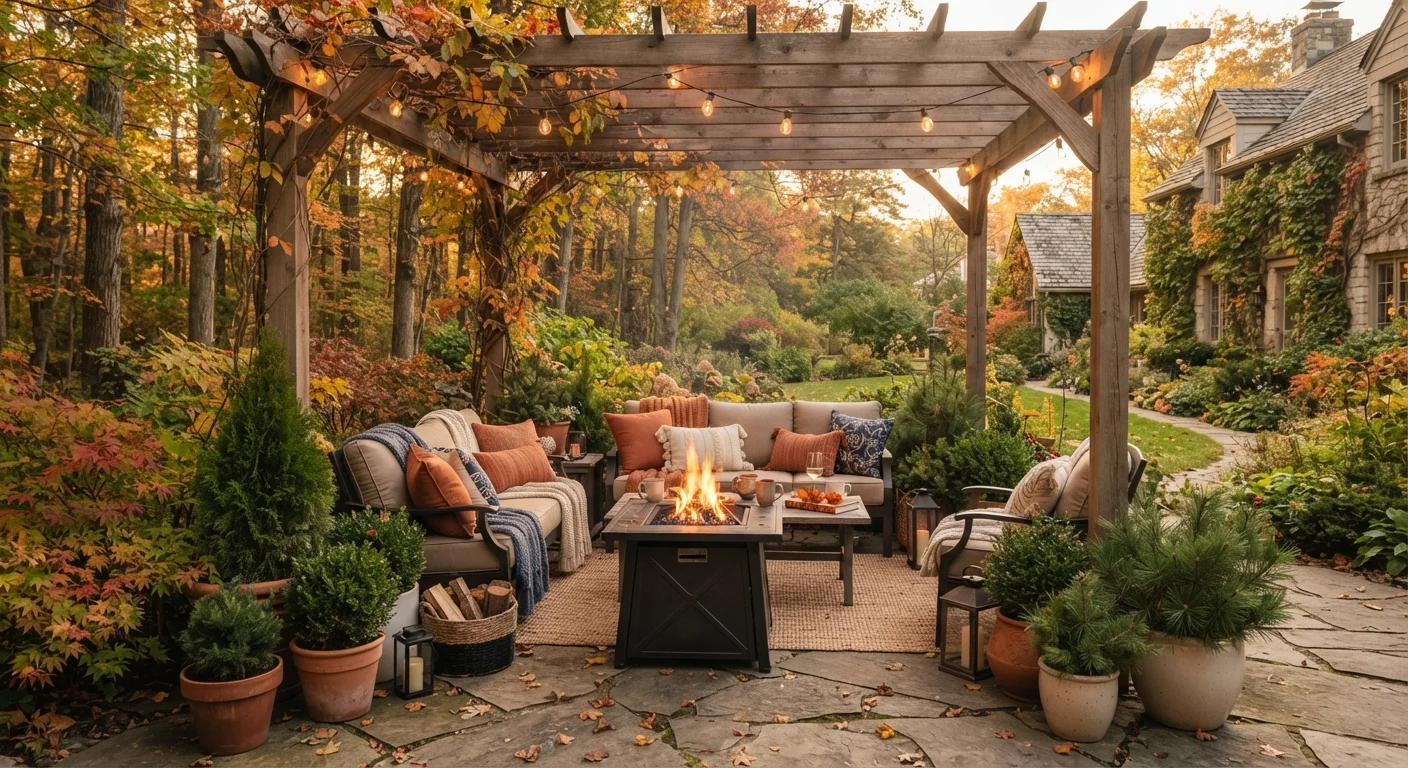
A pergola, retractable awning, or shade sail provides protection from rain and harsh sun — two of the primary reasons people abandon outdoor spaces during shoulder seasons. A solid-roof pergola or insulated patio cover offers the most year-round protection; open-beam pergolas paired with outdoor curtains or a canopy provide flexibility. Check with your local municipality about permit requirements before building any permanent overhead structure.
Orient overhead structures to take advantage of natural wind protection or to block prevailing cold winds. In smaller spaces, a high-quality freestanding canopy can serve a similar function with less permanence.
Incorporate a Supplemental Heat Source
A reliable heat source is the single most effective way to extend outdoor use into cooler months. Freestanding propane patio heaters, wall-mounted electric infrared heaters, and wood-burning or gas fire pits all serve this function — each with different fuel costs, maintenance needs, and installation requirements. Infrared electric heaters mounted under a covered structure are particularly efficient because they warm people rather than air. Gas fire pits connected to a natural gas line remove the need for fuel storage but require a licensed plumber for installation.
Position heat sources where they deliver warmth to seated guests without becoming a circulation hazard. Always follow the manufacturer's clearance guidelines from combustible materials.
Plan Lighting for Shorter Days
In fall and winter, daylight hours shrink, and good outdoor lighting becomes essential for both safety and atmosphere. Layer your lighting: path lights or step lights for safe navigation, task lighting near cooking or dining areas, and softer ambient sources such as string lights or lanterns for relaxed evenings. Low-voltage LED systems are energy-efficient and relatively simple to install along existing pathways. For broader guidance, our outdoor lighting principles article covers layering strategies and energy considerations.
Select Plants That Provide Year-Round Interest
A well-chosen plant palette keeps your outdoor space visually engaging beyond the growing season. Evergreen shrubs, ornamental grasses, and structural plants such as boxwood or dwarf conifers maintain presence through winter. Layer in spring bulbs, summer perennials, and fall-blooming plants for color across warmer months. In shaded areas, consult our shade-tolerant plant reference guide for varieties suited to low-light conditions.
Container gardening offers flexibility to swap in seasonal plants as conditions change. Our container gardening guide covers plant pairings and seasonal care in compact spaces. For more ambitious planting, raised garden beds can extend your growing season at the edges of the patio.
Invest in Weatherproof Furnishings Early
Furnishings rated for all-weather use — frames made from powder-coated aluminum, teak, or resin, with solution-dyed acrylic cushion fabric — dramatically reduce seasonal setup and teardown effort. Spending more upfront on durable pieces is generally more cost-effective than replacing cheaper furniture every few years. Use fitted furniture covers during extended periods of non-use to further extend their lifespan.
Seasonal Adjustments and Ongoing Care
Even a well-designed outdoor space benefits from a seasonal rhythm of maintenance and small adaptations. In early spring, inspect surfaces for frost heave or cracking — pavers and concrete are particularly susceptible to freeze-thaw cycles — and check that any drainage channels are clear. Swap out winter-hardy container plants for spring bloomers, and confirm that outdoor lighting fixtures are in working order after cold-weather exposure. Our seasonal home maintenance checklist covers property-wide tasks that complement outdoor upkeep.
As fall approaches, transition your container plantings to cold-tolerant species such as ornamental kale, pansies, or dwarf conifers. Move any frost-sensitive pots indoors or into a sheltered spot. For a thorough walkthrough of garden shutdown tasks before winter, refer to our end-of-season garden shutdown guide. Store or cover cushions and fabric elements when not in use to extend their lifespan considerably.
Watch for Ice and Slip Hazards in Winter
Patios and steps can become dangerously slippery when wet or icy. Apply textured anti-slip strips to steps, and keep a supply of non-corrosive ice melt appropriate for your surface material — standard rock salt can damage concrete and natural stone over time. Clear standing water promptly to prevent ice formation, and routinely inspect steps and edges for frost-related cracking that could become a trip hazard.
The content on this site is for informational purposes only and is not a substitute for professional advice. Always consult a qualified professional for guidance specific to your situation.