

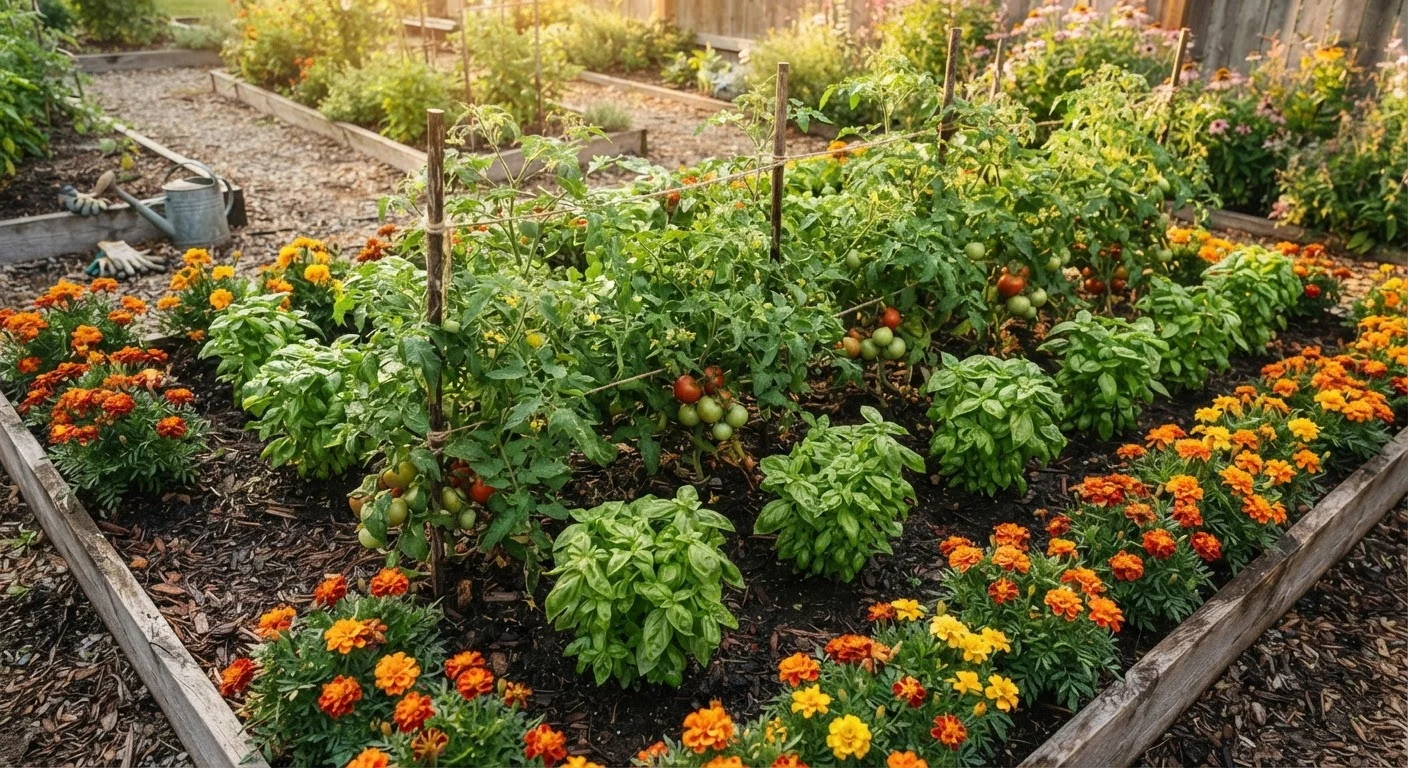
Why Plant Proximity Matters
Plants are not passive occupants of garden space. Through their root systems, volatile chemical compounds, and the insects they attract or repel, they actively influence the growing conditions around them. Companion planting takes deliberate advantage of these relationships rather than leaving them to chance.
When you think through which plants share space — whether in an open border, a raised garden bed, or a container on a patio — you are already making decisions that affect the health of the whole planting. Companion planting simply makes those decisions more intentional.
“The question is not whether plants interact with their neighbors, but whether we choose to work with those interactions or ignore them.”
— Eliot Coleman, Organic farmer and author on sustainable market gardening
The Mechanisms Behind Plant Partnerships
Companion planting works through several distinct mechanisms, and understanding which applies to a given pairing helps set realistic expectations:
- Nitrogen fixation: Legumes such as beans and peas host soil bacteria that convert atmospheric nitrogen into a plant-available form. Neighboring heavy-feeding crops like corn benefit from this enriched soil. This is one of the most rigorously supported mechanisms in companion planting.
- Pest disruption: Strongly scented plants — herbs like basil, dill, or lavender — may confuse the navigational cues that pest insects use to locate host plants. Interplanting them among vegetables can reduce colonization, though results vary by pest species and environment.
- Beneficial insect attraction: Flowers like marigolds, borage, and phacelia draw pollinators and predatory insects such as hoverflies and lacewings, which prey on aphids and other soft-bodied pests.
- Physical support or shade: Tall plants can shelter shorter, shade-tolerant neighbors from harsh afternoon sun, while dense ground-cover companions suppress weed growth and reduce moisture loss from the soil surface.
~60%
Of global nitrogen fixation from legume-bacteria partnerships
Biological nitrogen fixation by legumes and associated soil bacteria accounts for a substantial share of the nitrogen that enters agricultural systems, according to soil science literature.
3-in-1
Simultaneous benefits in the Three Sisters system
The corn-beans-squash combination provides structural support, nitrogen enrichment, and ground cover in a single planting scheme — a frequently cited model of polyculture efficiency.
Classic Pairings and Their Logic
A few companion combinations appear repeatedly in garden literature because they demonstrate more than one benefit at once:
- Tomatoes and Basil
- Basil's aromatic oils are commonly said to deter thrips and aphids around tomatoes. While scientific evidence is limited, basil also attracts pollinators and makes efficient use of vertical versus ground-level space in the same bed.
- The Three Sisters (Corn, Beans, Squash)
- This Indigenous North American planting system is one of the most studied. Corn provides a climbing structure for beans; beans fix nitrogen; squash leaves shade the soil, reducing weeds and retaining moisture. The system demonstrates multiple mechanisms working simultaneously.
- Brassicas and Dill or Nasturtiums
- Dill attracts parasitic wasps that prey on cabbage worms, a common brassica pest. Nasturtiums act as a trap crop, luring aphids away from more valued plants. Both are easy to integrate at the edge of a bed.
If you are planning a garden that integrates planting areas with structural elements like paths or seating zones, the balance between hardscape and softscape is worth considering alongside your planting choices.
Start with One or Two Pairings
Rather than redesigning your whole garden around companion planting, introduce one well-documented pairing — such as beans alongside corn, or marigolds at the edge of a vegetable bed. Track what you observe over the season before expanding. Small-scale trials give you real data from your own soil and climate rather than relying solely on general guidelines.
Applying Companion Planting to Your Space
Companion planting principles adapt to a range of garden sizes and formats. In a raised bed, grouping compatible plants maximizes limited space while layering benefits. In a container garden on a patio or balcony, pairing a compact herb with a flowering edible creates a self-supporting micro-ecosystem.
For gardens with challenging light conditions, pairing taller plants with shade-tolerant companions in their shadow can unlock otherwise underused ground. And if you are interested in plants with ecological roles beyond aesthetics, the ecological role of native plants pairs naturally with a companion planting approach.
Track what you observe from season to season. Because soil conditions, climate, and pest populations differ between gardens, your own records will ultimately be your most useful guide to which pairings perform well in your specific setting.
Frequently Asked Questions
Some mechanisms are well-established — legumes genuinely fix nitrogen into the soil, benefiting neighboring plants. Other claims, like marigolds deterring all soil pests, have mixed research support. Treat well-studied pairings as reliable and anecdotal ones as worth experimenting with rather than guaranteed.
The "Three Sisters" combination of corn, beans, and squash is one of the most traditional and studied. Basil and tomatoes, marigolds and most vegetables, and dill with brassicas are other frequently cited pairings. Each serves a different purpose, from pest confusion to pollinator attraction.
It can help reduce pest pressure in some cases, particularly by attracting beneficial predatory insects or masking host plant scents. However, companion planting is best understood as one layer of an integrated approach to garden health, not a complete replacement for other pest management strategies.
Yes. Many companion pairings adapt well to container gardens and raised beds. Pairing herbs like basil or parsley with vegetables in the same container is practical for small patios or balconies. Soil volume and drainage remain the main limiting factors in containers.
Some plants are considered antagonistic — for example, fennel is widely noted to inhibit the growth of many common vegetables and herbs when planted nearby. Alliums like onions and garlic may suppress bean growth. Space antagonistic plants away from susceptible neighbors wherever possible.
The content on this site is for informational purposes only and is not a substitute for professional advice. Always consult a qualified professional for guidance specific to your situation.