

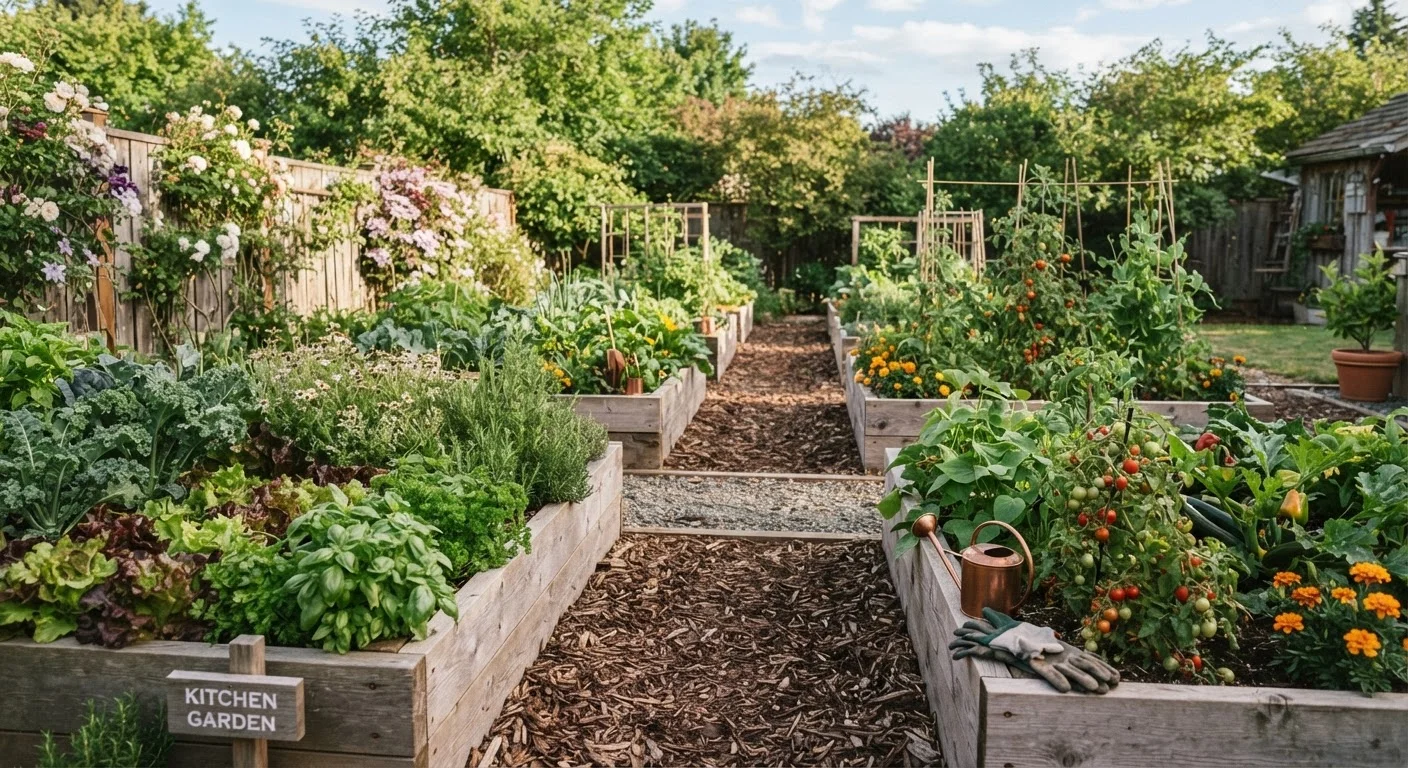
Why Raised Beds Work
Raised garden beds have become a cornerstone of productive home gardening for good reason: they solve several problems at once. Poorly draining native soil, compaction from foot traffic, rocky or clay-heavy ground, and limited growing seasons are all challenges a raised bed can meaningfully address.
Because you fill the frame with a purpose-built mix, you bypass whatever your yard's existing soil happens to be. The elevated structure also warms faster in spring, extending the effective growing window on both ends of the season. For homeowners looking to make their outdoor space genuinely functional, raised beds add both curb appeal and harvest-ready practicality — a complement to thoughtful patio and outdoor layout planning.
10–15 years
Lifespan of untreated cedar frames
Cedar's natural oils make it one of the most durable wood choices for raised beds without chemical treatment.
6+ hours
Daily sunlight most vegetables need
University extension services consistently cite full sun as the most important siting factor for productive vegetable gardens.
4 feet
Maximum recommended bed width
This dimension allows most adults to reach the center of the bed from either side without stepping in and compacting soil.
Choosing Materials for Your Frame
The frame is your longest-term investment, so material choice matters. Each option involves trade-offs between cost, longevity, aesthetics, and safety for food use.
- Untreated cedar or redwood: Naturally rot-resistant, attractive, and widely considered safe for vegetable growing. Expect 10–15 years of service depending on climate.
- Untreated pine: Less expensive and easy to work with. Will degrade sooner — typically 5–7 years — but is a practical starting point.
- Galvanized steel: Long-lasting and modern-looking. Look for food-safe coatings and ensure adequate drainage holes if using a solid trough style.
- Concrete block or brick: Extremely durable and excellent for retaining heat, though heavier to install and less flexible to reconfigure.
Avoid Certain Lumber Types Near Food
Pressure-treated lumber labeled ACQ or CA (copper-based preservatives) is generally considered acceptable for non-edible landscaping use, but many gardeners growing food prefer to avoid it entirely out of caution. Railroad ties, creosote-treated timbers, and painted or reclaimed lumber of unknown origin should not be used for vegetable beds. When in doubt, contact your county cooperative extension office for locally relevant guidance.
Avoid lumber treated with older preservative compounds, painted wood of unknown origin, or railroad ties, as these may leach substances into soil used to grow edibles. If you're unsure about a material, consult your local cooperative extension office for region-specific guidance.
Sizing and Siting Your Bed
Standard guidance puts maximum bed width at 4 feet — the distance most adults can comfortably reach from either side without stepping into the growing area. Stepped-in soil compacts roots and undermines drainage. Length is flexible; 8 feet is a common choice because it aligns with standard lumber dimensions and reduces waste.
Depth matters too. Most vegetables do well in 10–12 inches of prepared soil. Root crops like carrots or parsnips benefit from 16–18 inches. Shallower beds (6 inches) work for lettuce, herbs, and other shallow-rooted crops.
For siting, prioritize full sun — at least 6 hours of direct sunlight daily for most vegetables. Orient beds north-to-south where possible so plants shade each other minimally. A level site simplifies construction and prevents water pooling at one end. If you're designing a broader outdoor living zone, see our guide on making an outdoor space work year-round for how garden beds can fit into a four-season plan.
Line the bottom of your raised bed with a layer of cardboard before adding soil. It suppresses grass and weeds from below while breaking down and feeding the soil within a single season.
Cardboard is biodegradable and creates a temporary physical barrier that eliminates the need for landscape fabric, which can interfere with soil biology over time.
Place beds where a hose or irrigation tap is within easy reach — every extra step between water source and bed reduces how consistently you'll water during a busy week.
Convenience is one of the most underrated factors in garden productivity; raised beds that are inconvenient to water are often underwatered.
Building the Right Soil Mix
Soil is where most raised bed projects succeed or fail. Never fill a raised bed with native yard soil alone — it will compact, drain poorly, and likely lack the organic matter vegetables need.
A widely cited starting formula is often referred to as Mel's Mix, popularized in square-foot gardening literature: roughly one-third compost, one-third peat moss or coconut coir, and one-third coarse vermiculite. This creates a light, moisture-retentive, well-draining medium that roots can penetrate easily.
If budget is a consideration, a simpler blend of 60% topsoil, 30% compost, and 10% coarse sand or perlite performs well and costs less. The priority in either case is high organic matter content and good drainage.
Refresh Your Soil Every Season
Raised bed soil shrinks by several inches each year as organic matter decomposes. Top up with 1–2 inches of finished compost each spring before planting. This simple habit maintains soil structure, replenishes nutrients, and keeps the bed at a workable height — all without rebuilding from scratch.
Purchase compost from a reputable source or make your own. Avoid filling with only bagged topsoil, which is often low in organic content and may contain weed seeds. Topping the bed with 1–2 inches of fresh compost each season replenishes nutrients as they're consumed.
Planting Strategies and Layout
Raised beds reward intentional planting layouts. Rather than traditional single-species rows, square-foot gardening divides the bed into a grid — typically one-foot squares — and assigns each square a plant count based on mature spacing requirements. One tomato plant per square, nine bush beans per square, sixteen radishes per square, and so on.
Pairing plants thoughtfully improves productivity further. Some combinations suppress pests, fix nitrogen, or make efficient use of vertical and horizontal space. Our guide on companion planting and plant relationships explores the evidence-based logic behind these pairings.
Tall plants (staked tomatoes, trellised cucumbers) should be positioned on the north end of the bed so they don't shade shorter crops. Succession planting — sowing a new crop in a vacated square every 2–3 weeks — keeps the bed productive from spring through fall.
If raised beds feel like too large a commitment or space is very limited, container gardening on patios and balconies offers a lower-footprint alternative worth comparing.
“The beauty of raised beds is that you're not farming your soil — you're building it. That shift in mindset changes everything about how you plan, plant, and maintain.”
— Eliot Coleman, Farmer and author on market gardening and season extension
Ongoing Care and Seasonal Maintenance
Raised beds need less weeding than in-ground plots, but they do require consistent attention to watering, feeding, and seasonal preparation.
Watering: Raised beds dry out faster than ground soil, especially in summer. A drip irrigation line set on a timer is one of the most efficient solutions. Without irrigation, plan to water deeply 2–3 times per week during peak growing season, adjusting for rainfall.
Feeding: Because nutrients leach with frequent watering, beds benefit from supplemental feeding. A balanced, slow-release granular fertilizer worked into the top few inches at planting, combined with compost side-dressing midseason, is a practical approach.
End-of-season care: After the final harvest, pull spent plants and add 1–2 inches of compost to the surface. Allow it to break down over winter. Some gardeners plant a cover crop (winter rye, crimson clover) to protect and enrich the soil. Inspect the frame for any rot or loosened fasteners and address them before the next season.
Consistent year-to-year care is part of what makes raised beds such a valuable long-term addition — both to your harvest and to your home's outdoor appeal. For broader home upkeep perspective, the home maintenance hub covers complementary topics across your property.
A Note on Bed Longevity
Even well-built beds eventually need repair or replacement. Wood frames are easiest to replace in sections — you can swap out individual planks rather than rebuilding the entire structure. Keeping records of when you built each bed and what materials you used makes future maintenance more straightforward.
The content on this site is for informational purposes only and is not a substitute for professional advice. Always consult a qualified professional for guidance specific to your situation.