

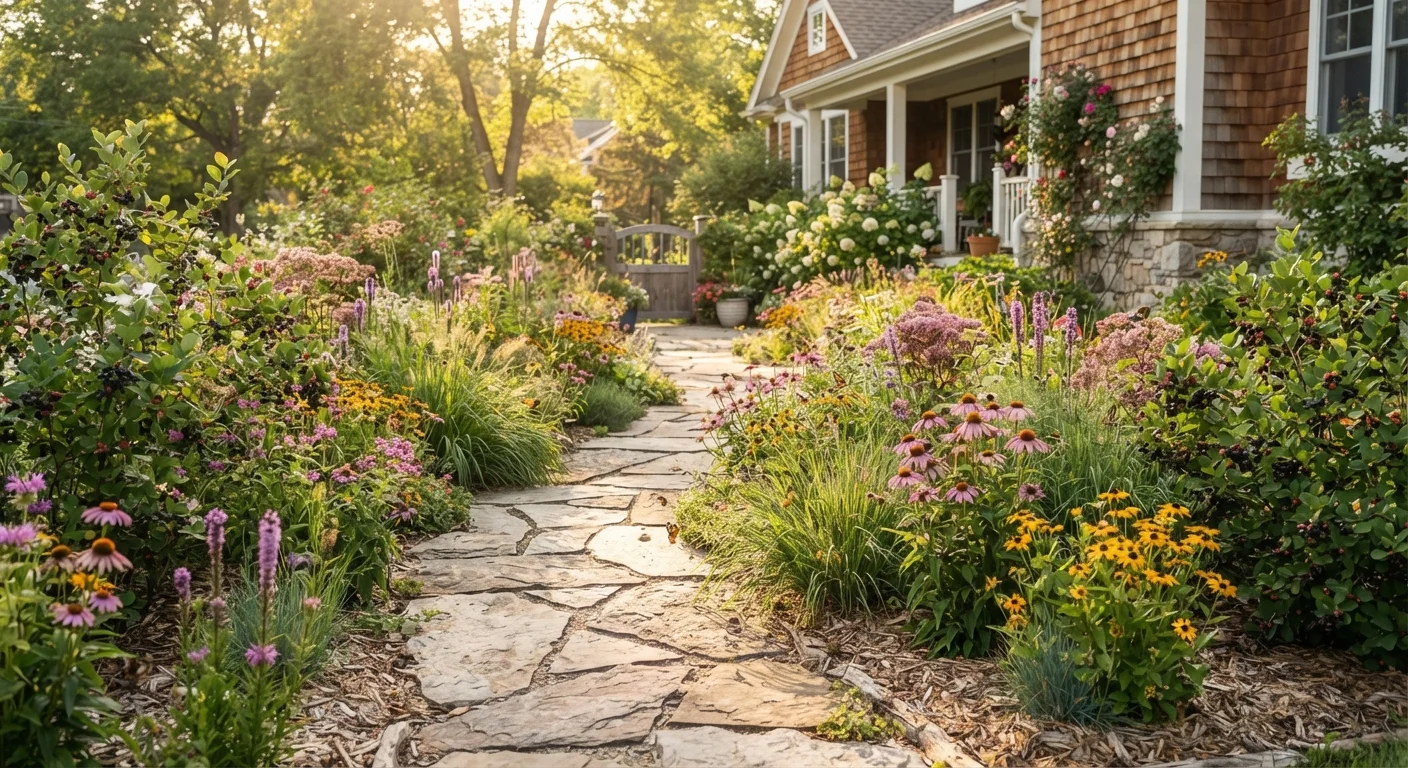
Why Native Plants Get a Bad Reputation
Walk through many suburban neighborhoods and you'll notice a pattern: neatly trimmed boxwood hedges, bright annual impatiens, and manicured lawns stretching from house to house. Native plants, by contrast, are often dismissed as weedy afterthoughts — the kind of thing that belongs at the edge of a highway, not in a thoughtfully designed yard.
That perception is both widespread and inaccurate. Many gardeners pass on native plants not because they've tried them and found them lacking, but because they've absorbed a collection of persistent myths that distort what these plants actually offer. Just as home maintenance myths can lead to costly surprises, gardening myths can lead homeowners to make decisions that cost them beauty, time, and ecological opportunity.
Below, we tackle the most common misconceptions head-on — and offer a clearer picture of what native plants genuinely bring to your outdoor space.
Myth
Native plants are messy and wild-looking — they'll make my yard look neglected.
Fact
Many native plants have refined, elegant forms that suit structured garden designs and boost curb appeal significantly.
The assumption that native automatically means unruly conflates plant origin with plant form. Species like native sedges, coneflowers (Echinacea), little bluestem grass, and black-eyed Susans have upright, defined habits that translate beautifully into borders, foundation plantings, and cottage-style designs. Design choices — spacing, edging, plant pairing — shape the overall appearance far more than whether a plant is native or not.
Myth
Native plants don't need any care once planted — just put them in the ground and walk away.
Fact
Native plants do require establishment care, including watering and weeding, typically for the first one to two growing seasons.
The low-maintenance reputation of native plants applies primarily after establishment. During the first year or two, roots are developing and plants need consistent moisture and competition management to take hold. Skipping this phase leads to failure and reinforces the myth that native plants are difficult. Think of establishment as a short-term investment for long-term ease — once settled, most native perennials and shrubs outperform conventional alternatives in drought and pest resilience.
Myth
You can't mix native plants with non-native ornamentals — it's one or the other.
Fact
Integrated planting designs combining native and non-native species are common, practical, and can still deliver real ecological benefit.
The idea that a garden must be entirely native to be worthwhile creates an unrealistic barrier. Even partial incorporation of native species — particularly those that support pollinators and birds — provides measurable ecological value. Many landscape designers combine native structural plants, like serviceberry or switchgrass, with non-invasive ornamentals to achieve a balance between horticultural variety and habitat function. The key distinction is avoiding invasive non-natives, not eliminating all non-native species.
Myth
Native plants are dull — they only bloom in muted, natural colors.
Fact
Native plant species span a vivid range of flower colors, forms, and seasonal interest, from brilliant reds to deep purples and bright yellows.
This myth likely stems from exposure to a narrow slice of native species or poorly maintained plantings. In reality, North America's native flora includes royal blue wild indigo (Baptisia australis), vibrant orange butterfly weed (Asclepias tuberosa), deep crimson cardinal flower (Lobelia cardinalis), and dozens of other visually striking species. Native ornamental grasses also add movement and winter texture that many conventional landscapes lack entirely.
Myth
Native plants only benefit wildlife — they add nothing to the visual appeal of a yard.
Fact
Native plants offer multi-season interest — flowers, seed heads, fall foliage, and winter structure — that rivals many conventional landscape choices.
Ecological function and visual beauty aren't in conflict. Many native species provide layered seasonal interest: spring blooms, summer foliage, autumn berries or seed heads, and structural form through winter. This four-season value is something annual-heavy conventional landscapes struggle to match. When selected and placed thoughtfully, native plantings can elevate the aesthetic of an outdoor space as much as they improve its habitat value.
Rethinking Your Landscape Through an Ecological Lens
One of the most meaningful shifts a gardener can make is moving from thinking about plants as decorative objects to thinking about them as working parts of a living system. Native plants don't just fill space — they create habitat. They produce pollen and nectar timed to local insects, berries that migratory birds have evolved to rely on, and root systems that stabilize soil and support mycorrhizal networks underground.
~96%
Of land birds rely on insects to feed young
Research from entomologist Doug Tallamy and colleagues suggests that roughly 96% of terrestrial bird species in North America feed insects to their nestlings, underscoring the food-web importance of insect-supporting native plants.
70%
Reduction in water use after establishment
Established native plant landscapes can use significantly less supplemental irrigation than conventional turf or annual-heavy gardens, according to general horticultural guidance from university extension programs across the US.
This doesn't mean every yard needs to become a wilderness preserve. Thoughtful integration — native trees and shrubs forming the backbone of a design, with cultivated accidentals filling gaps — can satisfy both aesthetic and ecological goals. This is also where companion planting principles become relevant: strategic plant pairings, whether native or adapted, shape the health and resilience of the entire garden.
The goal isn't perfection or purity — it's intentionality. Replacing even a portion of a conventional lawn or annual bed with native perennials can meaningfully improve local biodiversity while reducing the routine inputs your landscape demands.
Not All Native Plants Suit Every Region
A plant native to the Pacific Northwest may be entirely unsuited to a southeastern garden — and vice versa. Always source plants native specifically to your local region or ecoregion, not just to the broader United States. Your local cooperative extension service or native plant society can help you identify appropriate species for your climate, soil type, and light conditions.
If myths have kept you from exploring native plants, it may be worth approaching the topic the same way you'd approach debunking any entrenched assumption — with curiosity and a willingness to look at the evidence. Just as white interiors aren't inherently cold or sterile when designed well, native landscapes aren't inherently unkempt when planned with care.
The content on this site is for informational purposes only and is not a substitute for professional advice. Always consult a qualified professional for guidance specific to your situation.