

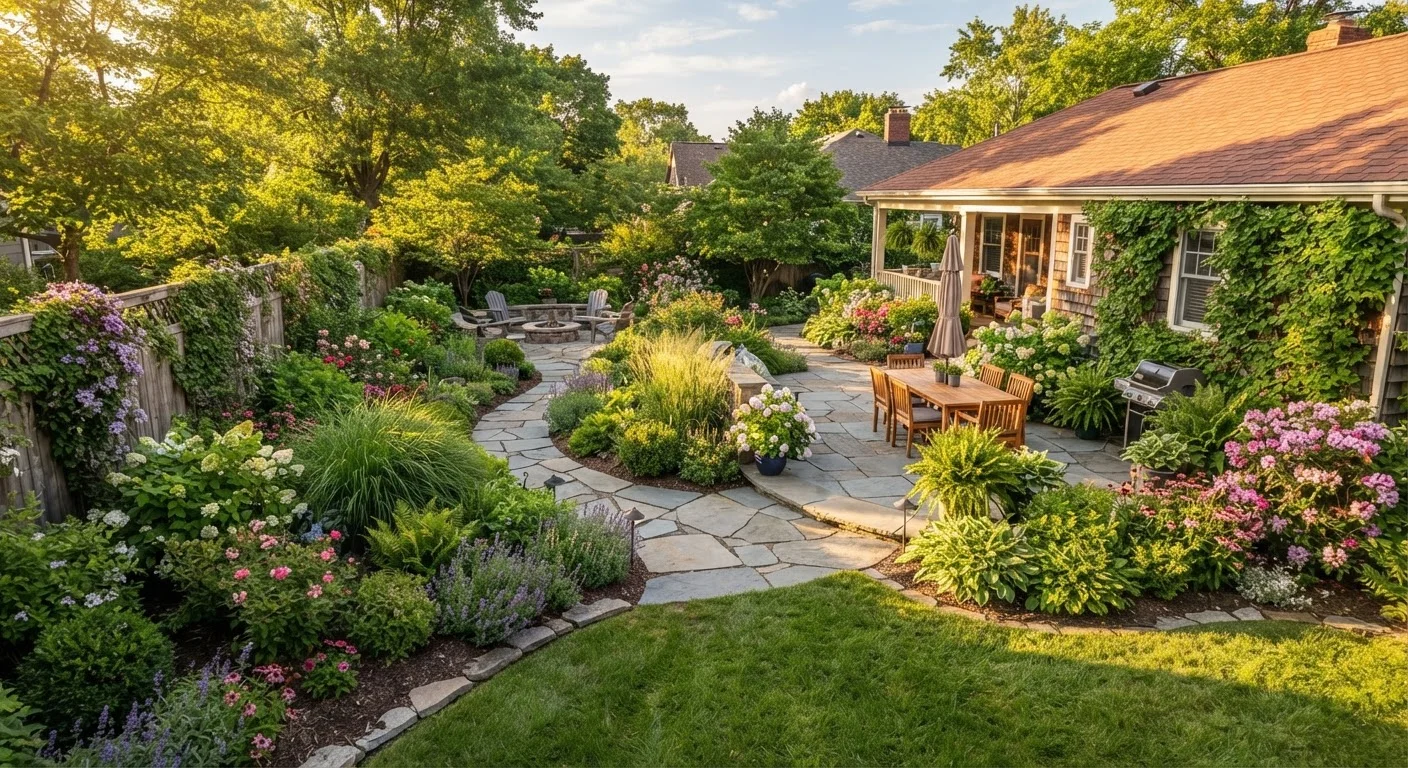
Option A
Hardscape
The structural, durable backbone of your outdoor space.
Best for: Homeowners who want low-maintenance, high-function surfaces for entertaining, pathways, and defined outdoor rooms.
Option B
Softscape
The living, breathing layer that brings color, texture, and nature to a yard.
Best for: Those who want to create visual interest, support wildlife, and enjoy the seasonal changes that plants and grass provide.
Defining Hardscape and Softscape
Every yard is made up of two broad categories of design elements: hardscape and softscape. Understanding the distinction is the first step toward planning an outdoor space that looks cohesive and functions well.
Hardscape refers to all the non-living, constructed features in your landscape. This includes patios, driveways, walkways, retaining walls, raised garden beds made of stone or timber, pergolas, fences, and outdoor kitchens. These elements provide structure, define movement through a space, and create usable surfaces for activities like dining, relaxing, or storage.
Softscape, by contrast, encompasses all living plant material — lawn grass, ground covers, perennials, annuals, shrubs, hedges, and trees. Softscape elements change with the seasons, grow over time, and require ongoing care such as watering, pruning, and fertilizing. They introduce color, fragrance, shade, and ecological value to your yard.
Neither category is superior on its own. The goal is to understand how they work together. If you're curious about how the soil beneath your softscape affects plant health, our guide on identifying your garden's soil type provides a useful foundation before you start planting.
| Criterion | Hardscape | Softscape |
|---|---|---|
| Examples | Patios, walls, walkways, fences | Lawn, shrubs, trees, perennials |
| Maintenance level | Low (occasional cleaning, sealing) | Ongoing (watering, pruning, fertilizing) |
| Installed first? | Yes — sets structure and drainage | No — added after hardscape is complete |
| Seasonal change | Largely static year-round | Changes with season and growth |
| Ecological benefit | Minimal (can increase runoff) | High (supports pollinators, absorbs rain) |
| Upfront cost | Typically higher per square foot | Variable; plants appreciate over time |
| Curb appeal impact | Provides clean, defined structure | Adds color, texture, and warmth |
How to Find the Right Balance
Landscape professionals often use a rough guideline: aim for no more than 50–60% impervious surface (hardscape) in any given yard. Exceeding that threshold can contribute to stormwater runoff, reduce your yard's ability to absorb rain, and create a space that feels more like a parking lot than a garden retreat. Your local municipality may also have codes that limit the percentage of impervious surface on a residential lot — it is worth checking before you begin any major project.
50–60%
Recommended max hardscape coverage per yard
Landscape designers commonly advise keeping impervious surfaces to no more than half a residential lot to support healthy drainage and biodiversity.
30%
Reduction in stormwater runoff with planted areas
The EPA notes that vegetated landscapes can significantly reduce the volume and speed of stormwater runoff compared to paved surfaces.
One practical approach is to install hardscape first and let it dictate planting zones. Lay your patio, pathways, and retaining structures before introducing plants. This prevents disturbing root systems later and ensures that drainage flows away from both your home's foundation and your planting beds. If you're weighing decking materials as part of your hardscape plan, our comparison of wood decking vs. composite decking breaks down what each option looks like over time.
Once hardscape is in place, use softscape to soften transitions. A stone walkway flanked by ornamental grasses or low groundcovers feels far more welcoming than bare paving surrounded by mulch. Layering plant heights — low groundcovers, mid-height shrubs, and canopy trees — creates visual depth and a sense of enclosure that hardscape alone cannot achieve.
For those thinking beyond summer, designing your outdoor space for year-round use explores how structural plantings, heating elements, and hardy surfaces can extend usability well into cooler months.
Check Local Permits Before You Build
Many municipalities require permits for retaining walls above a certain height, patio drainage modifications, or impervious surface coverage exceeding a set threshold. Before beginning any significant hardscape project, verify local zoning and building codes with your city or county planning department. A qualified landscape contractor can also help you navigate these requirements.
If your softscape plans include edible gardens or mixed flower beds, companion planting strategies can help you maximize plant health and reduce pest pressure in those planted areas.
The content on this site is for informational purposes only and is not a substitute for professional advice. Always consult a qualified professional for guidance specific to your situation.