

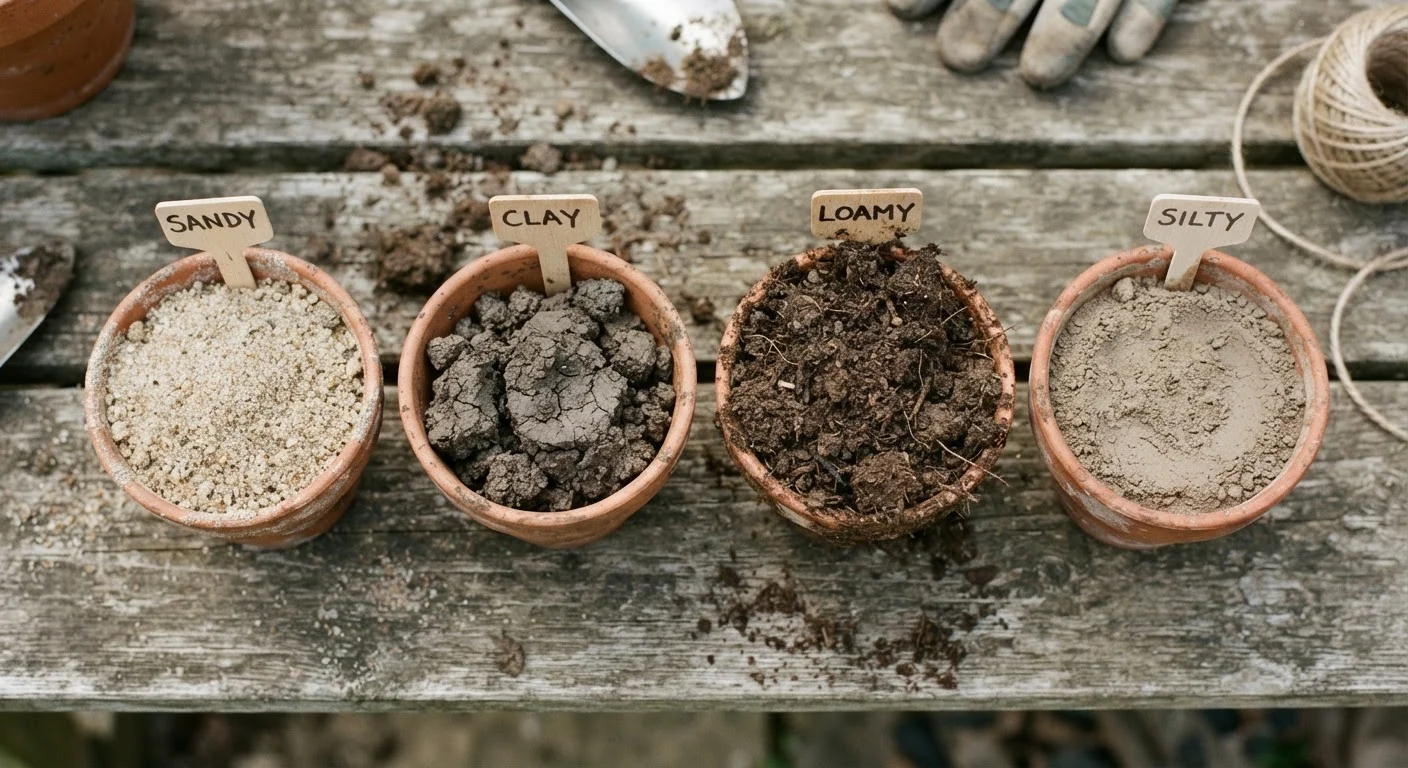
The Four Main Soil Types Explained
Every garden sits on a blend of mineral particles, and the proportions of those particles define everything from how often you need to water to which plants will thrive. The four types most relevant to home gardeners are sandy, clay, silt, and loam.
- Sandy soil has large, loosely packed particles that let water drain very quickly — often too quickly. Nutrients leach out rapidly, meaning plants in sandy soil may need more frequent watering and feeding.
- Clay soil has tiny, tightly packed particles that hold water and nutrients well but drain poorly. It can become waterlogged in wet seasons and crack hard in dry periods. Heavy clay is also prone to compaction.
- Silty soil feels smooth or powdery when dry. It retains moisture better than sand and is relatively fertile, but its fine particles compact easily and can crust over after rain, reducing water infiltration.
- Loam is the gardener's ideal — a balanced mixture of sand, silt, and clay that drains well without drying out too fast, supports good root development, and retains nutrients effectively.
Most garden soils are a blend of two or more of these types, which is why terms like sandy loam or clay loam are common in soil reports.
Soil Type vs. Soil Health Are Different Things
Soil type describes physical texture and is largely fixed by geology. Soil health — including organic matter content, microbial activity, and pH — is something you can actively improve over time. Both matter, but they require different interventions. Knowing your type first helps you target health improvements more effectively.
How to Identify Your Soil Type Without a Lab
You do not need to send a sample away to get a working sense of your soil. Two simple methods work well for most homeowners.
The Ribbon Method
Take a handful of slightly moist soil and squeeze a walnut-sized portion between your thumb and forefinger. Try to form a ribbon:
- If no ribbon forms and the soil feels gritty, you likely have sandy soil.
- If a short, crumbly ribbon forms (under one inch), you probably have a loamy soil.
- If you can form a long, smooth ribbon (two inches or more) without it crumbling, the soil is likely clay-heavy.
The Jar Test
Fill a clear jar about one-third with soil, top it up with water, shake vigorously, and leave it undisturbed for 24 hours. Sand settles first (within minutes), silt settles next, and clay particles settle last and form the topmost layer. Comparing the layer depths gives a rough proportion of each component.
Test When Soil Is Slightly Moist
Both the ribbon method and the jar test work best when the soil sample is slightly moist — not saturated and not bone dry. Bone-dry soil can be misleading in the ribbon method because it won't bind regardless of clay content. Collect your sample after a day or two following light rain for the most reliable result.
Once you have a sense of your soil texture, a professional soil test through your local cooperative extension service can add pH and nutrient data — valuable context before making large amendments.
Why Soil Type Has Real Consequences for Your Garden
Soil type influences nearly every aspect of plant health. Drainage is the most immediate concern: clay soils that hold water around roots for extended periods create conditions where root rot and fungal problems thrive. Conversely, sandy soils that drain within minutes may leave plants chronically thirsty between waterings.
Nutrient availability is equally affected. Clay particles carry a negative electrical charge that attracts and holds positively charged nutrient ions — useful, but it also means soil can become compacted and airless, limiting root oxygen. Sandy soil releases nutrients quickly but holds little in reserve.
Soil type also has structural implications beyond the garden bed. If you are planning outdoor improvements like patios or retaining walls, the ground beneath matters. Clay-heavy soils expand when wet and contract when dry, which can shift or crack hardscape features over time. Understanding your soil before you build is part of thoughtful outdoor planning — something worth keeping in mind as you consider the broader balance of your yard. See our guide to hardscape vs. softscape for how soil conditions factor into outdoor design decisions.
And drainage problems linked to soil type rarely stay minor. If waterlogging patterns are visible in your garden, they often signal issues that can escalate — as explored in our article on why garden drainage problems get ignored until they're expensive.
~25%
Ideal air space in healthy garden soil
Soil scientists generally consider well-structured loam to contain roughly 25% air pore space, which is critical for root respiration and microbial activity.
2–4 inches
Compost depth recommended for soil amendment
Most cooperative extension services recommend incorporating two to four inches of compost into existing soil to meaningfully improve texture and fertility over a growing season.
60%
U.S. soils classified as clay-containing
According to USDA soil survey data, a significant majority of continental U.S. soils contain enough clay content to influence drainage and require management consideration.
Improving Your Soil — Practical Starting Points
The encouraging reality is that most soil types can be meaningfully improved without replacing them entirely. The single most universally beneficial amendment is compost. Added to clay soil, it breaks up dense particles and improves aeration. Added to sandy soil, it increases water and nutrient retention. Most extension services recommend incorporating two to four inches of compost into the top six to eight inches of soil for a noticeable improvement.
For ongoing garden planning, knowing your soil type also informs choices like raised bed gardening — a practical solution when native soil is very poor or heavily compacted. Our complete raised garden bed overview walks through how to build and fill beds with a custom soil mix tailored to your crops.
Soil health also shapes how companion planting works in practice — the nutrient exchange between plants depends in part on the microbial life that thrives in well-structured, well-drained soil. Once your soil is in good shape, explore our guide to companion planting to make the most of those conditions.
“Healthy soil is the foundation of a productive garden. Understanding what you're working with before you plant or amend saves time, money, and frustration in every season that follows.”
— USDA Natural Resources Conservation Service, Federal agency focused on soil health and conservation education
Frequently Asked Questions
Try the jar test: fill a clear jar one-third with soil, add water to fill it, shake well, and let it settle for 24 hours. Sand sinks to the bottom first, silt settles in the middle layer, and clay forms the top layer. The relative thickness of each layer tells you your soil's composition.
Loam is generally considered ideal for vegetables because it balances drainage, aeration, and nutrient retention. If your native soil is clay-heavy or sandy, incorporating generous amounts of compost can move it closer to a loamy texture over time.
Yes. Adding organic matter — compost, aged bark, or leaf mold — over several seasons gradually improves clay's structure, allowing better drainage and root penetration. Avoid tilling clay when it is wet, as this destroys soil structure and creates compaction.
Soil type determines how quickly water drains away, how much air reaches roots, and how well nutrients are held near the root zone. A plant in mismatched soil may show yellowing leaves, wilting, or poor growth even when watered and fertilized correctly.
No. A soil type test identifies texture — the sand, silt, and clay ratio. A soil test (usually done through a cooperative extension service or lab) measures pH, nutrient levels, and organic matter content. Both provide valuable, complementary information.
Absolutely. Clay-heavy or poorly draining soil can undermine patios, paths, and retaining walls over time through heaving and erosion. Understanding your soil before installing hardscape elements helps you plan appropriate drainage solutions.
The content on this site is for informational purposes only and is not a substitute for professional advice. Always consult a qualified professional for guidance specific to your situation.