

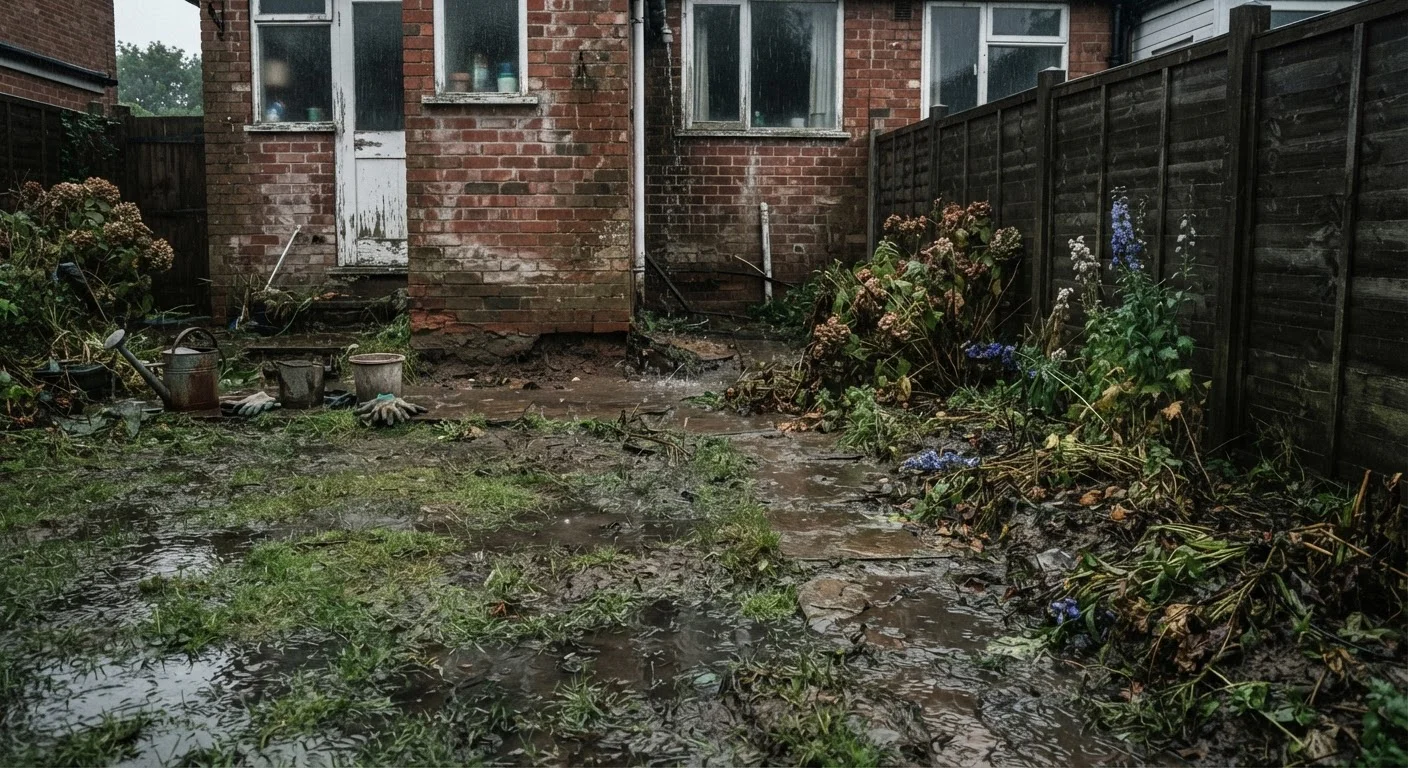
Why Drainage Problems Stay Hidden Until They're Serious
Garden drainage issues share an uncomfortable trait with many home maintenance problems: they are easiest — and cheapest — to fix early, yet most homeowners don't act until visible damage has already occurred. A soggy corner of the yard rarely feels urgent. Water that disappears by Tuesday doesn't seem like a crisis on Wednesday. But beneath that benign surface, soil is being eroded, roots are being suffocated, and in worst cases, your home's foundation is being undermined.
This pattern of delay is so common that drainage consistently ranks among the most costly of all overlooked home maintenance tasks. Unlike a broken appliance or a leaking faucet, poor drainage doesn't announce itself with noise or sudden failure. It works slowly, invisibly, until the bill arrives — often attached to a contractor's quote for foundation repair, basement waterproofing, or extensive regrading.
Understanding the errors that let these problems escalate is the first step toward protecting both your garden investment and your home's structural health.
Foundation Risk Is Real and Costly
Persistent water pooling within six feet of your home's foundation is a serious structural warning sign, not just a landscaping nuisance. Over time, saturated soil can shift, crack, or undermine footings — repairs that can run into tens of thousands of dollars. Do not wait for interior water intrusion before acting. Have a qualified professional assess the situation if you notice chronic pooling near the house.
The Most Common Drainage Mistakes — and How to Avoid Them
Most drainage failures aren't caused by extreme weather events or unusual geology. They result from a predictable set of decisions — or non-decisions — that homeowners make over time. Recognizing these patterns makes correction straightforward.
Assuming standing water will drain on its own after rain.
Why it happens: Homeowners often see puddles as a temporary weather inconvenience rather than a symptom of a structural soil or grading problem. If it dries up within a day or two, the issue seems resolved.
Planting trees and shrubs without considering root impact on drainage channels.
Why it happens: Most homeowners choose plants for appearance or shade value, not for how roots may eventually infiltrate drain pipes, French drains, or dry wells nearby.
Blocking natural drainage swales with garden beds, fencing, or hardscaping.
Why it happens: Swales — shallow channels that guide water across a property — are often invisible to new homeowners and easy to build over without realizing their purpose.
Neglecting gutter downspout discharge points in the garden.
Why it happens: Homeowners focus on keeping gutters clean but rarely check where downspouts deposit water and whether that location is causing soil saturation close to the foundation.
Allowing soil compaction to go unaddressed year after year.
Why it happens: Heavy foot traffic, vehicle use, and clay-heavy soils naturally compact over time. Because the change is gradual, homeowners rarely connect poor absorption with soil condition.
DIY Regrading Has Limits
Minor surface grading adjustments — such as adding topsoil to slope a small area away from a foundation — may be manageable for experienced homeowners. However, significant regrading, installing French drains, or modifying drainage that connects to municipal stormwater systems typically requires permits and licensed contractors. Always check local codes and consult a professional before beginning any substantial drainage project.
Many of these mistakes also reflect a broader tendency in home care: assuming that what isn't actively broken doesn't need attention. As detailed in Home Maintenance Myths That Could Be Costing You Money, reactive maintenance almost always costs more than proactive prevention. Drainage is one of the clearest illustrations of that principle.
Taking Action Without Overcomplicating It
Addressing garden drainage doesn't have to mean major excavation. A walk around your property after a significant rainfall — notebook in hand — is often the most valuable first step. Note where water collects, how long it stays, and whether any of those areas are near your foundation, garden beds, or hardscaping. This simple observation exercise gives a professional the information they need to recommend targeted solutions.
98%
Of basements experience water damage over time
According to the American Society of Home Inspectors, nearly all basements will experience some form of water intrusion, most of it originating from poor exterior drainage.
$4,000–$15,000
Typical French drain installation cost range
HomeAdvisor's national cost data indicates French drain installation for residential properties commonly falls in this range, depending on property size and complexity.
For properties with complex terrain, heavy clay soils, or existing damage, engaging a licensed landscape contractor or drainage specialist is the responsible path. For a deeper grounding in how the full system works — from surface runoff to stormwater outlets — Understanding Your Home's Drainage System provides a comprehensive foundation. The Home Maintenance hub also offers ongoing guidance for keeping all aspects of your property in sound condition.
The outdoor spaces around your home can be both beautiful and functional — but only when water is moving the way it should. Getting ahead of drainage problems is one of the most protective investments a homeowner can make.
The content on this site is for informational purposes only and is not a substitute for professional advice. Always consult a qualified professional for guidance specific to your situation.