

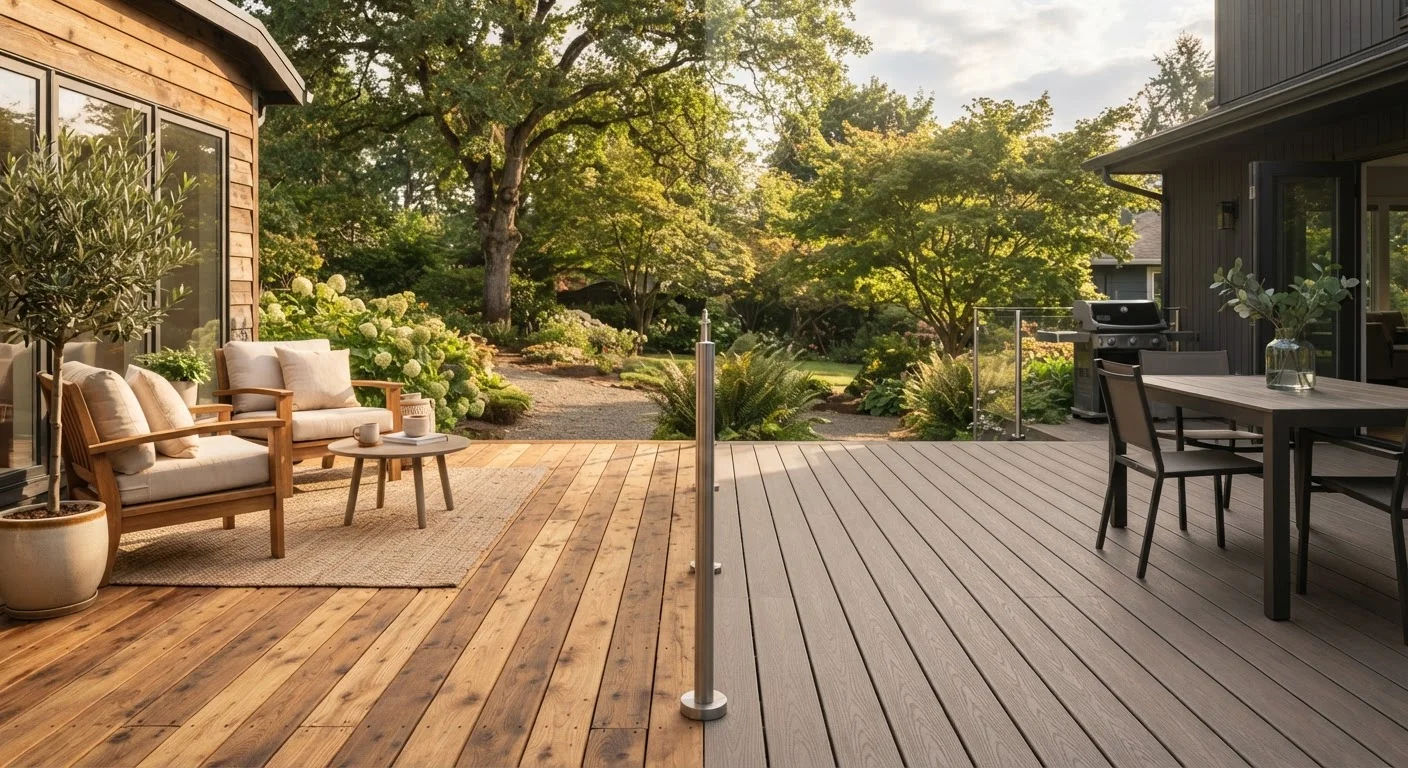
Option A
Natural Wood Decking
The classic, warmly textured choice with proven outdoor appeal.
Best for: Homeowners who value authentic wood aesthetics and are willing to invest time in regular upkeep.
Option B
Composite Decking
The engineered, low-maintenance alternative built for longevity.
Best for: Those who prioritize durability and minimal annual maintenance over the years.
How Each Material Ages Over the Years
The most telling difference between wood and composite decking isn't how they look on installation day — it's how they hold up over the following decade. Understanding that arc helps homeowners set realistic expectations and plan accordingly.
Natural wood begins to show its age relatively quickly without intervention. Exposure to UV rays causes most untreated wood to gray within one to two seasons. Moisture cycling — wet winters, dry summers — leads to expansion and contraction that can produce warping, cracking, and raised grain over time. Softwoods like pressure-treated pine are especially susceptible; dense hardwoods like ipe or teak are more resistant but considerably more expensive. Annual or biennial cleaning, sanding, and resealing are generally necessary to preserve both appearance and structural integrity.
Composite decking is engineered to be more dimensionally stable. Most boards combine wood fiber and recycled plastics, then encase them in a protective polymer shell (in capped composite products). This shell resists moisture, mold, and insect damage far better than bare wood. However, composite is not entirely maintenance-free: surface staining from leaf tannins, grease, or mildew can develop, and lower-quality uncapped composite boards may still absorb moisture at cut ends. UV fading is also a real factor — most composite boards will lighten slightly over the first few years before stabilizing.
| Criterion | Natural Wood Decking | Composite Decking |
|---|---|---|
| Typical lifespan (maintained) | 15–30 years | 25–30+ years |
| Upfront material cost | Generally lower | Generally higher |
| Annual maintenance effort | High (seal, sand, stain) | Low (clean only) |
| Moisture resistance | Low to moderate | High (capped boards) |
| UV / fade resistance | Low without sealant | Moderate; stabilizes over time |
| Splinter risk | Yes, especially aged boards | Minimal |
| Aesthetic character | Natural grain, warm tones | Consistent, uniform look |
| Sustainability profile | Renewable if certified | Recycled content, not biodegradable |
For homeowners who are also thinking about how their deck fits into the broader outdoor picture, see our guide to balancing hardscape and softscape for a fuller perspective on outdoor design.
Maintenance, Costs, and Environmental Considerations
Maintenance effort is where the two materials diverge most sharply in practice. Wood demands a consistent schedule: annual inspection for soft spots or fastener corrosion, periodic washing, and reapplication of sealant or stain every one to three years depending on exposure. Skip a season, and you may face accelerated deterioration. Composite decking requires far less — typically an annual wash with mild soap and water, and prompt removal of organic debris to prevent surface staining.
1–3 years
Resealing interval for most wood decks
General guidance from decking industry professionals suggests wood decks in direct sun and rain exposure need resealing at least every one to three years to maintain protection.
25 years
Typical warranty on premium capped composite boards
Many manufacturers of capped composite decking products offer structural and fade warranties covering 25 years or more under normal residential use conditions.
Up to 95%
Recycled content in some composite board products
Certain composite decking lines marketed as eco-conscious claim to incorporate up to 95% recycled materials, though figures vary significantly across manufacturers.
Cost over time tells a more nuanced story. Natural wood often carries a lower upfront material and installation cost, particularly for pressure-treated pine. But ongoing maintenance — products, labor if hired out, and eventual board replacement — can close or reverse that gap over a 15–20 year lifespan. Composite decking costs more initially, yet many manufacturers offer warranties of 25 years or more on capped products, reflecting their confidence in long-term durability.
Environmental impact is complex for both. Wood from certified sustainable forestry programs (such as FSC-certified sources) represents a renewable material with a relatively low embodied energy. However, pressure-treated lumber contains chemical preservatives that require careful disposal. Composite boards often incorporate recycled plastic and wood waste, reducing landfill contribution — but they are not biodegradable and can be difficult to recycle at end of life. Neither option is without trade-offs, and the more environmentally responsible choice will depend on specific product sourcing and your region's waste management options.
If you're planning a deck as part of a year-round outdoor retreat, our seasonal outdoor planning guide covers how structural choices like decking material interact with heating and shelter considerations. You may also find it useful to review other patio surface options before committing to decking at all.
Installation Quality Matters as Much as Material
Regardless of which material you choose, proper installation is critical to long-term performance. Gaps between boards must be sized correctly for drainage and expansion, fasteners should be rated for outdoor use, and any cut composite ends should be sealed per manufacturer guidance. Poor installation can cause premature failure in both wood and composite decking. If you are not experienced with deck construction, consulting or hiring a licensed contractor is strongly advisable — especially for elevated or multi-level structures that may require permits in your municipality.
The content on this site is for informational purposes only and is not a substitute for professional advice. Always consult a qualified professional for guidance specific to your situation.