

Our Verdict
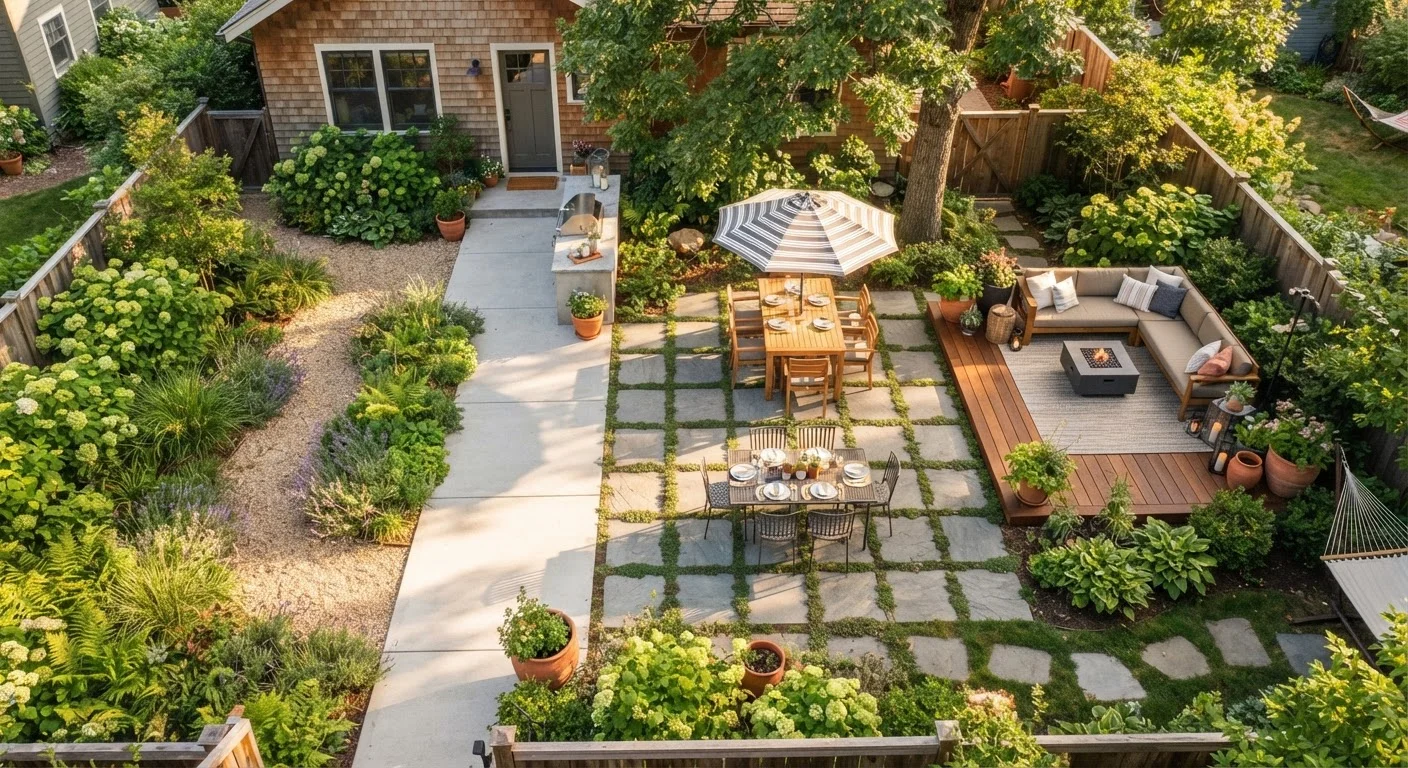
No single patio surface suits every yard or household. Gravel works best for budget-conscious projects with good drainage; pavers reward those who want design flexibility and longevity; concrete suits flat lots where minimal upkeep is a priority; and decking solves slope challenges while adding warmth. The right choice depends on your climate, how you use the space, and the level of maintenance you're prepared to commit to.
| Best for | Recommended |
|---|---|
| Budget-conscious homeowners with informal outdoor spaces | Gravel |
| Those wanting long-term durability with design flexibility | Pavers |
| Flat lots where minimal ongoing maintenance is a priority | Concrete |
| Sloped yards or homeowners seeking a warm, natural aesthetic | Decking |
Why the Surface Material Matters More Than You Might Expect
Your patio surface isn't just a cosmetic choice — it affects drainage, safety, maintenance schedules, and how well the space holds up over decades. Choosing the wrong material for your climate or yard conditions can lead to cracking, weed intrusion, pooling water, or surfaces that become slippery hazards. Understanding the relationship between hardscape and softscape in your yard is a useful starting point before committing to any surface.
The four most common residential patio surfaces — gravel, pavers, poured concrete, and decking — each have genuine advantages and real limitations. This comparison breaks them down across the criteria that matter most for everyday use.
| Gravel | Pavers | Concrete | Decking | |
|---|---|---|---|---|
| Typical cost range | Low | Medium–High | Low–Medium | Medium–High |
| Durability | Moderate (shifts over time) | High (decades with upkeep) | High (climate-dependent) | Moderate–High (material-dependent) |
| Maintenance level | Regular raking, weed control | Occasional re-sanding | Sealing, crack repair | Staining/sealing or minimal (composite) |
| Drainage | Excellent (permeable) | Good (with proper base) | Poor (impermeable) | Good (gaps allow runoff) |
| Freeze-thaw performance | Good | Good | Moderate (cracking risk) | Good–Moderate |
| DIY-friendly | Yes | Moderate | No (typically professional) | Moderate (ground-level only) |
| Design flexibility | Limited | High | Moderate | Moderate |
| Best suited for | Informal, budget-focused projects | Long-term investment, custom look | Flat lots, low-maintenance goal | Sloped yards, elevated areas |
Gravel: Affordable, Flexible, and Low-Tech
Crushed stone, pea gravel, and decomposed granite are accessible options with a relatively low upfront cost. Gravel installs quickly with minimal site preparation, and its permeability makes it naturally good for drainage — a meaningful advantage over impermeable surfaces in yards where runoff is a concern.
The trade-offs are real, however. Gravel shifts underfoot over time and tends to migrate beyond the intended area without solid edging. It also requires periodic top-ups and consistent weed management unless a quality landscape fabric is installed beneath it (and even then, weeds find a way in over time). Rolling furniture is impractical on loose stone, and gravel isn't code-compliant as a surface for some types of outdoor structures.
Add Solid Edging Before You Fill
For gravel patios, installing a rigid border — metal, composite, or concrete edging — before spreading stone is one of the most effective ways to limit migration and reduce long-term maintenance. Pair it with a woven geotextile fabric rather than plastic sheeting, which tends to degrade and bunch. Getting the base right at the start saves considerably more effort than annual top-ups and regrading.
Pavers: Design Range and Long-Term Value
Concrete pavers, natural stone, and brick offer one of the widest design ranges of any surface material. Laid on a compacted base with sand or mortar, individual units can be replaced if one cracks or shifts — a significant repair advantage over poured concrete. Properly installed paver patios can last several decades with relatively modest upkeep.
The main drawback is cost: material and labor for pavers typically run higher than gravel or basic concrete slabs. Joint sand can wash out over time and may require periodic reapplication, especially in high-rainfall areas. Polymeric sand — a sand-and-binder mix — can reduce this maintenance burden. If you use sealant on natural stone pavers, understanding which product to use matters; the differences between grout, caulk, and sealant can help you choose correctly.
15–25 years
Typical lifespan of a well-installed paver patio
Industry guidance from landscape and masonry trade groups suggests properly installed concrete or natural stone pavers can last 25 years or more with basic joint maintenance.
30–40%
Portion of home improvement projects requiring a permit
According to the National Association of Realtors, a significant share of outdoor structural projects — including attached decks — require local building permits, varying by municipality.
Concrete: Durable, but Climate-Sensitive
Poured concrete is one of the most common patio surfaces in the US for good reason: it is relatively affordable to install, nearly maintenance-free in mild climates, and can be finished in a range of textures and colors. Stamped concrete can approximate the look of stone or brick at a lower cost.
The critical vulnerability is freeze-thaw cycling. In climates with hard winters, water seeps into micro-cracks, expands when frozen, and accelerates surface degradation. Proper reinforcement (rebar or wire mesh), correct mix ratios, and a sealed surface help, but concrete patios in cold climates still tend to require more crack repair over time than pavers do. Concrete also becomes permanently stained more easily than individual paver units, which can be replaced selectively.
Decking: The Right Fit for Slope and Warmth
Wood and composite decking shine in situations where a patio would otherwise require significant grading or retaining walls — particularly sloped lots or elevated areas near a rear door. Decking creates a level, comfortable surface above uneven ground without extensive earthwork.
Natural wood decking — cedar, redwood, or pressure-treated pine — requires staining or sealing on a regular schedule to resist moisture, UV fading, and insect damage. Composite decking reduces that maintenance burden considerably, though it comes at a higher upfront cost and can retain heat in direct sun. The long-term comparison between wood and composite decking is worth reviewing before making a final call on material. Decking is also worth considering if you want the space to function across all four seasons, since it can be paired with pergolas, outdoor heaters, and drainage-friendly designs.
Note: Any structural decking work — particularly elevated decks attached to a home — typically requires permits and inspections under local building codes. Always verify requirements with your local building authority before beginning construction.
The content on this site is for informational purposes only and is not a substitute for professional advice. Always consult a qualified professional for guidance specific to your situation.