

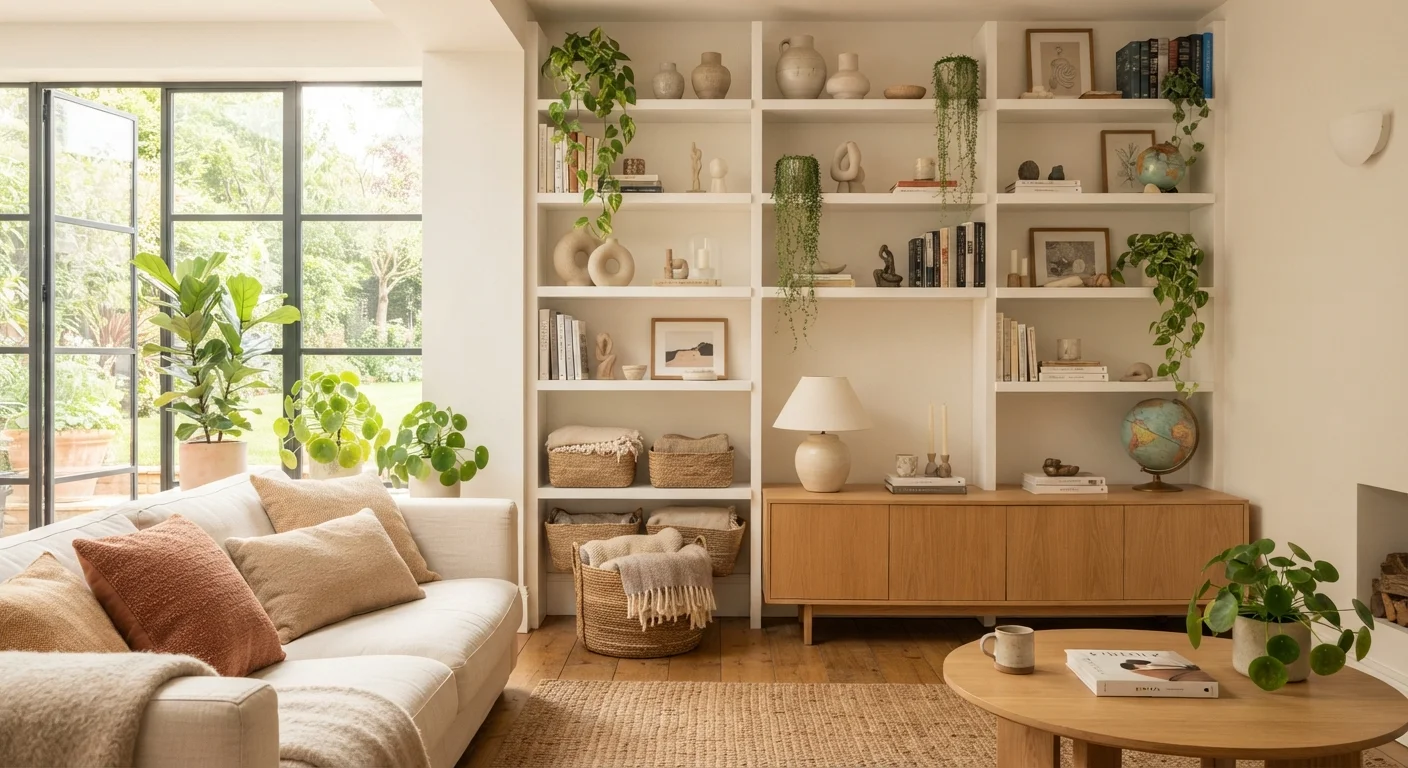
Our Verdict
Open shelving in the living room rewards homeowners who enjoy styling, own curated collections, and are willing to dust regularly. It creates genuine visual openness and personality that closed cabinetry rarely matches. However, it's a poor fit for households with significant storage needs, young children, or a preference for low-maintenance living.
Best for design-minded homeowners with a curated approach to belongings and time to maintain an intentional, styled display.
The Honest Appeal of Open Shelving
Open shelving has become one of the most recognizable features in contemporary living rooms — and for good reason. When done well, it transforms a blank wall into a visual story, blending function with personal expression in a way that closed cabinets simply cannot.
The most immediate benefit is the sense of visual lightness. Unlike bulky entertainment units or closed bookcases, open shelves allow the eye to travel through the space. In smaller rooms especially, this permeability can make a room feel less boxed in. If you're already thinking about furniture arrangement in a tight space, see our guide to furniture layouts for small rooms for compatible strategies.
Open shelving also puts your personality on display — literally. Books, plants, artwork, travel souvenirs, and heirlooms can all coexist on a well-planned shelf run. The result feels lived-in and specific, rather than catalog-generic.
Makes rooms feel visually open and airy
Removing visual mass from walls allows sight lines to extend, which can make a living room feel more spacious without any structural changes.
Displays personality and curated collections
Books, plants, and meaningful objects become decor rather than clutter, giving a room a sense of individual character that closed storage cannot replicate.
Generally less expensive than built-in cabinetry
Floating shelf systems and bracket-mounted shelves are widely available at a range of price points, making this a more accessible option than custom millwork.
Easy to restyle and reconfigure over time
Unlike fixed cabinets, open shelves allow you to update the display seasonally or as your taste evolves, without physical renovation.
Encourages more intentional ownership
When everything on display is visible, many homeowners find they become more selective about what they keep — a side effect that can reduce overall clutter.
What the Design Inspiration Photos Don't Show
The styled images you see in design magazines represent a single curated moment — usually freshly dusted, professionally arranged, and lit for maximum appeal. Real life introduces variables those photos skip.
Dust is the most consistent challenge. Open surfaces collect particles continuously, and in a living room — where foot traffic, upholstery fibers, and air circulation all contribute — visible dust can appear within days of a thorough cleaning. For homeowners who prefer low-maintenance spaces, this ongoing requirement can feel burdensome.
Visual clutter compounds fast. The moment everyday items — remote controls, charging cables, mail — land on open shelves, the curated look collapses. Open shelving works best when it displays only intentional objects, which means finding alternative homes for practical clutter elsewhere.
Open Shelving and Rental Homes
If you're renting, installing floating shelves may require landlord approval, and wall damage from anchors could affect your security deposit. Some renters use freestanding ladder shelves or bookcases as a flexible alternative that achieves a similar open look without permanent wall modification. Always review your lease terms before drilling into walls.
It's also worth thinking about how open shelving interacts with the rest of your room's composition. Our article on why rooms feel smaller than they are covers how visual density affects perceived space — directly relevant if your shelves risk feeling overcrowded.
Dust accumulates continuously on all surfaces
Every object and shelf surface is exposed to airborne particles, requiring frequent wiping — often weekly — to maintain a clean appearance.
Offers no concealed storage for everyday clutter
Items like remote controls, cables, and miscellaneous objects have nowhere to hide, so they visually disrupt even a well-styled display.
Requires consistent styling effort to look intentional
Without a deliberate approach to grouping and spacing, open shelves can quickly appear disorganized rather than curated.
Improper installation poses real safety risks
Shelves not anchored into studs or rated for their load can fail under weight, making professional installation or careful DIY verification essential.
Limited suitability for households with young children
Accessible shelves at lower heights can pose both breakage and safety risks, and styled displays rarely survive toddler-level curiosity intact.
Styling, Safety, and Practical Limits
Achieving the effortless look of well-styled open shelving is more labor-intensive than most people anticipate. Good shelf styling typically follows a few principles: varying heights, balancing visual weight, grouping objects in odd numbers, and leaving intentional breathing room. Without these techniques, a shelf can look randomly assembled rather than thoughtfully arranged. Our guide to mixing furniture styles cohesively covers related principles that apply equally to shelf displays.
~15 min
Weekly dusting time per standard shelf run
Interior designers generally estimate 10–20 minutes of maintenance per week for a typical living room shelf display of four to six shelves.
3–5 objects
Recommended grouping size per shelf zone
Professional stylists commonly use odd-numbered groupings of three to five items to create visual balance without overcrowding open shelves.
Load capacity and wall anchoring are non-negotiable safety considerations. Floating shelves must be anchored into wall studs or appropriate anchors for the wall material. Overloaded or improperly mounted shelves can fail — a risk that increases with heavier items like hardcover book collections or ceramic objects. Always verify the weight rating for any shelf system before loading it, and consult a professional installer if you're uncertain about wall structure.
Finally, consider storage limitations honestly. Open shelves display — they don't hide. If your living room requires concealed storage for electronics, board games, or media equipment, open shelving alone won't solve that need. Comparing your options is worthwhile: our article on built-in storage versus freestanding furniture lays out a fuller picture of what each approach can and can't do.
For those newer to interior decorating decisions like this one, decorating your first home offers a grounded starting point before committing to a major design choice.
The content on this site is for informational purposes only and is not a substitute for professional advice. Always consult a qualified professional for guidance specific to your situation.