

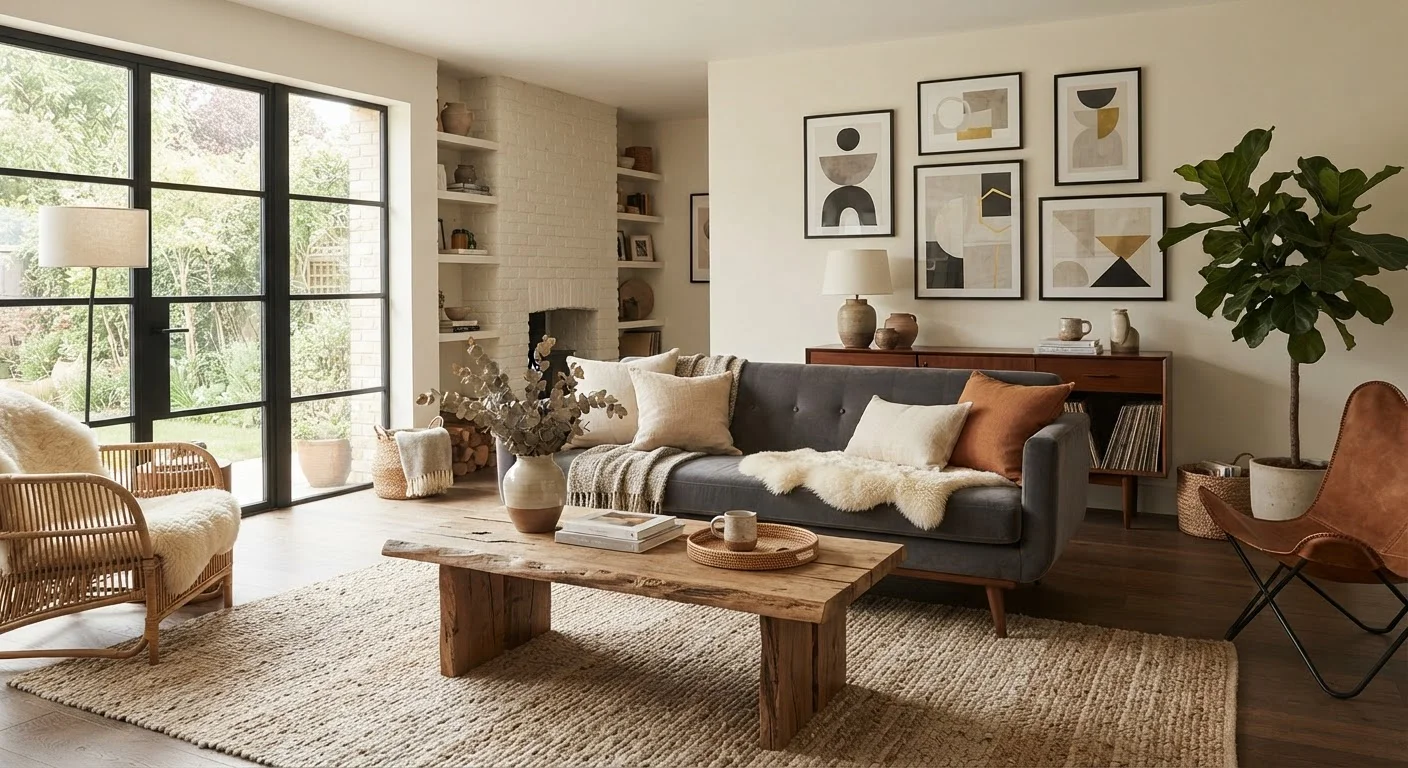
Why Mixed Styles Work — and When They Don't
Every home accumulates furniture over time: a hand-me-down dresser, a sofa bought for a previous apartment, a vintage find from a flea market. The question isn't whether your pieces match perfectly — it's whether you're communicating that the contrast is deliberate. Rooms that feel chaotic usually lack a shared visual language; rooms that feel curated have one, even when the furniture spans decades and styles.
Understanding the core principles behind cohesive rooms — scale, proportion, and flow — gives you the foundation to mix confidently. The practices below build on those principles with specific, actionable techniques.
Quick Wins You Can Apply This Weekend
Not every fix requires rearranging the whole room. Some of the most effective cohesion strategies take an afternoon and cost almost nothing. Start with these and you'll likely see a meaningful shift in how the space reads before committing to bigger changes.
Anchoring, Layering, and Knowing When to Stop
Even in the most eclectic spaces, one dominant style should carry the most visual weight. Think of it as a host and guests — the host sets the tone, and the guests add personality without taking over. If your sofa is a streamlined mid-century piece, let it lead. A rustic wood coffee table and a global-inspired textile can coexist beautifully as long as they don't compete for dominance.
Layering works best when you introduce contrast gradually. Add one unexpected piece at a time, step back, and assess. Editing is just as important as curating — if a room feels busy, removing one item often resolves more than adding another ever would. Before any major design decision, consider a room-by-room audit to clear the visual noise first.
“The eclectic interior is not about mixing everything you love into one room — it is about editing everything you love down to what belongs together.”
— Nate Berkus, Interior designer and author
For smaller rooms, the challenge intensifies. Mixing styles in a tight space requires even more restraint — see furniture arrangements that work in small spaces for layout strategies that keep eclectic rooms from feeling crowded. And once your furniture mix is settled, don't overlook how much layered lighting can do to unify the atmosphere across contrasting pieces.
The 'Squint Test' for Visual Cohesion
Stand at the doorway of your room, squint until the details blur, and look at the shapes and tones that remain. If the room reads as balanced — similar values of light and dark distributed evenly, no single corner demanding all attention — your mix is working. If one area jumps out as too heavy or too sparse, that's where to adjust first.
The content on this site is for informational purposes only and is not a substitute for professional advice. Always consult a qualified professional for guidance specific to your situation.