

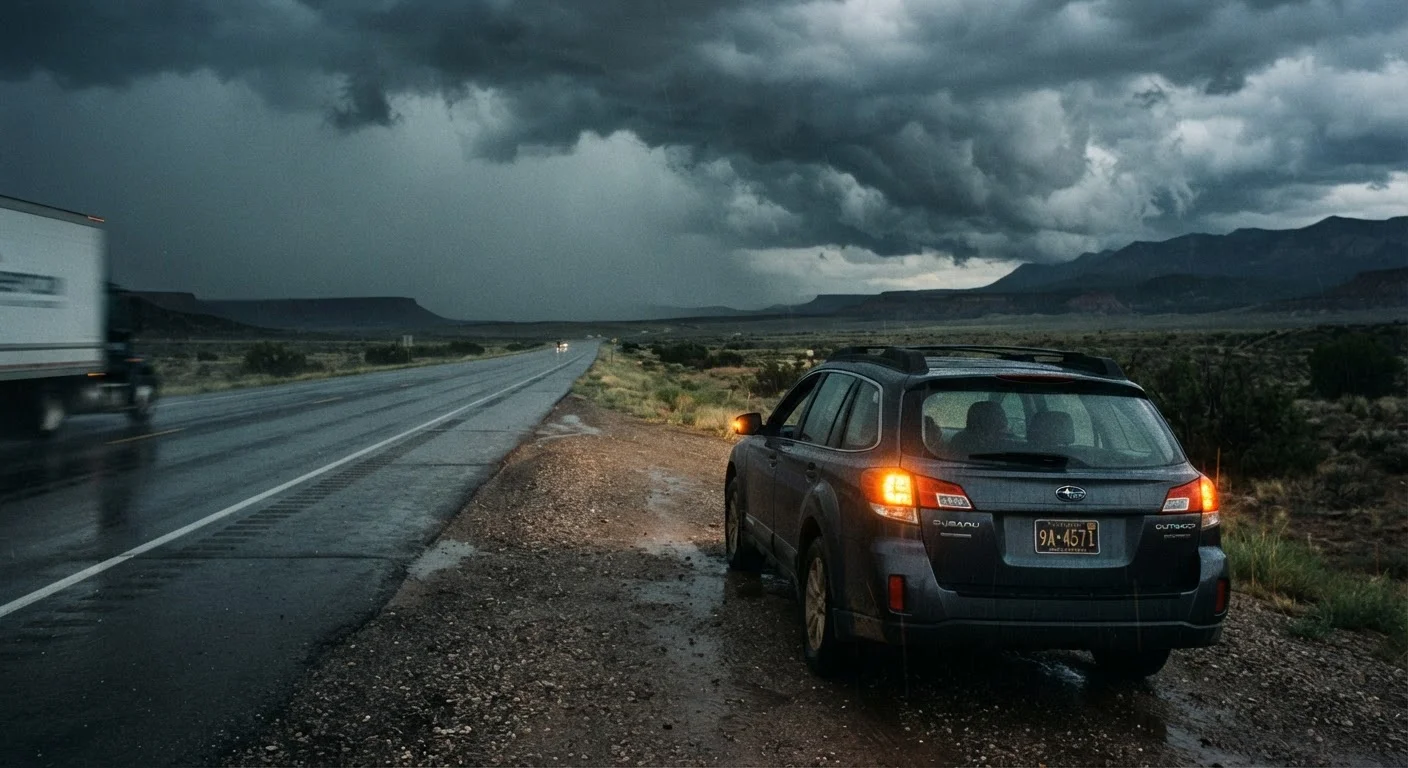
Why Things Go Wrong—and Why That's Normal
Even well-planned road trips encounter disruptions. A tire picks up a screw. A storm system moves faster than the forecast predicted. A highway closure reroutes three hundred miles of traffic onto a two-lane county road. These events aren't failures of preparation—they're the nature of long-distance driving in a country as varied as the United States.
The difference between a disruption that becomes a minor story and one that becomes a genuine emergency almost always comes down to two things: the supplies and information you have on hand, and the decisions you make in the first few minutes. Our pre-trip checklist covers the vehicle-side preparation; this guide picks up where that leaves off—covering what to actually do when something goes sideways mid-journey.
What you will need
Before You Roll: Tools and Mindset
Handling disruptions well starts before you leave. The tools below represent the practical baseline for long-distance driving in the US. None of them are exotic or expensive, but all of them have a specific job to do when something goes wrong.
Offline Navigation App
Provides turn-by-turn directions and rerouting capability even when cellular service is unavailable.
Portable Jump Starter
Allows you to restart a vehicle with a dead battery without requiring another car or roadside assistance.
Reflective Warning Triangles or Road Flares
Alerts approaching drivers to your stopped vehicle, reducing rear-end collision risk during a roadside stop.
Tire Inflator with Pressure Gauge
Temporarily reinflates a slow-leak tire to allow driving to a service station.
Weather Radio or App with Severe-Weather Alerts
Delivers real-time warnings for tornadoes, flash floods, and winter storms in your current location.
Physical Road Atlas
Provides a fully offline, no-battery navigation fallback for routes in areas with no cell service.
Build a Simple Go-Bag for Disruptions
A small bag containing a phone charger, a basic first-aid kit, an emergency blanket, water, snacks, and a flashlight addresses most short-term roadside situations. Keep it accessible in the cabin, not buried in the trunk, so you can reach it without exiting the vehicle into traffic.
Beyond gear, the most useful mindset shift is accepting that delays are part of the trip, not a failure of it. Drivers who treat their itinerary as fixed rather than flexible tend to make worse decisions under pressure—pushing through fatigue, driving into worsening weather, or skipping a safe stop because they're behind schedule. For a fuller look at building flexibility into your route from the start, see our guide to planning a road trip from scratch.
The Step-by-Step Response
Never Stop in a Live Traffic Lane
If your vehicle breaks down, your first and only priority is to exit the travel lane entirely. Even a partially blocked lane on a highway is a serious hazard. Pull as far onto the shoulder or verge as possible, turn on your hazard lights immediately, and stay behind a guardrail or well away from traffic if you must exit the vehicle. Never stand between your car and oncoming traffic.
Check the Forecast Every Morning, Not Just at Home
Weather conditions change significantly over a multi-day trip. Pull up a radar-based forecast each morning for the full stretch of road you plan to cover that day, not just your destination. Pay attention to severe weather alerts, flash flood watches, and road closure advisories for mountain passes or coastal routes.
Know Your Weather Exit Options Before You Need Them
Identify towns, rest areas, and covered structures along each day's route before you set out. If severe weather moves in unexpectedly, you want a pre-identified place to shelter rather than making a rushed decision at highway speed. For driving in rain, fog, and snow, slowing down well in advance of reduced-visibility zones is always correct.
Respond to a Breakdown in the Correct Order
If something goes wrong mechanically, the sequence matters. First, signal and move safely off the road entirely. Second, activate your hazard lights. Third, if it's safe to exit the car, place reflective triangles 10–15 feet and 100 feet behind your vehicle. Fourth, call for assistance. Do not attempt roadside repairs in a live lane or on a narrow shoulder without adequate space and visibility.
Handle an Unexpected Detour Without Panic
Road closures, construction, and accidents reroute thousands of drivers every day. When a detour sign appears, follow it—these are established alternate routes, not improvised ones. If your GPS hasn't updated, pull off safely and let it recalculate before proceeding. For planned flexibility in routing, smarter route-planning principles can help you build detour windows into your itinerary from the start.
Communicate Your Situation and Adjust Expectations
If a breakdown, severe weather, or significant detour is going to delay your arrival, notify anyone expecting you as early as possible. Share your location with a trusted contact if you're waiting alone in a remote area. Adjusting hotel reservations or activity bookings early avoids cancellation fees and reduces stress significantly.
Make the Decision to Stop Early When Conditions Deteriorate
One of the most underrated road-trip skills is choosing to stop driving before conditions become dangerous—not after. If road conditions are worsening, visibility is low, or fatigue is setting in alongside bad weather, exit at the next available town and wait it out. A delayed arrival is always preferable to an accident. Safe driving practices consistently emphasize that scheduling pressure is one of the leading contributors to poor decisions on the road.
Travelling With Others: Extra Considerations
Disruptions hit differently when you have passengers—especially children. If you're travelling with kids, managing a long drive with children includes specific guidance on keeping young passengers calm and safe during unexpected stops. The core principle applies broadly: assign roles. One adult manages the vehicle and the roadside situation; another manages passengers, communication, and logistics. Splitting those tasks prevents everyone from crowding the same decision.
Don't Rely on a Single Navigation Source
Cell service is unreliable in remote stretches of many US routes. If your phone loses signal mid-detour, you may have no way to reroute. Download offline maps before departure and consider keeping a physical road atlas in the car as a last-resort backup.
If you're navigating unfamiliar road layouts during a detour, a quick review of road signs every driver should know and junction and roundabout rules can prevent confusion at intersections in unfamiliar territory.
The content on this site is for informational purposes only and is not a substitute for professional advice. Always consult a qualified professional for guidance specific to your situation.