

Summary
22 items · 30–60 minutes
Why a Pre-Trip Vehicle Check Matters
Most roadside breakdowns are not random mechanical failures — they're the result of conditions that were already present before the trip began. A tyre losing pressure gradually, a belt showing early wear, a battery a few months past its practical life. A systematic check before departure doesn't just reduce the risk of getting stranded; it also helps you catch smaller issues before they become expensive repairs.
This checklist is designed for any long drive — whether you're heading across a few states or committing to a cross-country journey. If you're also planning the logistics of your trip, the Road Trip Planning From Scratch walkthrough covers everything from route selection to budgeting. This article focuses specifically on the vehicle.
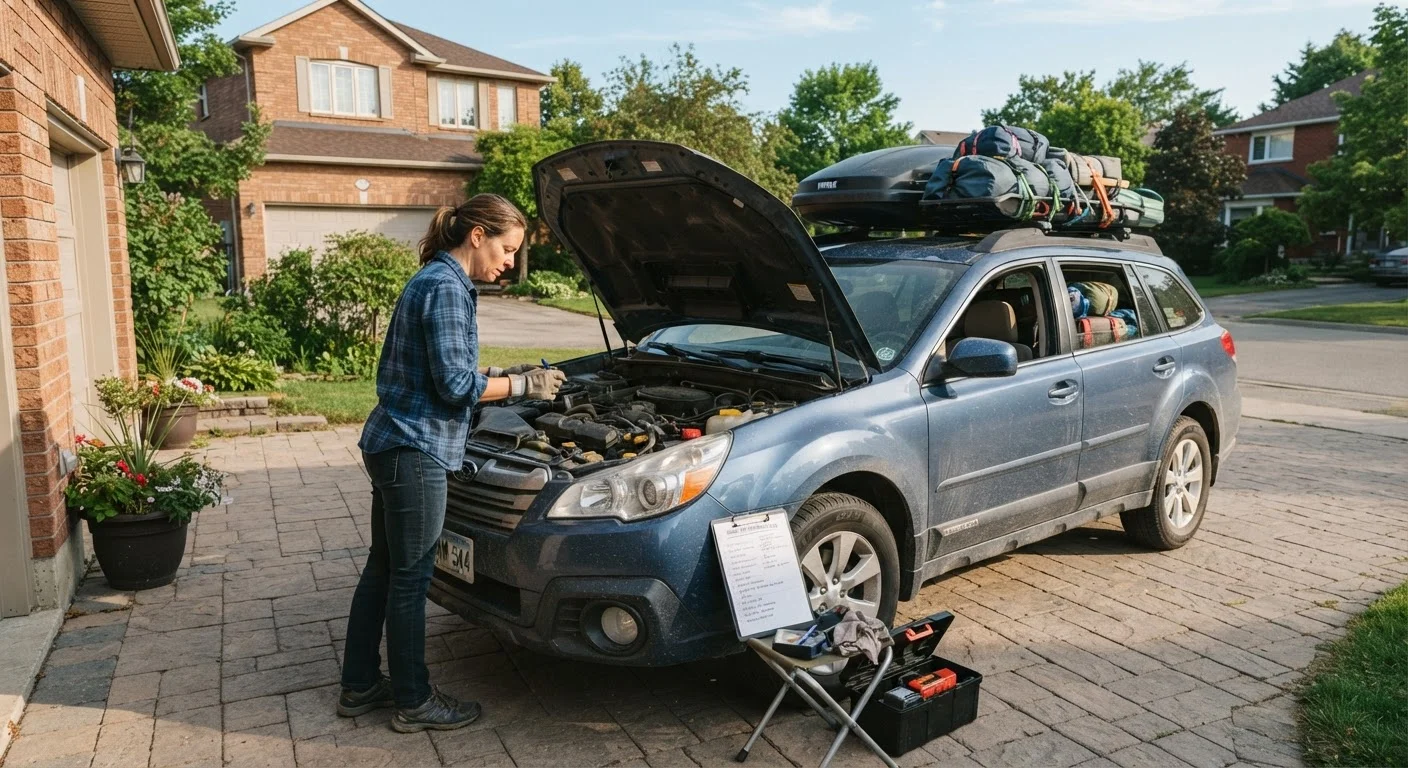
Work through the checklist below at least 24 hours before departure — not in the driveway with the engine running and the bags already loaded.
Tyre pressure gauge
Used to accurately measure PSI in all four tyres and the spare before departure.
Tread depth gauge
Provides a precise measurement of remaining tyre tread, which a visual inspection alone may miss.
Portable battery tester or multimeter
Checks the battery's charge capacity to identify batteries that may fail under highway load.
Vehicle owner's manual
Contains manufacturer-specified fluid capacities, tyre pressure recommendations, and service intervals.
Portable jump starter pack
Allows you to restart a dead battery without needing another vehicle — especially important on remote roads.
How to Use This Checklist
The items are grouped by system — tyres, fluids, lights, under the hood, brakes, and emergency supplies. Work through each group in sequence; this mirrors how a qualified mechanic approaches a pre-service inspection and reduces the chance of skipping something under time pressure.
Items marked must are non-negotiable for safety — address any failure before departure. Items marked should are strongly recommended and cover conditions that become increasingly relevant on longer drives. Nice-to-have items are practical enhancements that cost little time or money but meaningfully improve your resilience on the road.
Check Tyres at Least the Evening Before
Tyre pressure readings are affected by ambient temperature — cold tyres after a cool night give more accurate readings than tyres that have been driven on. Check pressures the evening before a morning departure, or first thing before moving the vehicle. Refer to the manufacturer's specification, not the maximum PSI stamped on the tyre sidewall.
If you want a shorter, daily-driving equivalent, compare this list against the pre-drive safety walkthrough, which covers what to verify before any journey, not just a long one.
Tyres
Fluids
Lights and Visibility
Under the Hood
Brakes and Steering
Emergency Supplies and Documents
After the Checklist: Emergency Readiness
Even a well-prepared vehicle can encounter problems — a road hazard punctures a tyre, or another driver causes an incident. What you carry can determine whether a delay becomes a minor inconvenience or a serious situation. Our detailed guide to what belongs in a car emergency kit goes deeper on kit contents and why each item earns its place.
For trips heading into areas with limited services or unpredictable weather, also consider the remote destination preparation checklist, which adds communication, connectivity, and emergency contact considerations beyond what vehicle checks alone cover.
Don't Ignore Dashboard Warning Lights
A warning light that was present before departure can indicate a developing mechanical fault that worsens under highway conditions. Before leaving, look up any active warning symbols — our guide to reading dashboard warning lights explains what each symbol typically signals. If a light relates to brakes, engine temperature, or oil pressure, have it evaluated by a qualified mechanic before you go.
Low Brake Fluid Is Not a DIY Fix
Brake fluid level naturally drops slightly as brake pads wear, but a significantly low reservoir can indicate a leak or a more serious problem. Topping up the fluid without investigating the cause only masks the issue. If brake fluid is notably low, consult a qualified mechanic before the trip — this is not optional.
Once your vehicle is confirmed road-ready, the final step is making sure everything you're bringing is packed efficiently — see our advice on packing the car without chaos before you load up.
The content on this site is for informational purposes only and is not a substitute for professional advice. Always consult a qualified professional for guidance specific to your situation.