

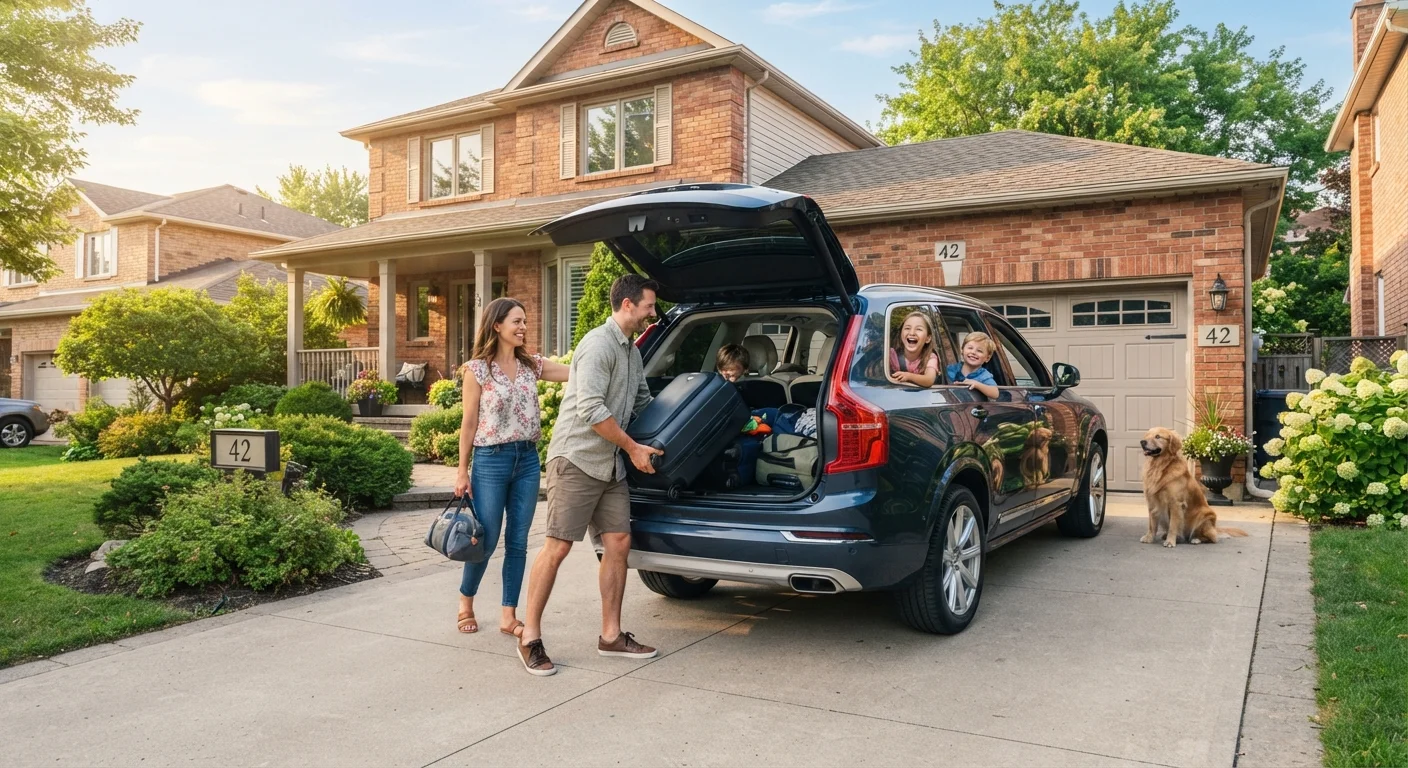
How Family Road Trips Differ From Adult-Only Drives
A long drive with children in the car operates by an entirely different set of rules. Adults can adjust their comfort, manage bathroom breaks, and push through fatigue with relative autonomy. Children — depending on age — cannot. Understanding this distinction is the starting point for a trip that works for everyone.
Road trips have rhythms all their own, but with young passengers those rhythms must bend around shorter attention spans, more frequent rest needs, and the physical realities of child car seats. Drivers who approach a family road trip as simply a longer commute typically find themselves unprepared.
| Recommended stop frequency (young children) | Every 60–90 minutes (General road safety guidance) |
| Safest seating position for children under 13 | Rear seat (American Academy of Pediatrics) |
| Booster seat transition height threshold | At least 4 ft 9 in tall (AAP general guidelines) |
| Rear-facing seat use | As long as possible within seat's weight/height limits (American Academy of Pediatrics) |
| Car seat inspection resources | Free checks available at many fire stations and community events (NHTSA Safe Kids program) |
| Optimal departure strategy | Early morning or overnight to align with children's sleep (Common family travel practice) |
The practical difference shows up immediately in planning: route choice, departure timing, stop frequency, and in-car setup all shift when children are aboard. Treating these factors as an afterthought rather than core logistics is one of the most common mistakes families make.
Child Passenger Safety: What US Law and Best Practices Require
Child restraint requirements in the United States are governed at the state level, but the underlying safety science is consistent. The American Academy of Pediatrics (AAP) recommends that children ride in rear-facing car seats for as long as possible, up to the maximum height and weight limits set by the seat manufacturer — not merely until a specific birthday.
Rear-facing car seat
A child safety seat installed so the child faces the rear of the vehicle. This orientation distributes crash forces across the child's back, head, and neck, and is recommended for as long as the seat's weight and height limits allow.
Belt-positioning booster seat
A seat that raises a child so the vehicle's standard lap-and-shoulder belt fits correctly across the body. It is used after a child outgrows a forward-facing harnessed seat.
LATCH system
Lower Anchors and Tethers for Children — a standardized set of anchor points built into US vehicles since 2002, used to secure compatible child safety seats without relying on the seat belt.
Motion sickness
A form of nausea triggered when the brain receives conflicting signals from the eyes and inner ear, often worsened by reading or screen use during travel on winding or stop-and-go roads.
Once a child exceeds rear-facing limits, a forward-facing harnessed seat is appropriate, followed by a belt-positioning booster seat, and finally a standard seat belt alone — typically when the child is at least 4 feet 9 inches tall and between 8 and 12 years old. The back seat remains the safest position for children under 13.
Before any long drive, verify that your child's seat is correctly installed and hasn't been involved in a crash. Many fire stations and community organizations offer free car seat inspection events staffed by certified technicians. See the Safe Driving hub for broader context on pre-trip vehicle readiness.
Planning Stops and Managing the Schedule
The general guideline from road safety organizations is to stop at least every two hours — for adults. With young children, every 90 minutes is a more realistic target. These breaks serve multiple purposes: bathroom access, physical movement to reduce restlessness, and a reset for both children and the driver.
43%
Car seats found incorrectly installed at inspection events
According to NHTSA data, nearly half of child safety seats checked at inspection stations have some form of misuse.
90 min
Recommended maximum in-car stretch for young children
Road safety and pediatric travel guidance consistently suggests breaks no longer than every 90 minutes for young passengers.
Departure timing matters considerably. Many families find that departing early in the morning — or even overnight for infants — aligns driving time with children's natural sleep windows. This can meaningfully reduce the in-car entertainment burden and driver stress simultaneously.
Build genuine buffer into your schedule. A rigid arrival target creates pressure that leads to skipping stops, which compounds fatigue and discomfort for everyone. Managing comfort over a multi-day drive is challenging enough for adults alone — adding children requires even more flexibility.
Keeping Children Comfortable and Engaged
Comfort in the car begins before departure. Dress children in layers so temperature adjustments are easy. Pack a small bag within reach — not buried in the trunk — with snacks, a water bottle, a change of clothes, and a few familiar items like a favourite small toy or blanket.
For entertainment, a mix of screen-based and screen-free options tends to work better than relying on a single approach. Audiobooks, children's podcasts, and simple car games (such as counting specific road signs) engage different kinds of attention and reduce dependency on a single device's battery life. Organising what's accessible in the car makes a direct difference when a child needs something quickly.
Motion Sickness: Talk to a Pediatrician First
Over-the-counter motion sickness remedies are not appropriate for all ages and should never be given to children without explicit guidance from a qualified healthcare provider. General comfort measures — horizon visibility, ventilation, light snacks — are safe first steps, but persistent or severe nausea warrants a conversation with your child's doctor before the trip, not during it.
Nausea is common in children on winding or stop-and-go roads. Positioning a child so they can see the horizon, ensuring fresh airflow, and avoiding heavy meals immediately before driving can help. If a child regularly experiences motion sickness, consult a pediatrician before the trip — do not administer any medication without professional guidance.
Before you leave home, use the road trip readiness checklist to confirm the vehicle itself is prepared, so that stops are planned — not forced.
The content on this site is for informational purposes only and is not a substitute for professional advice. Always consult a qualified professional for guidance specific to your situation.