

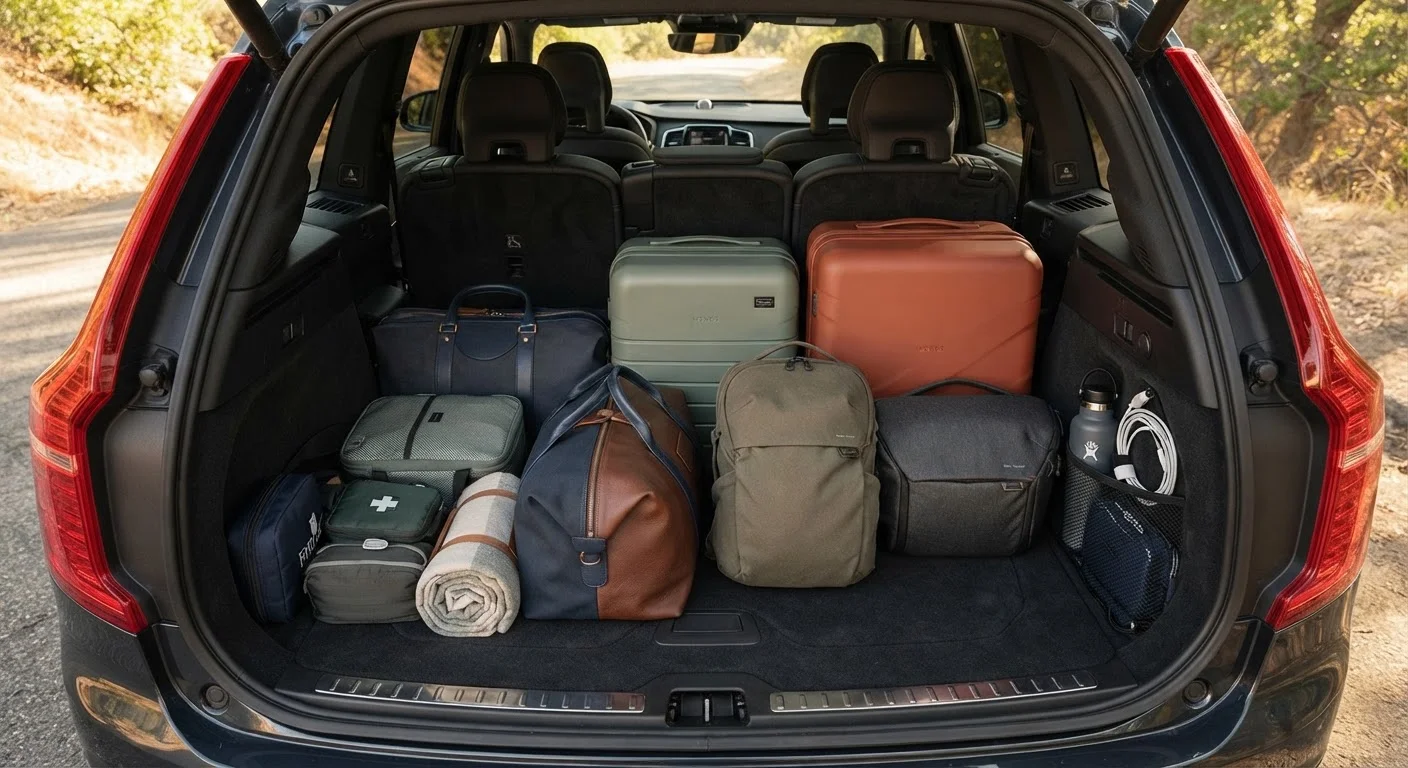
Why How You Pack Matters as Much as What You Pack
Most drivers think about what to bring on a long road trip and give little thought to how those items end up in the car. That's a mistake with real consequences. An unevenly loaded vehicle handles differently — braking distances lengthen, cornering feels sluggish, and tire wear accelerates. Before you throw the first bag in the trunk, it's worth understanding why load placement is a safety issue, not just a comfort one.
Learn how a loaded vehicle affects handling and braking before your next trip. Every vehicle has a Gross Vehicle Weight Rating (GVWR) — the maximum loaded weight it's designed to safely operate at. Exceeding it strains the suspension, brakes, and tires in ways that aren't always obvious until something goes wrong. Your owner's manual lists the GVWR and maximum payload for your specific model.
The good news: smart packing doesn't require less stuff, just smarter placement. The steps below walk through a repeatable system that works whether you're loading a sedan, a minivan, or an SUV.
What you will need
Step-by-Step: Loading Your Vehicle the Right Way
Work through these steps in order. Each one builds on the previous, so resist the temptation to toss everything in and rearrange later — that approach typically produces a lopsided, hard-to-access load.
Sort everything into weight categories before it goes near the car
Lay out all your gear and divide it into three groups: heavy (luggage, tool kits, coolers, camping equipment), medium (clothing bags, shoe bags, soft duffels), and light/fragile (pillows, jackets, electronics, snacks). This visual audit also surfaces what you don't actually need — see the guide to packing only what earns its weight for a systematic way to cut the list down.
Load heavy items first, low and centered
Place the heaviest items directly on the cargo floor, as close to the center of the vehicle as possible and ideally over or just forward of the rear axle. In an SUV or wagon, this means the front portion of the cargo area. In a sedan, it means pushing heavy bags as far forward in the trunk as they'll go. Keep weight balanced side-to-side — a lopsided load affects cornering response.
Layer medium-weight bags on top
Soft duffels and clothing bags go on top of the heavy layer. Because they're compressible, they fill the irregular gaps around harder items. Aim to keep the overall stack below the rear window line so you don't create a blind spot. Use cargo nets or tie-down straps if your vehicle has anchor points — most modern SUVs and wagons have floor hooks for exactly this purpose.
Define your access zones
Think about what you'll need at every stop versus what stays packed until the destination. Create three zones: Drive Zone (within arm's reach of the driver — phone mount, water, sunglasses, toll cash); Stop Zone (rear seat floor or a dedicated bag — snacks, kids' activities, first-aid kit); Destination Zone (trunk or cargo area — luggage you won't touch until arrival). Stick to these zones and you won't be unpacking the entire car at a gas station to find a phone charger.
Secure loose items and check visibility
Walk around the car and look through every window. Any item you can see above the seat backs in the rear is a potential sightline obstruction — rearrange until your rear view is clear. Inside, check that nothing is rolling loose on seats or the dashboard. Use seatback organizers, door pocket inserts, and trunk cargo dividers to lock everything in place. Give the car a firm shake and listen for anything sliding or rattling.
Check tire pressure after loading
Once the car is fully loaded with passengers and gear, check all four tires against the loaded vehicle pressure spec on the driver's door jamb sticker. A heavier car compresses the tires more, and running at the wrong pressure under load increases heat buildup and wear. Top up as needed, then walk around one final time before pulling out. Review the pre-departure checklist to catch anything you may have missed.
The Packing Audit Saves Time Later
Before loading anything, photograph your laid-out gear. This takes thirty seconds and gives you a reference if you suspect something was left behind at a stop. It also forces a final look at whether you've overpacked — if the photo looks overwhelming, something probably doesn't need to come.
Before you load a single bag, run through the vehicle readiness checklist to confirm tires, fluids, and lights are in good shape. A mechanical issue is easier to catch in the driveway than on the interstate.
Common Packing Mistakes and How to Avoid Them
Even experienced road-trippers fall into the same traps. Here's what to watch for:
- Blocking rear sightlines. Cargo stacked above the window line of the rear seats creates a dangerous blind spot. Use the side mirrors as a guide — if they can't compensate for what you've blocked, rearrange or use a roof carrier.
- Loose items in the cabin. In a sudden stop or collision, an unsecured water bottle or laptop bag becomes a projectile. Anything not in a secured cargo area should be in a bag that's clipped or netted in place.
- Forgetting the emergency kit. This belongs in an accessible spot — not buried under a week's worth of luggage. See what an effective roadside emergency kit should contain and plan its location before you pack anything else.
- Overloading a roof carrier. Roof boxes and cargo carriers raise your center of gravity noticeably. Keep the heaviest items at floor level inside the cabin whenever possible. If you do use a roof carrier, distribute weight front-to-back and check the mounting hardware before each leg of the trip.
- Ignoring tire pressure. A heavier load means tires run hotter and at higher effective pressure. Check and set tire pressure to the loaded vehicle spec — typically found on the driver's door jamb sticker — not the tire sidewall maximum.
If you're traveling with children, the family road trip comfort guide covers seating safety and how to allocate in-cabin space when car seats are part of the equation. And once the car is packed, the multi-day driving comfort guide can help you stay sharp behind the wheel for the long haul.
Exceeding Your Vehicle's Payload Limit Is a Safety Issue
Your vehicle's payload rating is a hard engineering limit, not a suggestion. Overloading stresses the suspension, extends braking distances, and can cause tire failure at highway speeds. Check your owner's manual or door jamb sticker for the maximum payload, weigh your gear if you're close to the limit, and leave non-essentials behind rather than risk it.
The content on this site is for informational purposes only and is not a substitute for professional advice. Always consult a qualified professional for guidance specific to your situation.