

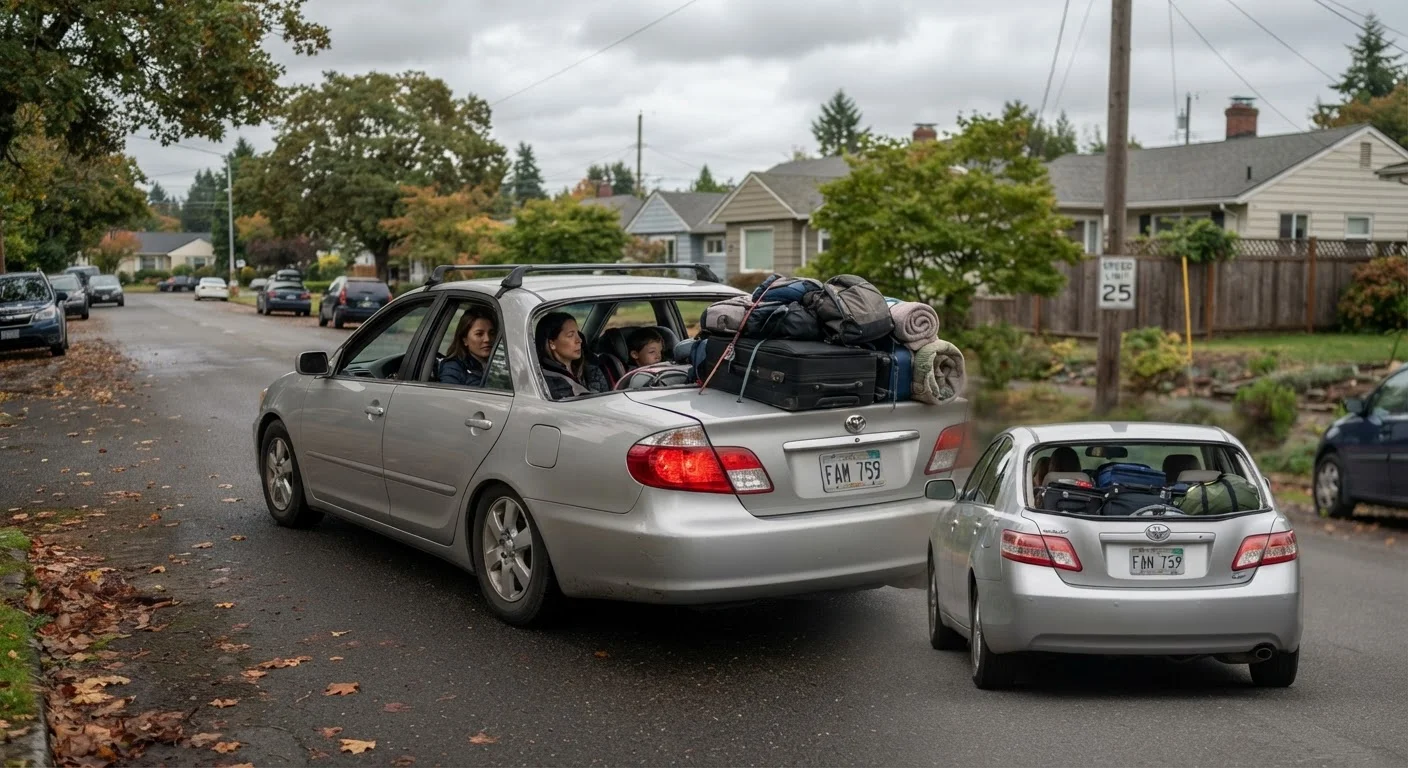
Why Weight Changes How Your Car Behaves
A car is engineered to perform within a specific weight range. Its suspension geometry, brake bias, steering response, and tyre contact patches are all calibrated for that envelope. When you add passengers, luggage, or cargo, you shift the vehicle's dynamics in ways that demand adjusted driving behavior.
The most immediate effect is on braking distance. Weight creates momentum, and momentum is what your brakes must overcome. A vehicle carrying four adults and a loaded boot may need 10–20% more stopping distance than the same car driven empty — a gap that becomes critical in emergencies.
Cornering is equally affected. More mass means higher lateral forces at a given speed, which pushes the tyres closer to their grip limits. Curves that feel effortless in an empty car can induce understeer or body roll with a full load. Reducing cornering speed is not overcaution — it is physics.
10–20%
Increase in braking distance when fully loaded
Engineering estimates based on momentum physics; actual figures vary by vehicle type, speed, and road surface conditions.
~150 lbs
Average payload consumed by one adult passenger
The US average adult weight is approximately 180 lbs; combined with luggage, a full car can consume most of a typical sedan's payload allowance quickly.
4 in 10
Drivers who check tyre pressure before a loaded trip
General driver surveys consistently show most motorists do not adjust tyre pressure for load changes, even when manufacturer guidance recommends it.
Load Distribution Matters as Much as Total Weight
Where weight sits inside the vehicle alters handling as much as how much there is. A boot packed entirely to the rear shifts weight off the front axle, lightening steering and reducing front-tyre grip — the tyres responsible for both steering and, in front-wheel-drive vehicles, primary acceleration.
Uneven side-to-side loading can cause the vehicle to pull subtly in corners, masking a handling problem until it becomes acute. For longer journeys, heavier items should sit low and as close to the center of the vehicle as possible. See our guide to packing a car for a long trip for practical weight-distribution strategies.
Roof racks introduce a specific hazard: raising the center of gravity increases body roll in corners and amplifies the vehicle's response to crosswinds. If you use a rooftop cargo box, reduce your speed through curves and be more deliberate on highway lane changes.
Pack Low and Centered for Better Stability
Place your heaviest items on the floor of the boot, as close to the rear seat as possible, rather than stacking them high or pushing them to the far rear. This keeps the center of gravity lower and distributes weight more evenly between the axles. If you are using a roof rack, transfer anything that can fit inside the cabin to reduce the raised load.
Tyre Pressure and Suspension Under Load
Tyres carry the vehicle's weight. When that weight increases, tyre sidewalls flex more, generating heat and reducing the precision of the contact patch. Under-inflation compounds the problem — a tyre that is already soft will overheat faster under load, accelerating wear and increasing blowout risk.
Your vehicle's door jamb placard typically lists two tyre pressure recommendations: one for normal driving and a higher figure for maximum load. Many drivers overlook this. Before any heavily loaded trip, check the placard and inflate to the loaded specification. Our article on why tyre pressure matters more than you think explains the full safety picture.
Suspension components also work harder under load. Shocks and struts that are worn may allow excessive body movement, making the vehicle feel vague and unpredictable when loaded. This is worth keeping in mind when reviewing your scheduled maintenance intervals, particularly if you frequently carry heavy loads.
Payload Limits Apply to Every Journey
Payload capacity is not just a concern for trucks or SUVs — compact sedans and hatchbacks often have surprisingly modest limits. A mid-size sedan carrying four adults plus luggage may be at or near its payload ceiling. Check your owner's manual or door jamb sticker before assuming your vehicle can handle the load comfortably.
Practical Adjustments Every Driver Should Make
Awareness is the first adjustment. Before a loaded journey, mentally recalibrate your expectations: braking will take longer, the vehicle will feel heavier in corners, and high-speed lane changes require more deliberate inputs. These changes are manageable — they simply require conscious acknowledgment.
Increase your following distance proportionally. A common guideline is to add at least one additional car length of following distance for every significant increase in passenger or cargo load. In wet conditions, this gap should be larger still — wet-weather driving already demands extended stopping distances, and those compound with added weight.
Avoid aggressive acceleration out of corners. In a loaded vehicle, weight transfer during acceleration can unsettle the rear end, particularly in rear-wheel-drive cars. Smooth, progressive inputs — braking, accelerating, and steering — keep the tyres working within their limits.
Finally, check that your load is secured. Loose cargo shifts under braking and cornering, creating unpredictable weight transfer mid-maneuver. A bag sliding hard into the rear door at the wrong moment is more than an inconvenience — it can destabilize the vehicle at a critical point.
Frequently Asked Questions
More weight means more momentum, and momentum requires more force to stop. Even adding two or three adult passengers can noticeably extend braking distance, particularly at highway speeds. Always increase your following distance when the vehicle is heavily loaded.
Yes — most manufacturers recommend higher tyre pressure for loaded conditions. The recommended pressures for different load states are printed on the tyre placard inside your driver's door jamb, not just on the tyre sidewall. Check and adjust before a loaded journey.
Payload capacity is the maximum combined weight of passengers and cargo your vehicle can legally and safely carry. It equals the GVWR minus the vehicle's curb weight. You'll find both figures on the door jamb sticker or in your owner's manual.
Absolutely. Roof-mounted loads raise the vehicle's center of gravity, increasing body roll in corners and reducing stability, especially in crosswinds. Keep roof loads as light and centered as possible, and reduce cornering speeds accordingly.
In the US, exceeding payload or axle weight ratings can be a traffic violation, and it may void your vehicle warranty or complicate an insurance claim after an accident. Regulations vary by state, so check local rules if you regularly carry heavy loads.
The content on this site is for informational purposes only and is not a substitute for professional advice. Always consult a qualified professional for guidance specific to your situation.