

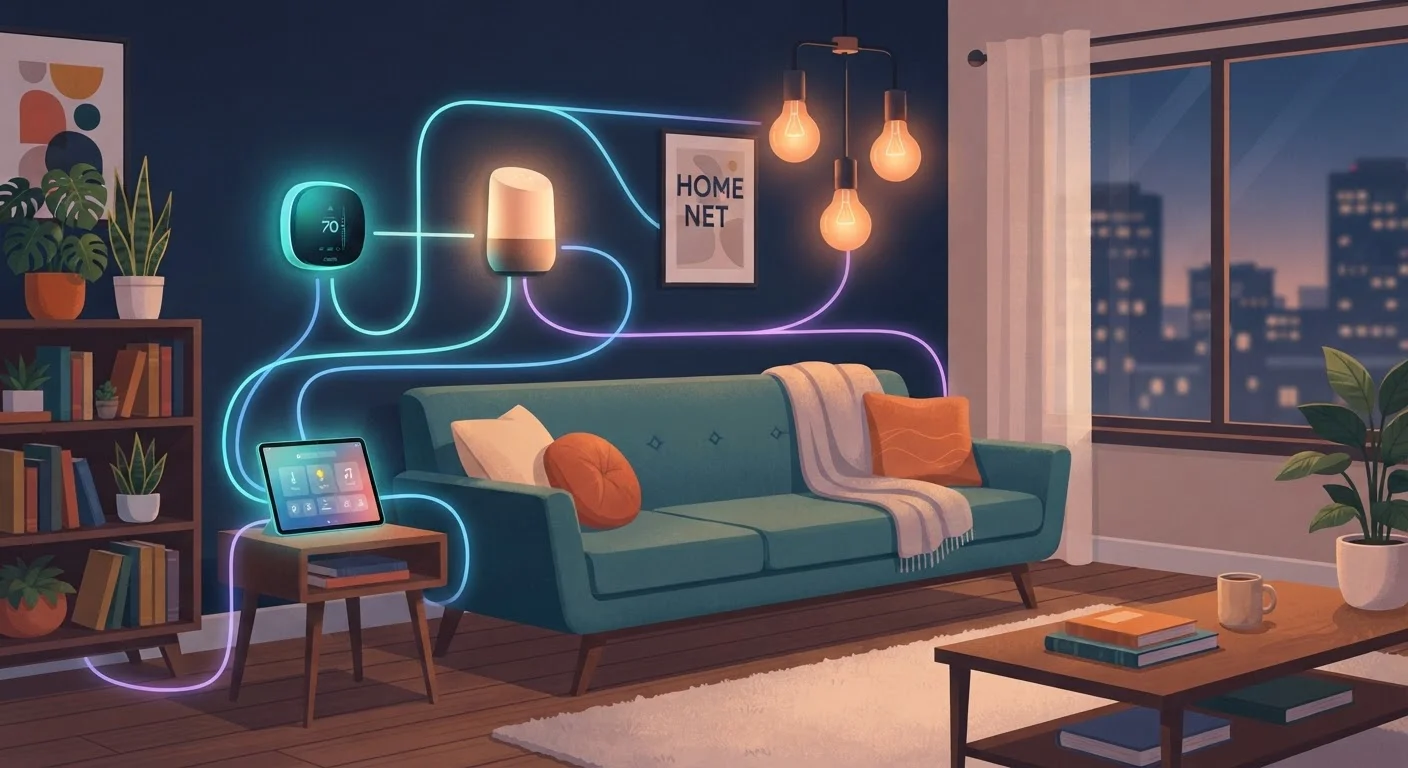
What Is the Internet of Things?
The Internet of Things (IoT) is a broad term for physical objects — thermostats, medical monitors, cargo trackers, agricultural sensors — that are embedded with computing hardware, software, and network connectivity, enabling them to collect and exchange data without requiring constant human input.
The concept isn't new. Machine-to-machine communication has existed in industrial settings for decades. What changed is scale: plummeting hardware costs, ubiquitous wireless networks, and cloud computing made it practical to embed intelligence into almost any object. Today there are estimated to be tens of billions of connected devices globally.
A useful mental model is a three-layer stack: the device layer (the physical sensor or actuator), the connectivity layer (the network carrying data), and the application layer (software that interprets data and triggers responses). Understanding which layer a given problem lives in — hardware, network, or software — makes the technology far less mysterious. For a plain-language primer on the terminology surrounding this space, see the plain-language tech glossary.
How IoT Devices Communicate
Not all IoT devices use the same communication method. The choice of protocol depends on range, power availability, data volume, and cost — tradeoffs that shape what a device can realistically do.
15.9B
Active IoT devices globally
IoT Analytics estimated approximately 15.9 billion active IoT connections worldwide as of 2023, a figure projected to grow significantly through the decade.
~10 years
Typical IoT device lifespan
Many IoT devices are deployed for a decade or more, often outlasting the manufacturer's security support window — a key vulnerability factor.
57%
IoT devices vulnerable to medium- or high-severity attacks
A Palo Alto Networks threat report found that the majority of IoT devices in monitored enterprise environments were vulnerable to medium- or high-severity attacks.
Short-Range Protocols
- Wi-Fi: High bandwidth, familiar to consumers, but power-hungry — best for devices that are always plugged in.
- Bluetooth & Bluetooth Low Energy (BLE): Ideal for wearables and accessories where battery life matters. Range is typically under 100 meters.
- Zigbee & Z-Wave: Mesh protocols popular in smart home ecosystems. Devices relay signals through each other, extending range without a direct router connection.
Wide-Area Protocols
- LTE-M and NB-IoT: Cellular standards designed for low-power devices that need to communicate over long distances — asset trackers, utility meters, remote sensors.
- LoRaWAN: A low-power, long-range radio technology often used in agriculture and city infrastructure where cellular coverage is unreliable or expensive.
One consequence of this diversity is that devices from different manufacturers often speak different languages, leading to the compatibility frustrations many smart home users encounter. The Matter standard and ecosystem fragmentation article explores this problem in depth.
When evaluating a new IoT device, search the manufacturer name alongside 'security vulnerability' before purchasing. A history of unaddressed CVEs (Common Vulnerabilities and Exposures) is a red flag worth knowing about.
IoT security track records are publicly logged in vulnerability databases, and a quick search takes seconds — but most consumers skip this step entirely.
If your router supports it, create a dedicated IoT network segment and connect all smart home devices to it rather than your primary network. This limits lateral movement if any device is compromised.
Network segmentation is one of the most effective and underused home security practices; it requires no ongoing effort once configured.
Where IoT Shows Up in Everyday Life
IoT is already woven into several domains most people interact with regularly.
Home Automation
Smart thermostats, voice-controlled lighting, connected door locks, and leak detectors are the most consumer-visible IoT applications. These devices typically communicate over Wi-Fi or a mesh protocol and are managed through a smartphone app or hub. See the everyday devices hub for practical guides on these products.
Health and Wellness
Smartwatches and fitness trackers continuously log heart rate, activity, and sleep data. Medical-grade IoT includes remote patient monitoring devices — blood glucose meters and cardiac monitors that transmit readings directly to healthcare systems. For a grounded look at what consumer health data actually means, the wearable tech as a health tool article provides useful context.
Transportation and Logistics
Modern vehicles embed dozens of sensors reporting diagnostics, location, and driver behavior. Freight companies use IoT trackers to monitor shipment conditions — temperature, humidity, and shock — in real time.
Agriculture and Industry
Soil moisture sensors, livestock trackers, and automated irrigation systems help farmers reduce water use and improve yields. Industrial IoT (IIoT) monitors equipment health to predict failures before they occur, a practice called predictive maintenance.
Privacy and Security Considerations
IoT Devices Collect Data Continuously
Unlike a laptop or phone you actively control, many IoT devices are always on and always collecting — even when you're not actively using them. Before connecting any new device, take a few minutes to review its privacy settings and data-sharing policy. Disable features you don't use, and check whether data is stored locally or in the cloud.
Every connected device is, at minimum, a data collection endpoint. That data travels across networks, lands in cloud storage, and may be shared with third parties under terms many users don't read. Understanding this flow is foundational to making informed decisions about IoT adoption.
Security risks are real and well-documented. IoT devices have historically shipped with weak default passwords, infrequent firmware updates, and limited encryption — vulnerabilities that have been exploited to compromise home networks, disrupt services, and conduct large-scale attacks. These aren't hypothetical scenarios; major distributed denial-of-service (DDoS) events have been traced to compromised IoT devices.
The data dimension deserves equal attention. A smart speaker may process voice data in the cloud. A connected appliance might share usage patterns with its manufacturer. Understanding what your devices collect — and where that data goes — is part of responsible IoT use. The guide to understanding your online data trail offers a broader framework for thinking about this.
Default Passwords Are a Common Vulnerability
Many IoT devices ship with identical default credentials — usernames like 'admin' and passwords like '1234' — that are widely published online. Always change default credentials immediately after setup. If a device doesn't allow you to change its password, treat that as a significant security concern.
What to Think About Before Connecting More Devices
Adding more IoT devices to a home or workplace isn't inherently problematic, but it benefits from deliberate evaluation. A few practical considerations:
- Update cadence: Does the manufacturer release firmware updates? How long will the device be supported? An unsupported device with unpatched vulnerabilities becomes a liability.
- Data practices: Review the device's privacy policy before setup. What data is collected, where is it stored, and who can access it?
- Network segmentation: Many home routers support a guest network or IoT VLAN (virtual local area network). Isolating smart devices from computers and phones limits the blast radius of a compromised device.
- Necessity: Connectivity adds value when it enables something genuinely useful — automation, remote monitoring, efficiency. A connected device that provides no meaningful benefit over its non-connected counterpart adds attack surface for marginal gain.
For a practical introduction to securing the devices already in your life, the everyday device security guide covers passwords, updates, and permissions in accessible terms. The digital life hub is also a useful ongoing resource for navigating connected technology thoughtfully.
The content on this site is for informational purposes only and is not a substitute for professional advice. Always consult a qualified professional for guidance specific to your situation.