

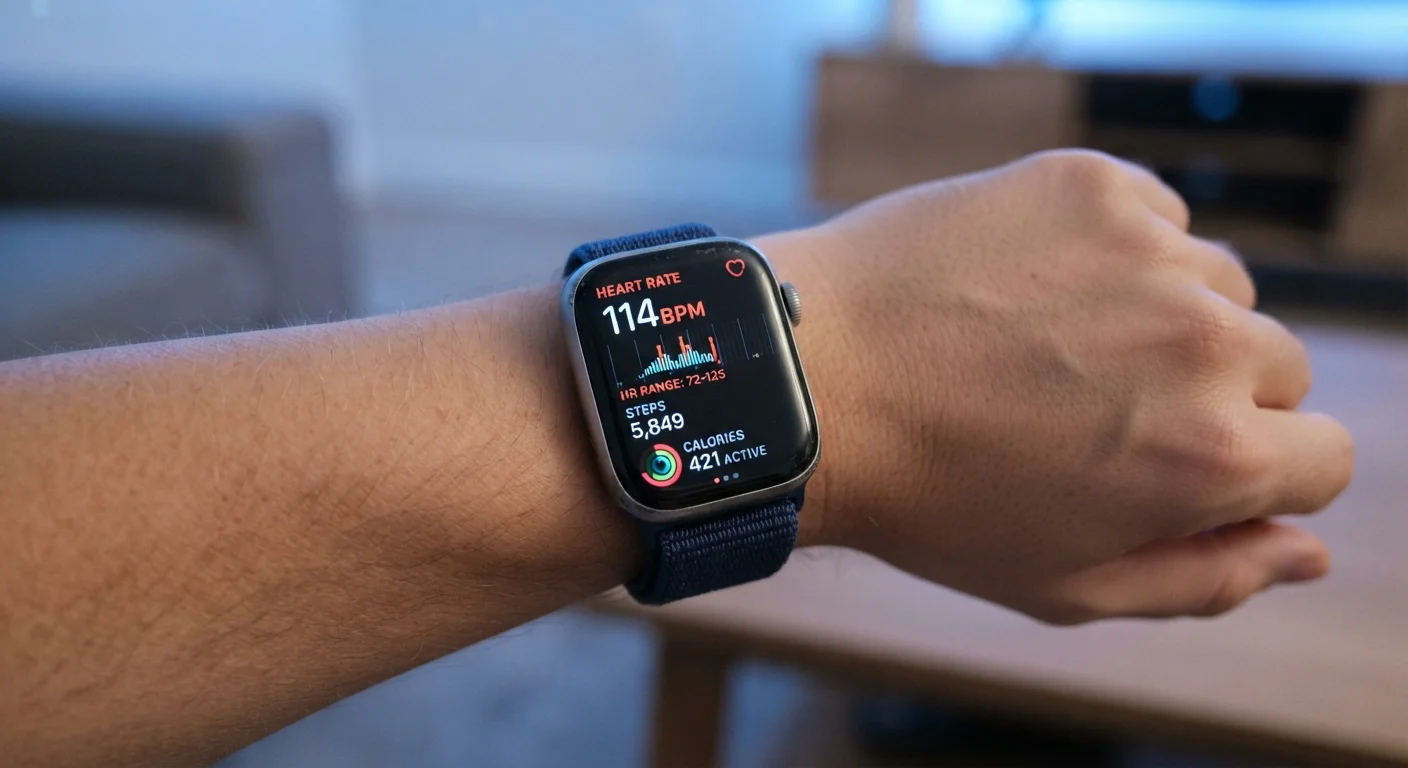
What Your Wearable Is Actually Measuring
Modern fitness trackers and smartwatches collect an impressive array of signals — heart rate, steps, sleep duration, blood oxygen saturation, skin temperature, and in some cases electrocardiogram (ECG) readings. It can feel like wearing a miniature medical lab on your wrist. But understanding what's actually being measured, and how, is essential to interpreting these numbers honestly.
The core technology in most wearables is a light-based sensor called a photoplethysmograph (PPG). It shines light through your skin and measures how much is absorbed by blood vessels as they expand and contract with each heartbeat. This gives an estimate of heart rate and, in some devices, blood oxygen levels. The word estimate is important — consumer-grade sensors are optimized for convenience and cost, not clinical precision.
Step counts rely on accelerometers that detect wrist movement, and algorithms interpret those movements as steps. These algorithms are trained on population averages, which means accuracy can vary with individual gait, activity type, and how snugly the device fits. Calorie estimates combine movement data with personal stats you enter — weight, age, height — and involve substantial modeling assumptions. They can be a useful rough guide, but should not be treated as exact figures.
±2–3%
Typical heart rate accuracy range for consumer wearables
Research published in peer-reviewed journals has found consumer optical heart rate sensors generally perform within this range under controlled, low-movement conditions, with accuracy declining during vigorous exercise.
~30%
Wearable users who share data with their doctor
Surveys by digital health researchers have found a significant minority of wearable users bring device data into clinical conversations, though adoption among healthcare providers varies widely.
1 in 3
US adults who own a fitness tracker or smartwatch
Pew Research Center surveys have consistently found wearable ownership among US adults to be substantial and growing, with smartwatches overtaking dedicated fitness bands in recent years.
Where Wearable Data Is Most Useful
Despite their limitations, wearables offer genuine value — particularly when used to observe patterns over time rather than placing weight on any single reading. A resting heart rate that gradually decreases as you become more physically active is a meaningful trend. A consistently shorter sleep duration during a stressful period can be a useful signal. Noticing that your heart rate spikes sharply during normally easy activities might prompt you to check in with a doctor.
Wearables are most actionable in three areas:
- Cardiovascular trend monitoring: Tracking resting heart rate and heart rate variability over weeks provides a broader picture of recovery and fitness than any daily snapshot.
- Sleep habit awareness: Even imprecise sleep tracking can highlight patterns — late bedtimes, shortened total sleep, or disrupted nights — that are worth addressing.
- Activity accountability: Daily movement reminders and step counts can reinforce habits and serve as a motivational baseline, even if the numbers aren't exact.
Think of wearable data the way you might think about a nutrition label — a useful guide for general awareness, not an instruction manual for your body. Our article on reading nutrition labels without getting lost in the numbers makes a similar point about numbers that look precise but require context to be useful.
Focus on Trends, Not Individual Readings
Rather than reacting to a single out-of-range number, look for patterns that persist over days or weeks. A resting heart rate that is consistently elevated compared to your personal baseline is more informative than one anomalous reading after a poor night's sleep. Most companion apps offer weekly or monthly summaries — these are often more useful than daily dashboards.
The Limits You Need to Know
The most important limitation is one that device manufacturers increasingly acknowledge in their own documentation: consumer wearables are not medical devices in the clinical sense, unless a specific feature has received regulatory clearance (such as FDA clearance for certain ECG or atrial fibrillation detection features in some smartwatches). Even cleared features come with significant caveats about false positive rates and the populations they were validated on.
Blood oxygen readings, marketed heavily during and after the pandemic, have drawn scrutiny. Research has found that optical pulse oximetry — the method used by wearables — can be less accurate for people with darker skin tones, because the light absorption characteristics that algorithms rely on vary with melanin levels. This is a known limitation in both consumer and some clinical devices, and awareness of it matters.
Anxiety is another consideration. There is emerging discussion in healthcare settings about patients becoming overly focused on wearable readings — a phenomenon sometimes called orthosomnia in the context of sleep tracking, where preoccupation with sleep scores can itself disrupt sleep. Wearable data should inform your awareness, not dominate it.
For a broader look at the trade-offs involved when personal physiological data is collected and shared, see our piece on biometric data trade-offs.
When to Bring Data to a Doctor
If your device alerts you to a persistent irregular rhythm, a sustained drop in blood oxygen readings, or you notice any physical symptoms — chest discomfort, dizziness, shortness of breath — these are reasons to seek timely medical evaluation. Do not rely on the device alone to assess severity. A wearable alert is the beginning of a conversation with a clinician, not the end of one.
Your Data, Your Privacy
When a device tracks your heart rate, sleep, menstrual cycle, or blood oxygen continuously, it is generating a detailed record of your body's behavior over time. That data doesn't just live on your wrist — it's transmitted to servers operated by technology companies, often located across different jurisdictions, and governed by privacy policies that most users never read.
Understanding who has access to your health data, whether it can be sold or shared with insurers or employers, and how long it is retained are all legitimate questions worth researching before fully committing to any wearable ecosystem. Our guide on understanding and reducing your online data trail covers how personal data flows in connected devices and what steps are available to limit exposure.
Reviewing the privacy settings within your device's companion app — particularly options to limit data sharing, delete historical data, or opt out of research programs — is a practical first step. The wearable space sits squarely within the broader digital life questions every connected household now faces.
This article is for informational and educational purposes only and does not constitute medical advice. Always consult a qualified healthcare professional regarding any health concerns or before making changes based on data from a consumer device.
Frequently Asked Questions
Some smartwatches have received FDA clearance to flag irregular heart rhythms that may be consistent with atrial fibrillation. However, they screen for irregularities rather than diagnose — a formal diagnosis always requires evaluation by a cardiologist using clinical-grade equipment. False positives do occur, particularly in younger users with no underlying condition.
Consumer-grade pulse oximetry on wearables is generally less accurate than clinical devices, with studies suggesting readings can vary by several percentage points. Factors like skin tone, wrist fit, and movement can affect accuracy. These readings are best used for general trend awareness, not clinical monitoring.
Wearables estimate sleep stages using movement and heart rate patterns rather than brain activity measurements used in clinical sleep studies (polysomnography). They can provide a useful picture of overall sleep duration and consistency, but stage-specific breakdowns should be treated as approximations.
Data ownership and sharing practices vary by manufacturer and are governed by each company's privacy policy. In many cases, data is stored on company servers and may be shared with third parties or used for research. Reviewing the privacy settings and policy of your specific device and app is important before use.
Yes — sharing trends over time can provide useful context for a clinical conversation. Many healthcare providers welcome long-term heart rate or activity data as supplementary information. However, clinicians will rely on validated tests for any formal assessment or diagnosis.
Some studies suggest wearables may detect early signals of conditions like irregular heart rhythm or reduced activity associated with illness. However, they are not validated diagnostic tools, and relying on them alone for early detection could delay appropriate medical evaluation. Use them as a prompt to seek professional guidance, not as a substitute.
The content on this site is for informational purposes only and is not a substitute for professional advice. Always consult a qualified professional for guidance specific to your situation.