

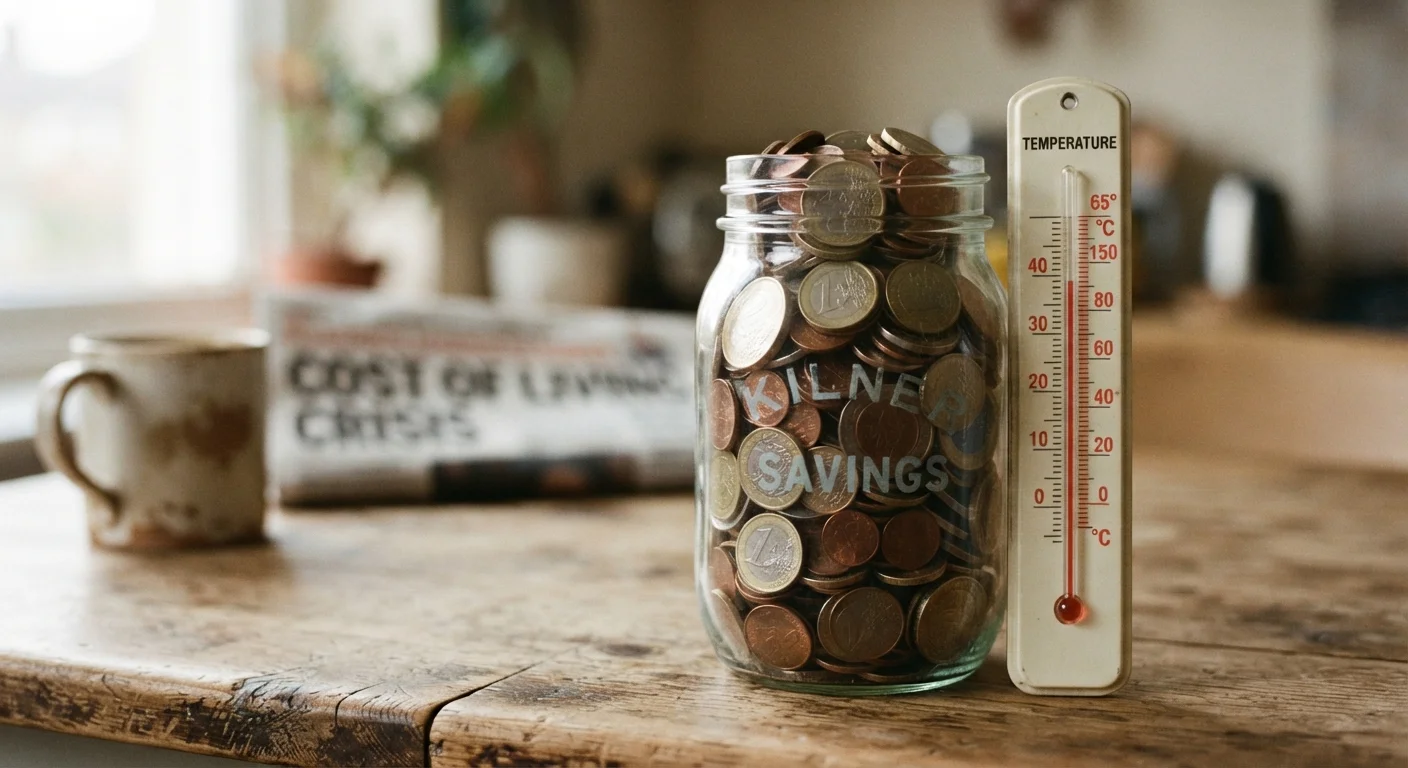
The Invisible Tax on Your Money
Most people think of losing money in concrete terms — a bad investment, a fraudulent charge, an unexpected bill. But one of the most consistent ways money loses value happens invisibly, requiring no dramatic event at all. It's called inflation, and it affects every dollar you hold.
Imagine setting aside $10,000 in a savings account and leaving it untouched for ten years. The balance shown on your statement might be higher thanks to modest interest — but if prices have risen faster than your interest rate, you can actually buy less with that money than you could have a decade ago. The number went up; the value went down.
This isn't a fringe concern or a rare scenario. It's the normal functioning of modern economies, and understanding it is one of the most practical steps any saver can take. For a broader grounding in key financial vocabulary, see essential terms every saver should know before diving deeper.
3.4%
U.S. average annual inflation rate (2023)
According to the U.S. Bureau of Labor Statistics, the Consumer Price Index rose approximately 3.4% over 2023, reflecting ongoing pressure on purchasing power.
~$134
Cost of a $100 basket after 10 years at 3% inflation
Illustrative calculation showing how consistent 3% annual inflation compounds to erode purchasing power over a decade.
Negative
Real return when savings yield trails inflation
When a savings account earns less than the prevailing inflation rate, the real rate of return is negative — meaning purchasing power is declining despite nominal growth.
How Purchasing Power Actually Erodes
Purchasing power refers to how much a given sum of money can buy. When inflation rises, the purchasing power of a fixed dollar amount falls — even if the number itself stays constant.
Here's a simplified way to think about it: if a grocery basket costs $100 today and prices rise 3% annually, that same basket costs roughly $134 after ten years. If your savings earned only 1% per year over that same period, your $100 grew to about $110 — not enough to cover the same basket. That gap is the real cost of low-yield saving in an inflationary environment.
The relationship between the interest rate your savings earns and the current inflation rate determines your real rate of return. When the real rate is negative — meaning inflation outpaces your yield — your savings are effectively shrinking in practical terms, even as the account balance ticks upward.
Why This Matters for How You Hold Money
Not all savings need the same treatment. Money earmarked for an emergency fund or a purchase within the next year serves a fundamentally different purpose than money set aside for retirement in 30 years. The time horizon changes how much inflation risk is acceptable.
For short-term needs, accepting some inflation drag is a reasonable trade-off for liquidity and stability. For longer-term goals, allowing inflation to quietly erode savings over decades can meaningfully reduce financial security. This is one core reason why financial educators often distinguish between saving and investing — though both matter, they solve different problems. Saving and investing serve distinct purposes, and understanding that distinction helps you allocate money more deliberately.
To go further, consider how your money maps to specific goals — matching your money to its purpose is a useful framework for making those decisions.
Match Your Account to Your Time Horizon
For money you won't need for several years, consider options designed to grow at rates closer to or above inflation rather than leaving it idle in a low-yield account. For your emergency fund or near-term savings, prioritise liquidity and stability first. The key is being intentional about which money goes where, and why — rather than treating all savings the same.
Common Habits That Make Inflation's Impact Worse
Inflation is an external force, but certain everyday money habits can amplify its effect. Leaving large sums in accounts with very low yields for extended periods, avoiding any engagement with higher-yield options, or consistently delaying financial planning decisions can all accelerate the erosion of real value.
It's worth noting that inflation erodes value differently from depreciation — which describes physical assets losing worth as they age or wear. Vehicle depreciation is a related concept worth understanding if you own or plan to buy a car.
Some patterns quietly undermine savings progress in ways that compound over time. Reviewing financial decisions that can set back long-term savings can help you identify where adjustments might make a meaningful difference.
Inflation Rates Change Over Time
Inflation is not fixed — it fluctuates based on economic conditions, monetary policy, and supply dynamics. A strategy that worked well in a low-inflation environment may need reassessment when inflation rises significantly. Reviewing your savings approach periodically, particularly during periods of changing economic conditions, is a sound general practice.
This article is for general informational and educational purposes only and does not constitute personalised financial, investment, or tax advice. Readers should consult a qualified, licensed financial adviser before making decisions based on their individual circumstances.
Frequently Asked Questions
When prices rise, the same amount of money buys fewer goods and services than before. If your savings account earns 1% interest but inflation is running at 3%, your money loses roughly 2% of its real purchasing power each year. The nominal balance grows slightly, but what it can actually purchase shrinks.
Cash held in a savings account is insured against bank failure (up to applicable FDIC limits), but it is not protected from inflation. If the interest rate paid is lower than the inflation rate, the real value of those savings declines over time. Safety of principal and preservation of purchasing power are two different things.
The real interest rate is the nominal (stated) interest rate minus the inflation rate. It tells you what your savings are actually earning in terms of purchasing power. A 4% savings rate with 2% inflation gives you a real return of approximately 2% — your money is genuinely growing in value.
No. The impact depends on how and where money is held, and for how long. Short-term cash kept for emergencies faces some inflation risk but serves a different purpose than long-term savings. Money invested in assets that historically outpace inflation — such as diversified market portfolios — may behave differently, though all investments carry risk.
No. Cash savings serve important purposes, especially for emergency funds and near-term goals. The goal is to understand which funds need inflation protection and which don't, then allocate accordingly. Avoiding cash entirely can leave you vulnerable to unexpected expenses.
The content on this site is for informational purposes only and is not a substitute for professional advice. Always consult a qualified professional for guidance specific to your situation.