

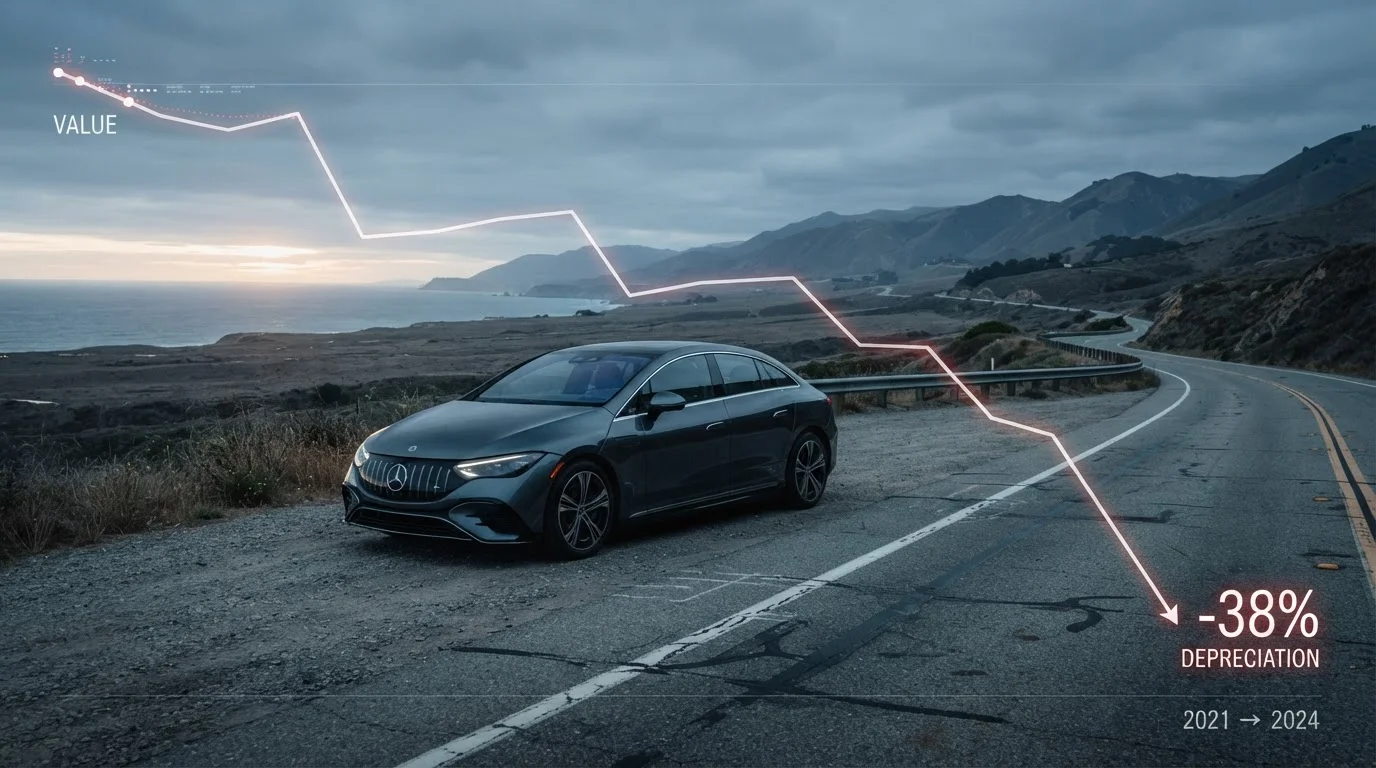
What Depreciation Actually Means for Car Owners
When you buy a new car, you're not just paying for transportation — you're also absorbing a predictable, significant loss in asset value. Depreciation is that loss, and it's one of the most substantial expenses in car ownership, yet one of the least visible at the point of purchase.
Unlike a fuel bill or insurance premium, depreciation doesn't show up as a monthly charge. It's the silent gap between what you paid and what your car is worth today. Understanding this gap is essential to seeing the full financial picture of ownership — explored in detail in the true cost of owning a car.
The Depreciation Curve: Why Early Years Hurt Most
Depreciation doesn't happen at a steady pace. The sharpest losses occur early — commonly 15–25% in the first year — because the vehicle transitions from 'new' to 'used' status, and the market immediately prices in that distinction. By years three to five, the rate of decline typically moderates, and by year seven or beyond, annual losses can become quite modest.
This front-loaded curve has real implications. A car purchased new and sold after two years will have shed a disproportionate share of its total lifetime depreciation. Conversely, buying a vehicle that's already two or three years old allows a different buyer to absorb those steepest early losses instead.
Depreciation Varies Widely by Vehicle Type
Luxury vehicles, sports cars, and certain truck segments can follow very different depreciation curves than mainstream family cars. Some pickup trucks and limited-production models have historically held value unusually well, while high-end luxury sedans often depreciate faster than average. No single rule applies universally — researching the specific vehicle type matters.
Key Factors That Drive or Slow Depreciation
Not all vehicles depreciate at the same rate. Several factors shape how quickly a specific car loses value:
- Mileage: Higher annual mileage signals more wear and shortens projected remaining service life, reducing buyer willingness to pay.
- Condition: Cosmetic damage, worn interiors, and mechanical issues all drag down resale value noticeably.
- Maintenance history: A documented service record demonstrates responsible ownership and builds buyer confidence. Keeping organized car records directly supports this.
- Model popularity and reliability reputation: Vehicles with strong reliability track records and broad used-market demand tend to hold value better.
- Fuel type and technology: As buyer preferences shift — toward or away from certain powertrains — resale values for those vehicle types follow accordingly.
- Color and trim: Neutral, widely preferred colors and well-specified trims generally fare better at resale than unusual configurations.
Driving habits also matter over the long run. Habits that gradually wear out a vehicle can accelerate mechanical decline and push depreciation faster than the calendar alone would suggest.
Using Depreciation Knowledge to Make Smarter Decisions
Depreciation isn't just a concept for accountants — it's a practical tool for owners. If you're weighing whether to buy new or used, understanding where a vehicle sits on its depreciation curve informs which option delivers more value for your situation. Buying versus leasing also plays directly into this calculation, since lease structures are partly built around projected residual values.
For those keeping a car long-term, depreciation still matters — it feeds into insurance replacement valuations and informs the vehicle's eventual trade-in worth. Managing a car across its full lifespan requires keeping depreciation in view at every stage, not just at purchase.
Preserve Value with Consistent Maintenance
One of the most effective ways to slow depreciation is straightforward: keep up with scheduled maintenance and retain every service receipt. A complete paper trail signals to future buyers that the vehicle has been cared for, and that perception has measurable dollar value at resale time.
This article is for general informational purposes only and does not constitute financial or purchasing advice. Consult a qualified financial professional for decisions specific to your circumstances.
Frequently Asked Questions
Most new vehicles lose between 15% and 25% of their value within the first year of ownership. This steep initial drop is partly driven by the shift from 'new' to 'used' status and the availability of manufacturer incentives on similar new models.
Key factors include mileage, overall condition, service history, model popularity, fuel type, and broader market trends. Vehicles with complete maintenance records and lower-than-average annual mileage typically retain more value.
Historically, many electric vehicles depreciated faster than comparable gas-powered models, partly due to evolving battery technology and changing buyer confidence. However, this trend has shifted for some popular EV models as demand has grown — the picture varies significantly by vehicle.
You can't stop depreciation, but you can slow it. Keeping mileage moderate, maintaining the vehicle consistently, avoiding cosmetic damage, and retaining service records all help preserve resale value over time.
Yes, even if you never sell, depreciation matters because it reflects the real economic cost of ownership. It also affects insurance valuations and the vehicle's worth as a trade-in if you change your plans.
Depreciation typically slows noticeably after the first three to five years. By years five to seven, many vehicles have absorbed the steepest value loss and begin to level out, though they continue to lose value gradually.
The content on this site is for informational purposes only and is not a substitute for professional advice. Always consult a qualified professional for guidance specific to your situation.