

Our Verdict
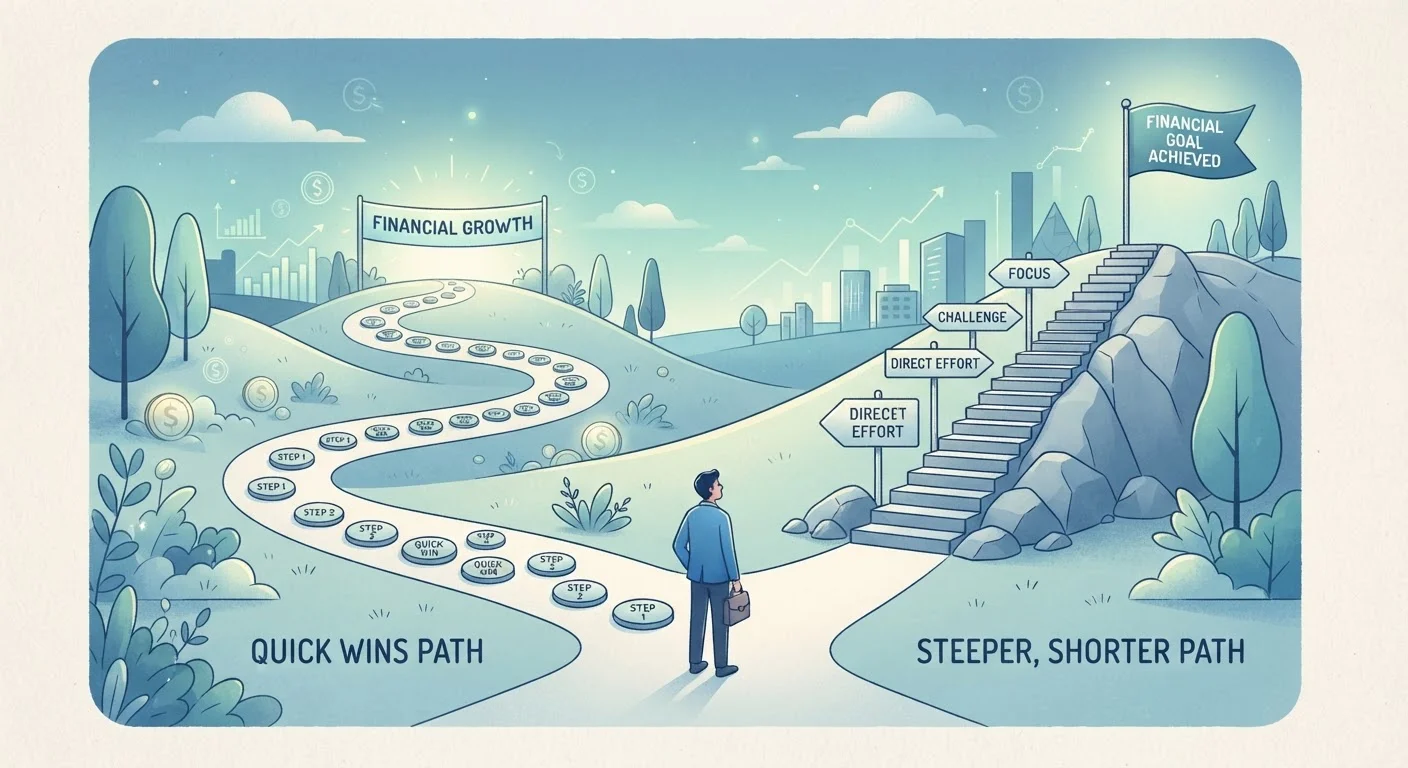
The debt avalanche will typically cost less in total interest, making it the mathematically efficient choice for those who can stay disciplined over a longer timeline. The debt snowball trades some interest savings for motivational momentum, which can be the deciding factor for people who have struggled to maintain repayment plans in the past. The best strategy is ultimately the one you will stick with.
| Best for | Recommended |
|---|---|
| Those prioritizing minimum total interest paid | Debt Avalanche |
| Those who need early wins to stay motivated | Debt Snowball |
| Those with high-interest debt and stable cash flow | Debt Avalanche |
| Those with many small balances and a history of abandoned plans | Debt Snowball |
How Each Method Works
Both the debt snowball and debt avalanche are structured repayment strategies that share a common mechanic: you pay the minimum on every debt each month, then direct any additional available funds toward one designated priority account. The difference lies entirely in how that priority account is chosen.
Debt Snowball: You rank your debts from the smallest balance to the largest, regardless of interest rate. You attack the smallest balance first. Once it's paid off, you roll that freed-up payment into the next smallest, creating an accelerating effect — the "snowball." This approach was popularized in personal finance circles as a motivational tool, not a mathematical one.
Debt Avalanche: You rank debts from the highest interest rate to the lowest. Extra payments go to the highest-rate debt first. When that's gone, you redirect the full payment to the next highest rate. Because you're eliminating the most expensive debt first, you reduce the total interest accruing across your entire debt load faster than any other sequencing approach.
Understanding how revolving credit and instalment loans differ is useful context here, since interest structures vary significantly by debt type and affect which method has the most impact.
| Debt Snowball | Debt Avalanche | |
|---|---|---|
| Repayment order | Smallest balance first | Highest interest rate first |
| Total interest paid | Typically higher | Typically lower |
| Time to first payoff | Usually faster | Can take longer |
| Motivational structure | Strong — frequent wins | Delayed — requires patience |
| Mathematical efficiency | Lower | Higher |
| Best suited to | Behaviorally-driven planners | Disciplined, rate-focused planners |
The Real Cost Difference
The avalanche method almost always produces a lower total interest cost — sometimes by hundreds or even thousands of dollars, depending on balances, rates, and repayment timeline. The difference is especially pronounced when high-interest debts (such as credit cards carrying 20%+ APR) represent a significant share of what you owe.
The snowball, by contrast, may extend the time you carry high-rate balances. If your smallest debt also carries a low interest rate, you might be leaving a high-rate account accruing interest for months or years longer than necessary.
20%+
Typical credit card APR in the US
Federal Reserve data shows average credit card interest rates have risen sharply in recent years, making high-rate debt expensive to carry.
~$6,000
Average US credit card balance per holder
According to Federal Reserve consumer credit data, outstanding revolving credit balances remain substantial across American households.
That said, the gap narrows considerably if debts are close in size or if your highest-rate debt is also your smallest balance — in that case, both methods point to the same account first.
People who are responsible borrowers who still accumulate significant debt often find that a pure math-first approach missed the behavioural dimension of why balances grew in the first place.
The Psychology Factor
Research in behavioral economics consistently shows that people are motivated by visible progress and concrete milestones. The debt snowball exploits this dynamic deliberately. Each paid-off account is a tangible achievement — one fewer creditor, one fewer bill. That sense of forward movement can reinforce the habit of sticking to a repayment plan, particularly in the early months when financial discipline is hardest to sustain.
The avalanche demands patience. You may be directing extra payments toward a large, high-rate balance for a year or more before you see that account reach zero. For some people, that extended runway feels discouraging.
Hybrid Approach: Combine Both Methods
If you have one or two very small balances (under a few hundred dollars), consider clearing them quickly to simplify your debt list — then switch to strict avalanche order for the remainder. This gives you an early motivational win without materially increasing your total interest cost. Always ensure minimums on every account are covered regardless of which sequence you follow.
The honest reality is that a slightly suboptimal strategy executed consistently outperforms the theoretically optimal strategy that gets abandoned. If you've tried debt repayment plans before and dropped them, the snowball's motivational structure is not a gimmick — it may be a practical necessity.
For a broader view of how debt strategy should evolve across different life stages, see managing debt and credit across every stage of adult life.
Choosing Your Path and Getting Started
Before selecting a method, gather a complete picture of your debts: current balance, minimum payment, and interest rate for each. List them in both snowball order (smallest to largest balance) and avalanche order (highest to lowest rate). Compare the two lists — if they look similar, either method will perform similarly. If they diverge significantly, weigh your own motivational style honestly.
From there, the mechanics are straightforward: calculate your total minimum payments across all debts, identify what surplus you can reliably direct to your priority account each month, and commit to that amount. Revisiting your monthly budget is often necessary to find or create that surplus.
If your debt situation involves multiple account types or you're considering restructuring, it's worth understanding what debt consolidation does and doesn't fix before deciding whether a structured payoff plan or consolidation — or a combination — fits your situation best.
And if you're unsure whether your debt load is still manageable, reviewing the early warning signs that debt is becoming a problem can help you calibrate urgency and whether professional guidance from a licensed credit counselor or financial adviser may be appropriate.
This article is for general informational and educational purposes only and does not constitute personalized financial or legal advice. Consult a qualified financial professional regarding your specific circumstances.
The content on this site is for informational purposes only and is not a substitute for professional advice. Always consult a qualified professional for guidance specific to your situation.