

Our Verdict
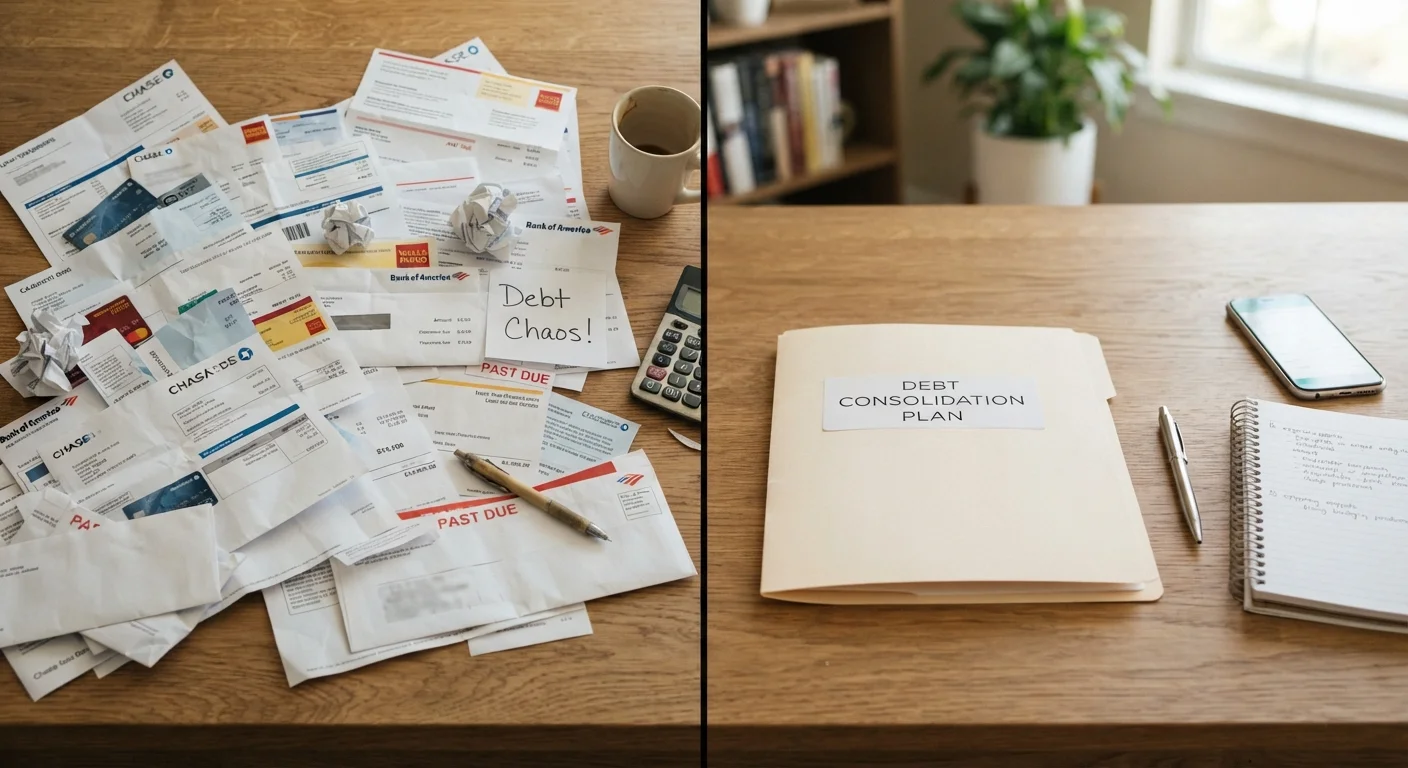
Debt consolidation is a legitimate financial tool that can lower interest costs and simplify repayment — but only when used strategically. It works best as part of a broader plan that includes changed spending habits and a clear path to paying down principal. Used without that discipline, it risks becoming a costly delay rather than a real solution.
Best suited to borrowers with good-to-fair credit who carry multiple high-interest debts, have stable income, and are committed to not accumulating new balances during repayment.
What Debt Consolidation Actually Is
Debt consolidation means combining multiple debts — typically unsecured debts like credit cards, medical bills, or personal loans — into a single new loan or repayment plan. The goal is usually to secure a lower interest rate, reduce the number of monthly payments you manage, or both.
The two most common methods are a personal consolidation loan (a fixed-rate loan used to pay off existing balances) and a balance transfer credit card (which moves balances to a card with a low or zero introductory rate). Debt management plans offered through nonprofit credit counseling agencies are a third route that doesn't require taking on new credit. Each approach has different eligibility requirements, costs, and trade-offs.
To understand how consolidation fits into broader debt dynamics, it helps to recognize why even responsible borrowers can end up with unmanageable debt — structural and behavioral factors that consolidation alone won't resolve.
This article is for general informational purposes only and does not constitute personalized financial or legal advice. Consult a licensed financial professional before making decisions about your debt.
The Genuine Benefits
When used appropriately, consolidation offers real advantages worth considering.
Simplifies repayment into one monthly payment
Managing five separate due dates, minimum amounts, and creditors creates cognitive load and increases the chance of a missed payment. A single consolidated payment reduces that friction considerably.
Can lower your effective interest rate
Qualifying borrowers may be able to replace high-rate revolving balances with a fixed-rate loan at a lower APR, reducing the total cost of repaying the debt over time.
Fixed payoff timeline adds structure
Unlike revolving credit, a personal loan has a defined end date. That structure can improve planning and provide psychological motivation that open-ended balances rarely do.
May reduce monthly payment amount
A longer loan term can lower the required monthly payment, easing short-term cash flow — though this typically means paying more interest overall if the term is extended significantly.
If your existing debts carry rates of 20–25% or more — common with revolving credit card balances — a consolidation loan at a meaningfully lower rate can reduce the total interest paid over the life of the debt. That's real money saved, not just convenience. For readers interested in structured repayment alternatives, the debt snowball and avalanche methods offer a comparison of approaches that don't require new credit.
The Limitations You Shouldn't Overlook
Consolidation addresses the structure of your debt, not its size. The principal doesn't shrink — only the terms change. That distinction matters more than most marketing language suggests.
Does not reduce the principal you owe
Consolidation restructures debt terms; it doesn't forgive any amount. If you owe $18,000 across five cards, you still owe $18,000 after consolidation — just to a different lender.
Risk of accumulating new debt on cleared accounts
Once credit cards are paid off through consolidation, the available credit is still there. Resuming spending on those accounts can leave borrowers worse off than before, carrying both a consolidation loan and new balances.
Fees and costs can offset interest savings
Origination fees on personal loans, balance transfer fees, or prepayment penalties can erode the financial benefit. It's worth calculating the all-in cost before assuming consolidation is cheaper.
Approval depends heavily on credit score and income
The most favorable consolidation rates require good-to-excellent credit. Borrowers with lower scores may only qualify for rates comparable to — or higher than — what they currently pay.
Longer terms can cost more in total interest
Stretching repayment over a longer period to lower monthly payments often results in paying significantly more interest over the life of the loan, even at a lower rate.
It's also worth knowing that the type of debt you're consolidating matters significantly. Moving unsecured balances into a secured loan (such as a home equity product) changes your risk profile substantially — a default that was once a credit hit could become a loss of collateral.
Balance Transfers Come With Caveats
Introductory 0% APR offers on balance transfer cards can be powerful tools — but the promotional rate typically lasts only 12 to 21 months. Any balance remaining after that period reverts to the card's standard rate, which can be high. These products work best for borrowers who can realistically pay down the transferred balance within the promotional window.
How to Assess Whether It's Right for You
A consolidation strategy is more likely to be beneficial when several conditions are present: your credit score qualifies you for a rate lower than what you currently pay, you have stable income to cover the new payment, and you have a plan to avoid accumulating new balances on the accounts you just paid off.
~20%
Average credit card APR in the US
Federal Reserve data has consistently shown average credit card interest rates hovering near or above 20%, making high-rate balances a significant consolidation candidate for qualifying borrowers.
3–7 years
Typical personal loan repayment term
Most consolidation loans are structured with repayment terms in this range, meaning a clear end date that revolving credit balances typically lack.
If you're already noticing signs of strain — minimum-only payments, missed due dates, or rotating which bills to pay — those signals deserve attention before they escalate. Consolidation may still be useful in that context, but it's worth pairing with a longer-term approach to responsible borrowing that builds sustainable credit habits. For debts already in default or collections, the picture changes further — understanding what happens when debt reaches collections is an important step before acting.
The content on this site is for informational purposes only and is not a substitute for professional advice. Always consult a qualified professional for guidance specific to your situation.