

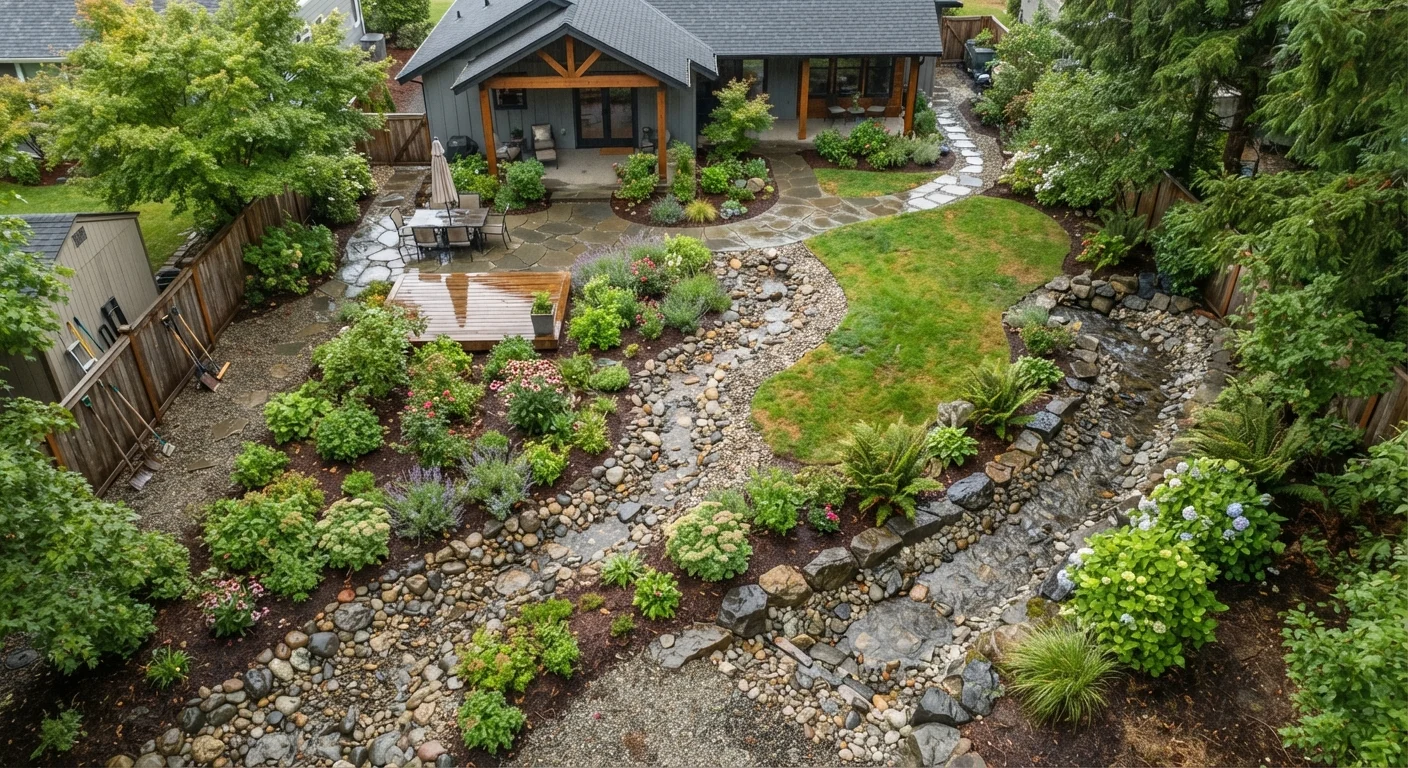
How a Home Drainage System Is Structured
Most homes have three interconnected drainage systems working simultaneously: a surface drainage system that moves rainwater off hard ground and lawns, a stormwater system that channels roof runoff through gutters and downspouts, and a wastewater system that carries used water from sinks, showers, and toilets to the municipal sewer or a private septic tank.
Each system is designed to operate independently, but failures in one can quickly stress the others. Understanding how they connect — and where each one begins and ends — is the foundation of effective home maintenance. Knowing which drain connects to which system also tells you whether a blockage is a DIY fix or a call-a-professional situation.
98%
Basement water problems from exterior sources
According to the American Society of Home Inspectors, an estimated 98% of basements will experience some form of water intrusion over their lifetime, most often from surface or groundwater.
6 in / 10 ft
Minimum recommended foundation slope
The International Residential Code recommends a minimum grade of 6 inches of drop over the first 10 feet away from a home's foundation to redirect surface water.
¼ in/ft
Standard drain pipe slope for proper flow
Most plumbing codes specify a slope of ¼ inch per foot for horizontal drain lines to maintain adequate velocity and prevent sediment buildup.
Surface Water and Stormwater Drainage
Surface water drainage begins at ground level. When rain falls faster than soil can absorb it, water must travel somewhere. Properly graded yards slope away from the foundation — generally at least 6 inches of drop over the first 10 feet — to direct runoff toward the street, a swale (a shallow landscaped channel), or a drainage easement.
Stormwater drainage starts at your roof. Gutters collect runoff and channel it to downspouts, which should discharge water at least 4–6 feet from the foundation via extenders or underground drain pipes. Blocked gutters overflow against the fascia board, saturate the soil near the foundation, and can cause basement moisture issues over time.
Your outdoor spaces design has a direct impact on drainage. Patios, decks, and paved areas create impervious surfaces that increase runoff volume. Adding permeable pavers or gravel beds can reduce surface pooling noticeably. Soil composition also plays a role — understanding your garden's soil type helps explain why some areas drain quickly while others stay saturated.
Direct Downspouts Away From the Foundation
Downspout extenders are inexpensive and easy to install, yet they are one of the most effective ways to protect your foundation from water intrusion. Position the extender so water discharges onto a sloped lawn or into a rain garden at least 5–6 feet from the house. Check the discharge point after heavy rain to confirm water is flowing in the right direction.
Wastewater and Interior Drain Lines
Inside the home, every fixture — sink, tub, toilet, dishwasher, washing machine — drains through a network of branch drain lines that converge into a main drain stack. This stack runs vertically through the house and exits horizontally as the building drain, which connects to either the municipal sewer main under the street or your property's septic system.
Drain lines rely on gravity and correct pipe slope (typically ¼ inch per foot) to move waste efficiently. Each fixture also connects to a P-trap, the curved pipe section visible under sinks, which holds a small water seal that prevents sewer gas from entering the home. Vent pipes running to the roof allow air into the system, maintaining the pressure balance that keeps drains flowing freely.
If multiple fixtures in your home drain slowly at the same time, skip the individual drain treatments and go straight to inspecting the main stack cleanout. A partial main-line blockage mimics individual clogs but won't clear with standard drain solutions.
Branch-line clogs typically affect a single fixture; simultaneous slowdowns across different rooms reliably indicate a problem closer to the main drain or sewer connection.
When reseating a toilet or replacing a P-trap, run water for 30 seconds after reassembly and check the joint visually for 24 hours before closing up any access panels. Slow seeps at fittings are far easier to fix before walls are sealed.
Compression fittings and rubber seals sometimes require the weight of water flow to seat fully — a visual check after full water pressure is restored catches the vast majority of installation leaks.
Common Drainage Problems and Warning Signs
Recognizing early warning signs can prevent minor inconveniences from becoming costly repairs:
- Standing water near the foundation after rain indicates poor grading or a blocked downspout extender.
- Slow interior drains suggest partial clogs from hair, grease, or soap buildup in branch lines.
- Gurgling sounds from drains or toilets after water runs elsewhere signal a venting problem or a developing main-line blockage.
- Sewage odor indoors often means a dried-out P-trap (common in guest bathrooms) or a cracked vent pipe.
- Basement dampness or efflorescence (white mineral deposits on concrete walls) points to persistent water pressure against the foundation.
Persistent moisture inside walls or unexplained mold growth can also relate to drainage issues. See our guide on condensation, mould, and ventilation for more on how moisture migrates through a home.
Never Ignore Sewage Odors or Backups
A sewage odor indoors or any backup of wastewater into fixtures is a potential health hazard. Raw sewage contains pathogens that pose serious risks. Avoid using affected fixtures, ventilate the area, and contact a licensed plumber promptly. Do not attempt to clear a sewage backup with household tools unless you have professional-grade protective equipment.
Preventive Maintenance You Can Do Yourself
Most drainage failures are preventable with a consistent maintenance schedule. Include these tasks in your seasonal home checkups — our seasonal home maintenance guide offers a full property-wide checklist.
- Clean gutters and downspouts at least twice yearly — in late spring after seed season and in late fall after leaf drop. Check that downspout extenders are properly positioned.
- Inspect grading around the foundation each spring. Soil settles over time; add topsoil or adjust mulch beds so the ground slopes away from the house.
- Run water in infrequently used fixtures every few weeks to keep P-traps from drying out and allowing sewer gas entry.
- Pour a kettle of hot water down kitchen drains monthly to soften grease buildup before it accumulates into a full clog.
- Check window wells and basement drains for debris after storms.
Roof condition directly affects how well your stormwater system functions — damaged flashing or missing shingles can direct water behind gutters entirely. Review what homeowners are responsible for in roof maintenance to understand what you can safely inspect yourself.
When to Call a Licensed Professional
Some drainage work is straightforwardly DIY; other tasks involve safety, structural, or regulatory considerations that require a licensed plumber or drainage contractor.
Call a professional when you encounter:
- Repeated or whole-house drain backups, which suggest a main sewer line blockage or root intrusion
- Sewage backup into fixtures, which is both a health hazard and often a sign of a serious line failure
- Any work requiring excavation of underground drain pipes
- Installation of a French drain, sump pump, or exterior waterproofing system
- Signs of foundation cracking correlated with persistent moisture
In most US jurisdictions, new drain connections, sewer line replacements, and interior rough-in plumbing require permits and inspections. Always verify your local code requirements before beginning any drainage project beyond basic cleaning and grading.
Permits Are Often Required for Drainage Work
Installing or replacing underground drain pipes, connecting to municipal sewer lines, or adding a sump pump typically requires a permit and inspection in most US jurisdictions. Working without a permit can create liability issues, void homeowner's insurance claims related to that work, and cause problems at the time of sale. Check with your local building department before starting any significant drainage project.
This article is for general informational and educational purposes only. It is not a substitute for advice from a licensed plumber, contractor, or local code authority. Drainage and plumbing regulations vary by municipality — always verify requirements with your local building department before undertaking any regulated work.
The content on this site is for informational purposes only and is not a substitute for professional advice. Always consult a qualified professional for guidance specific to your situation.