

Why Maintenance Myths Are Expensive
Home maintenance advice is everywhere — passed down from neighbors, repeated in online forums, and occasionally inherited as family wisdom. Some of it is sound. Much of it, however, is grounded in assumptions that lead homeowners to delay, skip, or mishandle upkeep in ways that quietly compound into significant costs.
The most dangerous maintenance myths aren't obviously wrong. They feel reasonable on the surface: a new home should be fine for a few years, a small issue can wait, and if the system is running it must be okay. Each of these beliefs has a financial consequence — and sometimes a safety one. Understanding where these ideas break down is the first step toward a more confident, cost-effective approach to home care.
For a structured view of what to check throughout the year, our seasonal home maintenance guide provides a practical season-by-season checklist.
Common Myths, Corrected
The following myth-and-fact pairs address the misconceptions that most commonly lead homeowners to delay necessary maintenance or take an approach that worsens the problem over time.
Myth
New homes don't need maintenance for the first few years.
Fact
New construction homes require routine upkeep from day one, including HVAC filter changes, caulking checks, and gutter clearing.
It's easy to assume a brand-new home is in perfect condition and can be left alone. In reality, new builds settle — literally. Foundations shift slightly as soil compacts, which can create gaps around windows, doors, and utility penetrations. Grout, caulk, and sealants in wet areas also need monitoring within the first year. Warranty coverage may depend on you reporting issues promptly, so staying attentive early is especially important.
Myth
You only need to service your HVAC system when it stops working properly.
Fact
Annual professional HVAC servicing maintains efficiency, extends equipment life, and helps catch refrigerant leaks or failing components early.
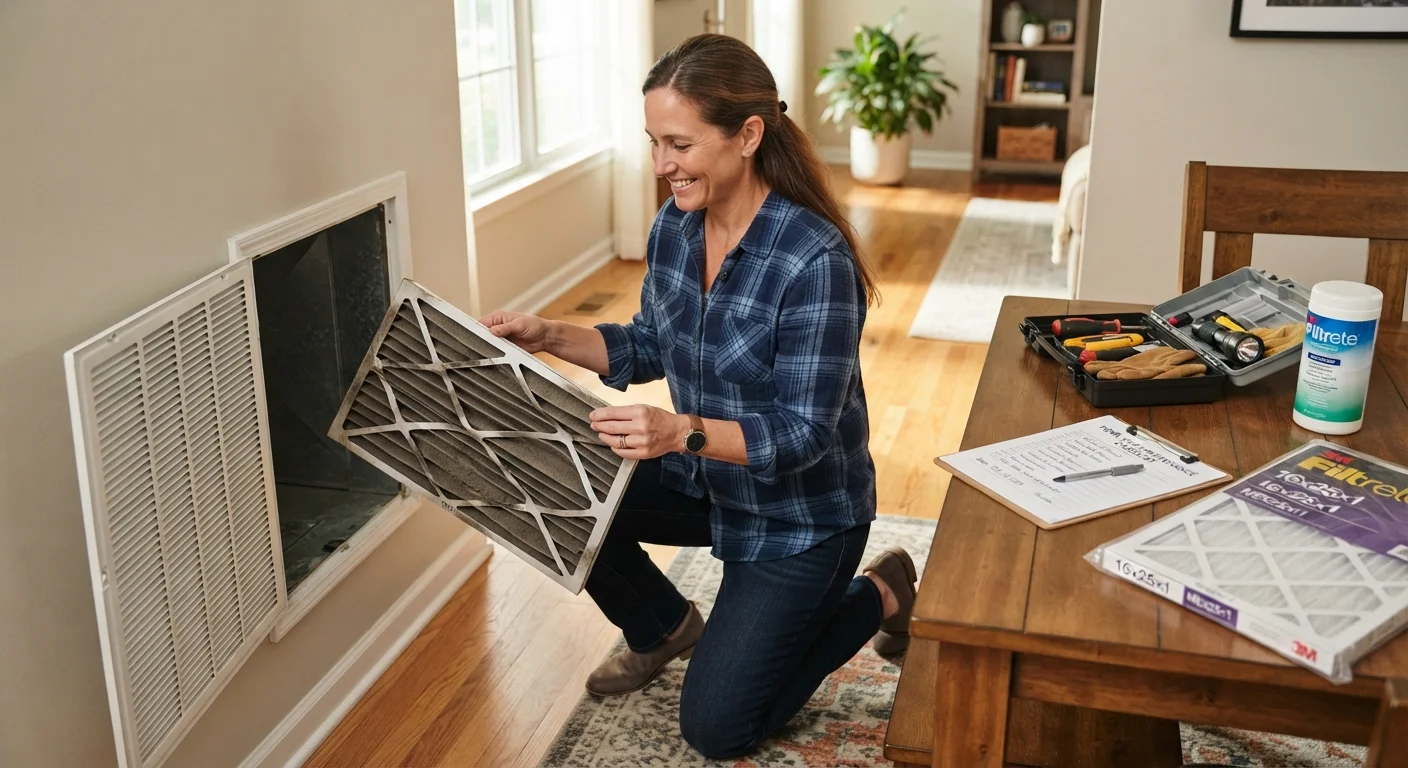
Waiting for a breakdown is one of the more expensive maintenance strategies a homeowner can adopt. HVAC systems running with dirty coils, low refrigerant, or worn belts consume more energy and work harder to reach set temperatures. According to the U.S. Department of Energy, a well-maintained system can use significantly less energy than a neglected one. Filter changes — typically every 1 to 3 months depending on filter type and household conditions — are something most homeowners can handle themselves. For a broader overview of service intervals, see our HVAC filters and servicing guide.
Myth
A small roof leak is minor and can wait until it gets worse.
Fact
Even small roof leaks can lead to structural wood rot, mold growth, and insulation damage if left unaddressed.
Water is patient. A pinhole-sized gap in flashing or a missing shingle can allow moisture to accumulate in the roof deck over months before any visible staining appears on interior ceilings. By that point, repairs often extend well beyond the roof surface itself. Homeowners should inspect their roofs at least twice a year — from the ground using binoculars, or by hiring a licensed roofer. Our guide to roof maintenance responsibilities explains what you can safely observe yourself and when a professional must be called.
Myth
Gutters only need cleaning if you can see debris from the ground.
Fact
Gutters can be fully obstructed with fine sediment and organic material that is invisible from street level but still causes overflow and damage.
Clogged gutters are a leading cause of foundation water intrusion, fascia rot, and basement moisture. Fine debris — including shingle granules, pollen, and compacted leaf matter — can block downspout openings without being visible from below. Most homes benefit from gutter cleaning at least twice a year, typically in late spring and late fall. For a full explanation of why this task matters more than many homeowners realize, see why gutters matter more than most homeowners realise.
Myth
Painting over mold or mildew is an effective fix.
Fact
Paint does not kill mold — it only conceals it temporarily while the underlying colony continues to grow and spread.
Mold painted over without remediation will eventually bleed through most standard paints and continue damaging the substrate beneath. Effective mold management requires identifying the moisture source, properly remediating affected materials, and correcting ventilation problems. Certain mold types may also pose health concerns, particularly for people with respiratory sensitivities. If you are dealing with more than a small, isolated surface spot, consult a professional remediation service. Our article on condensation, mould, and ventilation covers how moisture moves through a home and practical ways to reduce it.
Myth
If something isn't broken, it doesn't need to be checked.
Fact
Many home systems fail gradually and silently — routine inspection is the only reliable way to catch problems before they become emergencies.
Smoke alarm batteries, water heater anode rods, expansion tanks, and pressure relief valves are among the components that can degrade without any visible symptom until failure occurs. Reactive repair almost always costs more — in both dollars and disruption — than scheduled upkeep. Our guide to overlooked maintenance tasks details which systems are most likely to be forgotten until something goes wrong.
DIY Has Limits — Know When to Call a Pro
Tasks involving electrical panels, gas lines, structural components, or roofing typically require licensed professionals and may need permits. Attempting these without proper credentials can create safety hazards and void homeowner's insurance. Always verify local code requirements before starting any significant repair.
Tracking what has been inspected, serviced, or repaired is as important as doing the work itself. A home maintenance log helps you identify patterns, stay ahead of service intervals, and document work that may affect a future home sale or insurance claim.
Building a More Reliable Maintenance Habit
Correcting these myths isn't just about fixing individual misconceptions — it's about shifting from a reactive to a preventive mindset. The difference between preventive maintenance and reactive repairs may seem subtle, but the cost gap over a decade of homeownership is substantial.
1%
Annual home value recommended for maintenance spending
A commonly cited rule of thumb among housing researchers suggests budgeting roughly 1–2% of a home's value annually for maintenance and repairs to avoid deferred-cost buildup.
Up to 30%
Energy savings from proper HVAC maintenance
The U.S. Department of Energy indicates that regular HVAC upkeep — including clean filters and annual servicing — can meaningfully reduce a system's energy consumption compared to a neglected unit.
Start with the highest-impact, lowest-effort tasks: changing HVAC filters on schedule, cleaning gutters each fall and spring, testing smoke alarms monthly, and inspecting visible caulk and sealant annually. From there, build outward into seasonal checks, professional service appointments, and periodic inspections of less-visible systems like the water heater, attic insulation, and crawl space moisture levels.
When a task involves electrical, structural, or gas work, always defer to a licensed professional. Our guide to DIY repair limits outlines clearly where that line falls.
Deferred Maintenance Costs More Over Time
Delaying small repairs rarely saves money — it typically increases the eventual repair cost and may allow secondary damage to develop. A minor roof issue that costs a few hundred dollars to patch can become a multi-thousand-dollar repair if water infiltration is left to progress. When in doubt, get a professional assessment early.
The content on this site is for informational purposes only and is not a substitute for professional advice. Always consult a qualified professional for guidance specific to your situation.