

Summary
22 items · 1.5–3 hours spread across 1–2 weekends
Why End-of-Season Prep Matters
Skipping the fall garden shutdown is a common shortcut that often costs more effort in spring. Leaving spent plants in place, failing to drain irrigation lines, or neglecting soil health can mean pest pressure, disease carryover, cracked hoses, and compacted, depleted beds waiting for you when the weather warms again.
Think of fall prep as an investment in a stronger return. A thoughtful shutdown protects your existing plants, keeps beneficial soil biology active through winter, and puts your outdoor space — whether a full backyard, a raised bed setup, or a balcony container garden — in the best possible shape for spring. This checklist walks you through each key area so nothing gets overlooked.
This work also fits naturally into a broader seasonal maintenance routine. See our seasonal home maintenance guide for a full property-wide checklist that pairs well with these garden-specific steps.
Check Your First Frost Date Before You Start
Frost dates vary significantly by region and even by microclimate within a single yard. Starting shutdown tasks too early can interrupt beneficial late-season pollinator activity, while starting too late risks losing tender plants or leaving irrigation lines exposed to a hard freeze. Check your local cooperative extension service or USDA resources for the average first frost date in your area, then work backward about two to three weeks to begin.
The Complete Garden Shutdown Checklist
Work through these groups in order — clearing the garden first makes later tasks like mulching and soil amendment easier to complete thoroughly.
Plant Cleanup
Soil Health
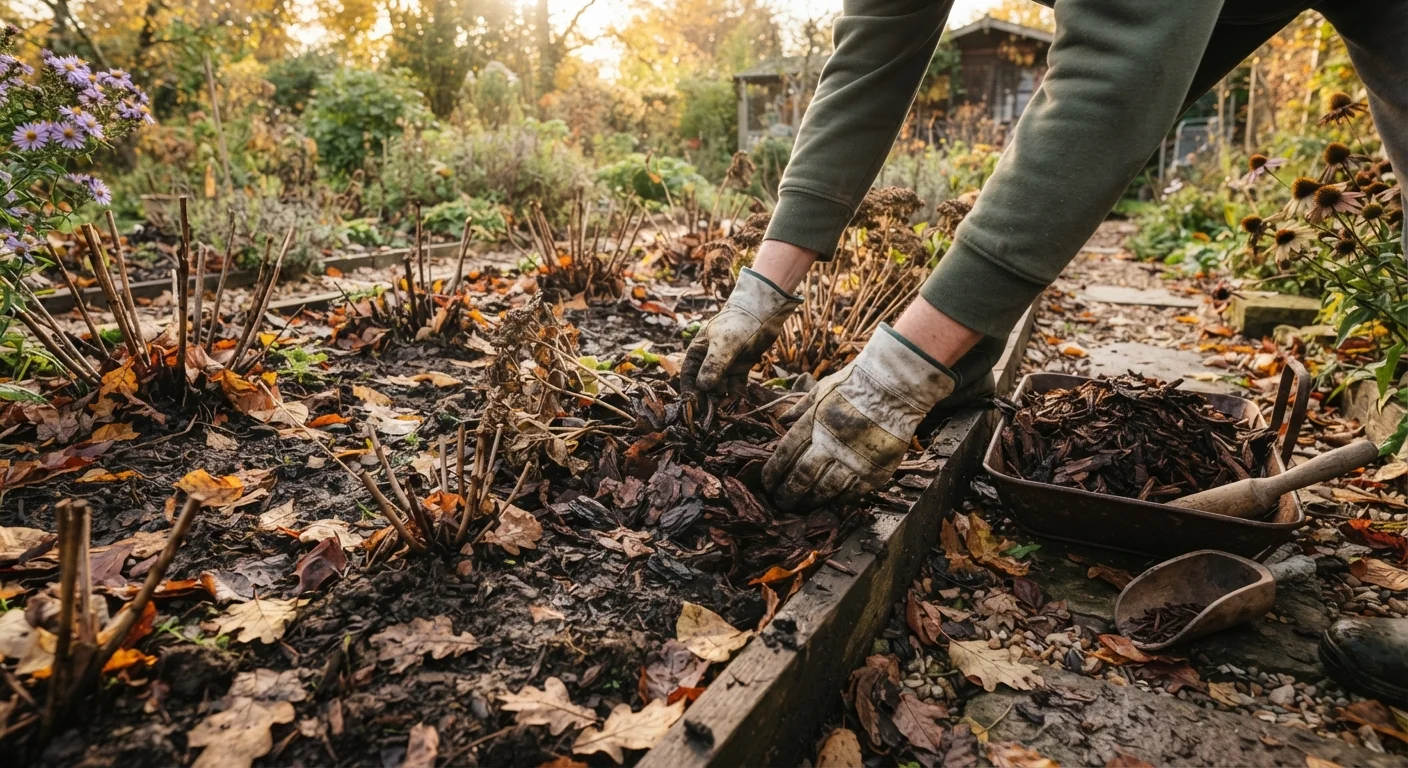
Mulching and Insulation
Irrigation and Water Systems
Tool and Equipment Storage
Do Not Compost Diseased Plant Material
Any plant debris showing signs of fungal disease, blight, or pest infestation should be bagged and disposed of through your municipal yard waste program — not added to a home compost pile. Most backyard compost systems do not reach the sustained temperatures needed to neutralize pathogens or weed seeds reliably. Composting infected material can spread disease to next year's garden beds.
Tools, Supplies, and Final Checks
Having the right materials on hand before you start prevents mid-task delays. Below are the key supplies and tools you'll want to gather.
Garden fork or spade
Used to work compost into beds and lift tender bulbs from the soil.
Pruning shears
For cutting back perennial stems and removing spent plant material cleanly.
Shredded leaves, straw, or wood chip mulch
Insulates plant roots and protects soil structure from freeze-thaw cycles.
Compost
Added to garden beds in fall to slowly enrich soil over winter.
Soil test kit
Reveals pH and nutrient levels so you can amend now for better spring results.
Burlap or frost cloth
Provides wind and cold protection for tender or newly established shrubs.
Fuel stabilizer
Added to gas-powered equipment before storage to prevent fuel breakdown and carburetor damage.
If you grow in raised beds, fall is an ideal time to top them off with compost and cover them with a light layer of straw or shredded leaves — nutrients will work into the soil all winter. Our raised garden bed overview covers soil maintenance strategies in more detail.
For those working with containers on patios or balconies, special attention is needed since pots are far more exposed to freeze-thaw cycles than in-ground plantings. The container gardening guide outlines how to winterize container plants and which pots can safely stay outdoors. Once your garden is buttoned up, don't forget the house itself — weatherproofing your home before winter covers the structural and mechanical steps that complete a full cold-season preparation.
The content on this site is for informational purposes only and is not a substitute for professional advice. Always consult a qualified professional for guidance specific to your situation.