

Summary
22 items · 2–4 hours spread over a weekend
Why Winter Preparation Matters
Cold weather doesn't just make your home uncomfortable — it exposes every gap, crack, and aging system to conditions that accelerate damage. A single burst pipe can cause thousands of dollars in water damage. Ice dams can lift roof shingles and soak insulation. A failing furnace on the coldest night of the year is both a safety risk and an expensive emergency call.
The good news is that most of the damage winter inflicts is preventable. The tasks on this checklist are designed to be worked through methodically — ideally in the weeks before temperatures consistently drop below freezing. They're organized by area of the home, so you can tackle one zone at a time rather than feeling overwhelmed.
For a broader view of what home maintenance looks like across all four seasons, see our seasonal home maintenance guide. And if you're also thinking about your outdoor areas, our end-of-season garden shutdown checklist pairs well with this one.
Gas and Electrical Work Requires a Licensed Professional
This checklist covers homeowner-appropriate tasks. Work involving gas appliances, furnace heat exchangers, or electrical systems inside walls must be performed by a licensed technician. Attempting these without proper credentials can create safety hazards, violate local codes, and void your homeowner's insurance. When in doubt, call a professional before starting.
Tools and Supplies You'll Need
Before you start, gather the materials below. Having everything on hand prevents mid-task stops and helps you work through the checklist efficiently. Most items are available at hardware stores and require no special training to use safely.
Caulking gun and exterior-grade caulk
Sealing gaps around window frames, door frames, and wall penetrations to block cold air and moisture entry.
Foam pipe lagging (pipe insulation sleeves)
Wrapping exposed water pipes in unheated areas to prevent freezing during cold snaps.
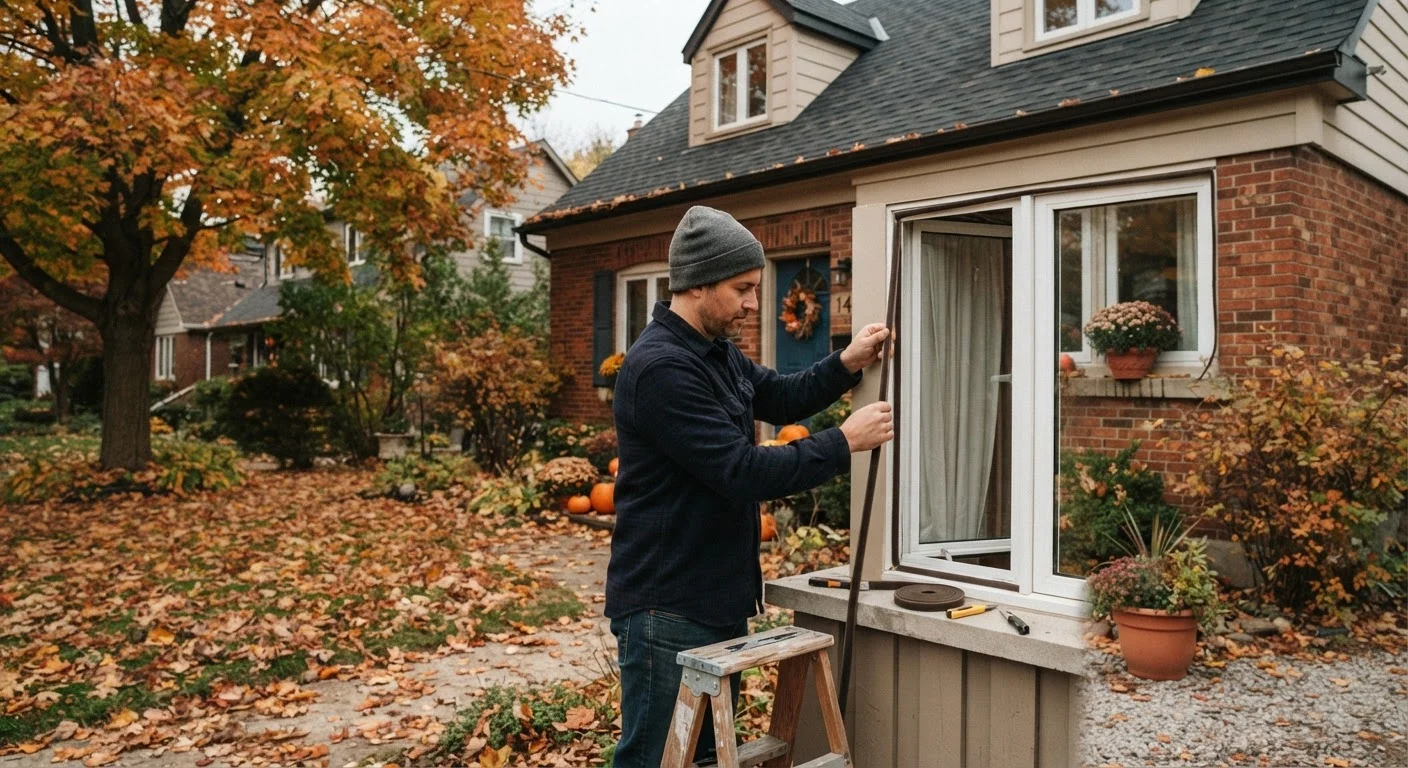
Weatherstripping tape or door seal kit
Replacing worn seals on exterior door frames to eliminate draughts.
Expanding foam spray
Filling larger irregular gaps around pipes and cables penetrating exterior walls.
Gutter scoop and garden hose
Clearing leaves and debris from gutters and flushing downspouts to ensure clear drainage.
Replacement furnace filters
Swapping out dirty filters to maintain heating system efficiency and air quality.
Draught excluder (door sweep)
Blocking the gap under exterior doors that weatherstripping alone cannot seal.
Radiator bleeding key
Releasing trapped air from hot-water radiators to restore even heat distribution.
The Full Winterproofing Checklist
Work through each group in order. Items marked must are non-negotiable for basic protection; should items are strongly recommended; nice-to-have items add comfort and efficiency if time and budget allow.
Air Sealing and Draught-Proofing
Insulation and Pipe Protection
Heating System and Ventilation
Roof, Gutters, and Exterior
Don't Skip the Exterior Faucet Shutdown
Failing to shut off and drain exterior hose bibs before the first hard freeze is one of the most common causes of burst pipes in residential homes. Even frost-free outdoor faucets can fail if a hose is left connected, because the hose traps water in the pipe. Make this one of the first tasks you complete, not the last.
If you discover signs of hidden moisture while sealing gaps or insulating pipes, don't ignore them. Our guide on detecting a slow water leak early can help you assess what you're seeing before it becomes a larger problem.
What to Hire Out vs. Do Yourself
Most of the draught-sealing, insulation, and gutter-clearing tasks on this list are well within DIY reach for a careful homeowner. However, several categories carry real risk and often require permits or licensed tradespeople under local building codes:
- Gas appliances and furnaces: Any work involving gas lines, burners, or heat exchangers should be done by a licensed HVAC technician. This includes annual furnace inspections.
- Electrical work: Upgrading weatherproofing around electrical outlets on exterior walls, or addressing any wiring concerns in attic insulation areas, requires a licensed electrician.
- Roof repairs: Walking on a roof to replace flashing or seal around chimneys carries fall risk. If you're not experienced and properly equipped, hire a roofing contractor.
- Structural concerns: Cracks in foundations that appear to be widening, or signs of significant water intrusion, warrant a structural assessment — not a DIY patch.
Attempting regulated or hazardous work without proper credentials can void insurance, fail inspections, and create safety hazards. When in doubt, get a professional quote first. For context on what gets skipped and why it matters, see our article on commonly overlooked home maintenance tasks.
The content on this site is for informational purposes only and is not a substitute for professional advice. Always consult a qualified professional for guidance specific to your situation.