

What a Home Maintenance Log Actually Is
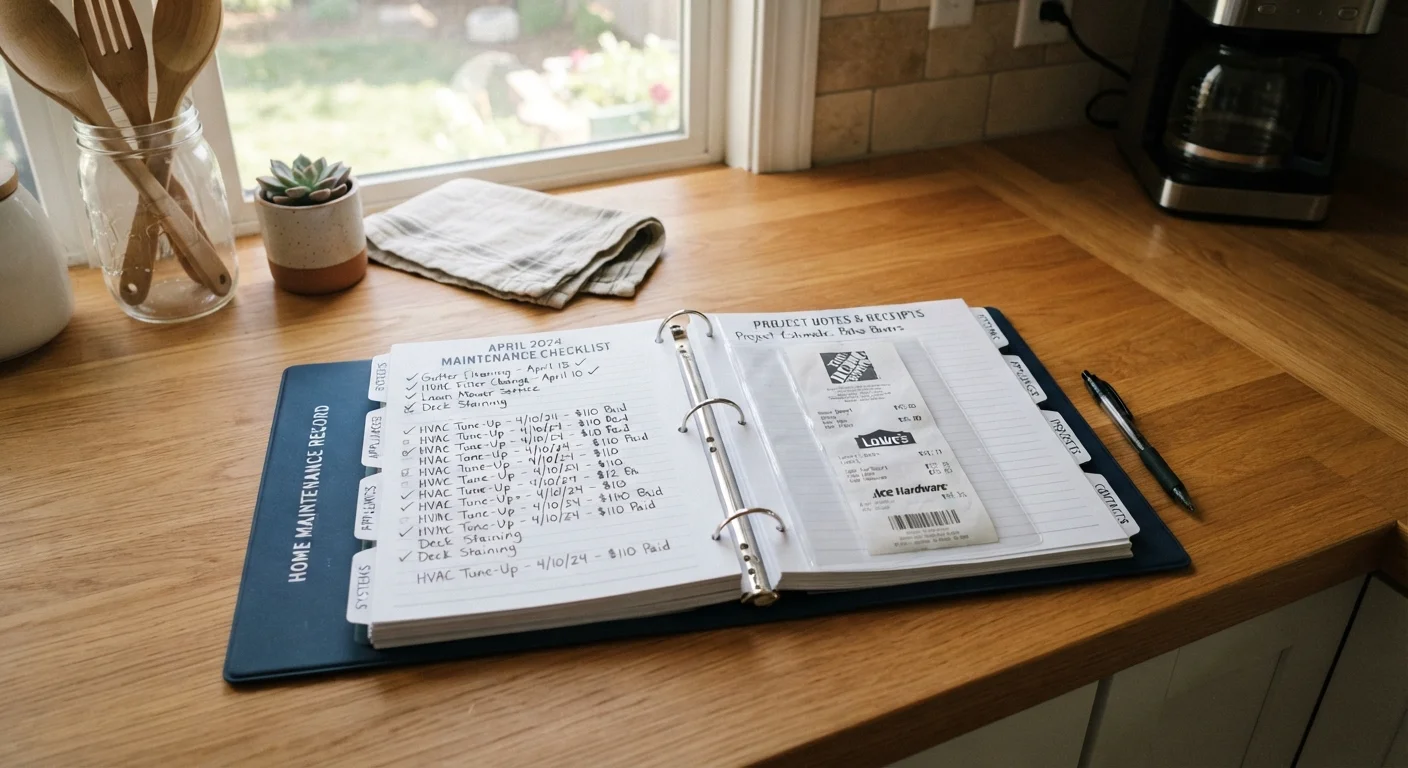
A home maintenance log is a running record of every repair, inspection, upgrade, and service performed on your property. It captures the date, what was done, who did it (contractor or DIY), what it cost, and any relevant notes — such as warranty terms or parts replaced.
Think of it as your home's health record. Just as a medical file helps a doctor understand a patient's history, your maintenance log gives you and future owners a clear picture of how the property has been cared for. It removes the guesswork when a contractor asks, "When was this last serviced?" or when you're trying to figure out whether a warranty is still active.
Logs can be as simple as a dedicated notebook, a binder with tabbed sections, or a spreadsheet. Some homeowners prefer dedicated apps or cloud-based documents. The format matters less than the habit of recording consistently.
Log Your Home's Baseline First
If you've recently moved in, start by documenting the home's known condition before you make any changes — note the age of major systems, any visible issues, and dates from inspection reports. This establishes a baseline that makes all future entries more meaningful. Even rough estimates are better than blank pages.
Core Practices for Keeping a Useful Log
The value of a log comes entirely from what goes into it. Vague entries like "fixed sink" tell you almost nothing a year later. The practices below help ensure your log actually earns its keep.
Record every service event within 48 hours of completion.
Memory fades quickly after a job is done. Logging promptly ensures details like the technician's name, part numbers, and costs are accurate rather than reconstructed later.
Attach or reference supporting documents for each entry.
Invoices, warranty cards, and inspection reports carry more weight than handwritten notes alone — particularly when making warranty claims or disclosing repairs to a buyer. Knowing where to find these documents quickly saves time and prevents disputes.
Use consistent categories across all entries.
Categorising entries by system — roofing, plumbing, electrical, HVAC, appliances, exterior — makes it easy to scan history for a specific area. This is especially useful when a contractor asks about prior work on a particular system. See the roof maintenance guidance for an example of why system-specific history matters.
Note what was inspected but not yet repaired.
Not every inspection leads to immediate work. Recording what was observed — a small crack in caulking, a slow-draining basin — creates a watch list that prevents issues from being forgotten until they worsen.
Schedule your next service date at the time of each entry.
Preventive maintenance depends on timing. Writing the next due date into the log at the moment of completion — rather than relying on memory — is the simplest way to stay ahead of problems. This reflects the core principle behind preventive versus reactive maintenance.
How Your Log Pays Off Over Time
The benefits of a home maintenance log tend to compound. In the first year, it mostly keeps you organised. By year three or four, patterns start to emerge — maybe your HVAC filter is clogging faster than the manufacturer's recommended schedule, or your gutters need cleaning twice a year rather than once. Those insights come directly from having a record.
77%
Homeowners who underestimate maintenance costs
According to HomeAdvisor's annual State of Home Spending report, a large majority of homeowners consistently underestimate what they'll spend on upkeep — a gap that better record-keeping can help close.
1–4%
Of home value recommended for annual maintenance
A widely cited rule of thumb among housing economists suggests setting aside 1–4% of your home's value annually for maintenance — a budget that's far easier to plan when you have a log of past costs.
When it comes time to sell, a well-maintained log signals to buyers that the home has been looked after. It reduces the likelihood of surprise findings during a home inspection derailing negotiations. Paired with a consistent approach to seasonal home maintenance, a log transforms from a passive record into an active tool for protecting your investment.
There's also a warranty dimension many homeowners overlook. Manufacturers and extended service plans often require documented proof of regular maintenance before honouring a claim. A log gives you that proof.
Getting Started Without Feeling Overwhelmed
If you've never kept a log before, starting from scratch can feel daunting — especially in an older home where history is murky. Begin with what you know: write down everything you've done in the past 12 months, even if dates are approximate. Then use your next scheduled task as the starting point for real-time entries.
If you're focused on tasks that often go unrecorded until something breaks, add those categories to your log first — smoke alarms, water heater inspections, and HVAC filter changes are easy to overlook and easy to log. Don't wait for a perfect system before you begin; a rough log started today beats a perfect template started never.
For context, the approach mirrors what works well for vehicle owners. The same discipline that makes keeping car service records valuable applies directly to your home.
“Documentation is one of the most underrated forms of home stewardship. A clear record of care tells the story of a well-managed property better than any fresh coat of paint.”
— National Association of Home Inspectors, Professional standards body for home inspection practice in the US
The content on this site is for informational purposes only and is not a substitute for professional advice. Always consult a qualified professional for guidance specific to your situation.