

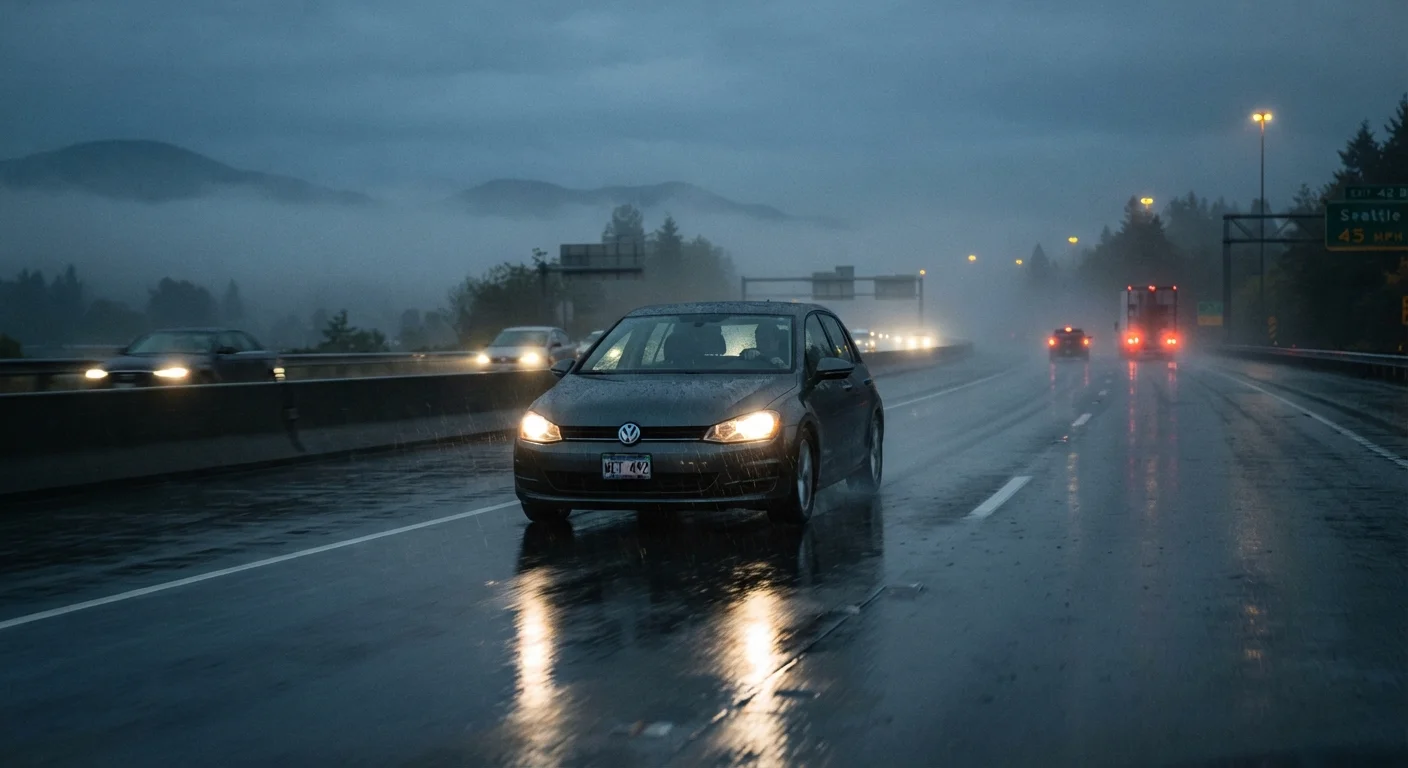
Why Each Weather Condition Demands a Different Approach
Most drivers treat bad weather as a single category requiring one universal response: slow down. But rain, fog, and snow each create distinct physical hazards that call for different techniques. Rain primarily attacks traction and drainage. Fog strips away your ability to see and be seen. Snow and ice compromise nearly every aspect of vehicle control simultaneously.
Understanding the mechanism behind each hazard — not just the general advice — is what allows you to respond appropriately rather than reactively. This is the foundation of defensive driving: reading the environment before it reads you.
21%
U.S. crashes linked to weather conditions
According to the Federal Highway Administration, approximately 21% of all vehicle crashes in the U.S. are weather-related, averaging over 1.2 million crashes per year.
46%
Weather crashes occurring on wet pavement
The Federal Highway Administration reports that nearly half of all weather-related crashes happen on wet pavement rather than snow or ice.
Driving in Rain: Managing Traction and Visibility
The first minutes of rainfall are often the most dangerous. Light rain mixes with road oils to create a slick film before heavier rain washes it away. This is when aquaplaning — where your tires ride on a layer of water rather than gripping the road surface — becomes a real risk, especially at highway speeds.
Reduce speed well before wet conditions demand it, not in response to them
Traction loss happens faster than reaction time allows you to compensate. Preemptively lowering speed gives your tires a better chance of maintaining contact with the road surface and preserves your ability to steer and brake effectively.
Double your following distance in wet conditions
Wet roads extend stopping distances considerably. The standard three-second following gap appropriate for dry roads is insufficient when traction is reduced. Increasing to six seconds provides a more realistic margin.
Turn on your headlights whenever wipers are running
Many U.S. states legally require headlights when wipers are in use, and for good reason — rain reduces how visible your vehicle is to others, not just how well you see. Being seen is half of collision avoidance.
If aquaplaning occurs, hold the wheel steady and ease off the accelerator gently
Jerking the wheel or braking hard while aquaplaning causes the vehicle to snap sideways when traction returns. A smooth, patient response allows tires to re-engage naturally.
Rear-fog lights, if your vehicle has them, should be used in heavy rain as well as fog. Keep in mind that stopping distances increase significantly on wet roads compared to dry conditions — a gap that feels comfortable in fine weather may be dangerously short in rain.
Driving in Fog: The Visibility Trap
Fog is uniquely deceptive. Drivers routinely overestimate how far ahead they can see, and they underestimate how quickly they are closing on slower traffic or stationary vehicles. The core rule for fog driving is simple: you must be able to stop within the distance you can clearly see.
The 'Stop Within Sight' Rule for Fog
In dense fog, your speed should never exceed what allows you to stop within the distance you can actually see ahead. If you can see 100 feet clearly, you should be traveling at a speed where 100 feet is a comfortable stopping distance. This single principle, consistently applied, prevents most rear-end collisions in fog.
High beams are counterproductive in fog — the light bounces back off water droplets and reduces your effective vision. Use low-beam headlights and front fog lights if fitted. If you are on a road trip and conditions deteriorate, knowing how to respond calmly to unexpected conditions can prevent a manageable situation from becoming dangerous. When fog is dense enough that you can barely see road markings, pulling off safely and waiting is a legitimate choice, not a concession.
Driving in Snow and Ice: The Gentle Input Rule
Ice and compacted snow can reduce traction to a fraction of what dry pavement provides. The governing principle here is smoothness: every input — braking, accelerating, and steering — must be gradual and deliberate. Sudden movements overwhelm what little grip exists and trigger slides that are difficult to recover from.
If your vehicle begins to slide, steer gently in the direction you want to go and avoid the instinct to brake hard. All-wheel drive helps you get moving but does not improve your ability to stop — a distinction many drivers overlook. For longer winter road trips, the considerations go well beyond driving technique; planning your route carefully with weather checks and contingency stops is equally important.
Vehicle Readiness: The Foundation Under Every Technique
No amount of skillful technique compensates for worn tires, failed wipers, or burned-out lights. Before winter weather arrives, it is worth checking tread depth, wiper blade condition, headlight function, and brake performance. Some common driving habits quietly degrade these systems over time, making seasonal checks especially valuable.
Winter Tires vs. All-Season Tires
All-season tires are designed for a broad range of conditions but represent a compromise rather than an optimum in severe winter weather. Winter (snow) tires use a softer rubber compound that remains flexible below 45°F and feature tread patterns specifically designed to channel snow and slush. If you regularly drive in regions with sustained freezing temperatures or snowfall, consulting a qualified mechanic or tire professional about winter-specific options is worthwhile.
In snowy regions, winter tires — not just all-season tires — deliver a measurable grip advantage at low temperatures. They use a different rubber compound that remains pliable when the mercury drops, improving both braking and cornering. This is not a luxury consideration; it is a safety one. Consult a qualified mechanic about the right setup for your climate and typical routes.
The content on this site is for informational purposes only and is not a substitute for professional advice. Always consult a qualified professional for guidance specific to your situation.