

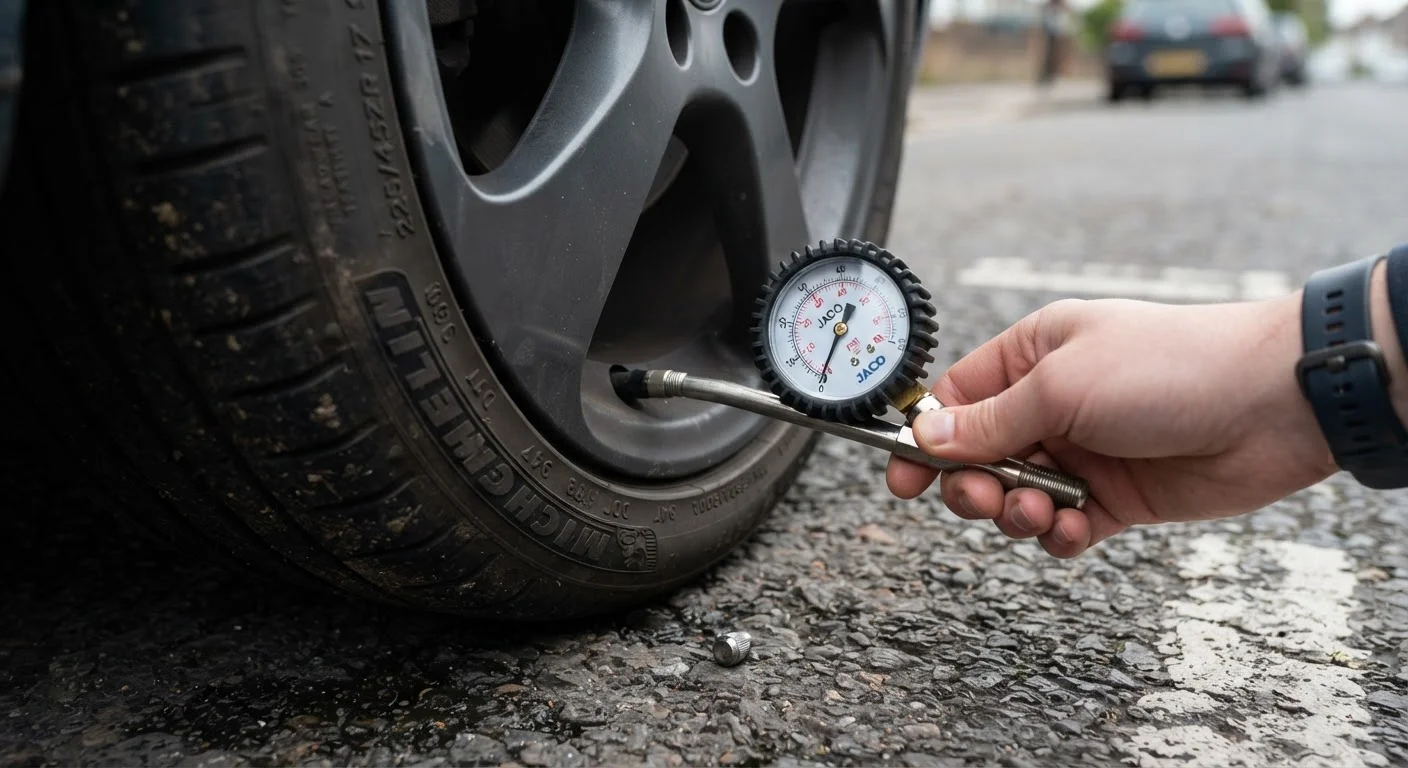
The Real Consequences of Wrong Tyre Pressure
Most drivers know they should check their tyre pressure occasionally — but fewer understand just how many things go wrong when they don't. Tyre pressure sits at the intersection of safety, fuel efficiency, and tyre lifespan. Getting it wrong in either direction carries measurable costs.
Under-inflation is the more common problem. A tyre running below its recommended PSI flexes more than it should with every rotation. That excess flexing builds heat — and heat is a tyre's primary enemy. Sustained under-inflation can lead to tread separation and, in severe cases, sudden blowouts at highway speeds. Beyond the blowout risk, low pressure causes the tyre's contact patch to deform, accelerating uneven wear along the outer edges of the tread.
Over-inflation carries its own risks. When a tyre is pumped too hard, the contact patch shrinks toward the centre of the tread, reducing the rubber actually touching the road. Less contact means less grip — particularly noticeable in wet conditions or during emergency braking. Over-inflated tyres are also more vulnerable to damage from potholes and road debris because there is less air volume to absorb impact.
~1 PSI
Monthly pressure loss under normal conditions
Tyres naturally lose approximately 1 PSI per month through normal permeation, according to tyre industry guidelines.
Up to 3%
Potential fuel economy improvement
The U.S. Department of Energy estimates properly inflated tyres can improve gas mileage compared with significantly under-inflated tyres.
1 PSI per 10°F
Pressure drop per temperature fall
Tyre pressure decreases by roughly 1 PSI for every 10-degree Fahrenheit drop in ambient temperature, making winter checks especially important.
Fuel Economy and the Tyre Pressure Connection
Under-inflated tyres increase rolling resistance — the force your engine must overcome to keep the vehicle moving. The U.S. Department of Energy has noted that keeping tyres properly inflated can improve fuel economy, with significant under-inflation measurably increasing fuel consumption. While the gains from any single tyre correction may appear modest, the compound effect across thousands of miles adds up meaningfully.
For drivers already paying close attention to running costs, tyre pressure is one of the lowest-effort, highest-return maintenance habits available. It costs nothing beyond the time to check. As part of a broader maintenance approach — see Vehicle Maintenance Intervals Every Driver Should Know — regular pressure checks help protect your entire investment in the vehicle.
Check Pressure Before Driving, Not After
Always measure tyre pressure when the tyres are cold — before you've driven or within a mile of starting. Heat from driving expands the air inside the tyre and inflates the reading artificially, making it harder to set the correct pressure. Morning checks before your first drive of the day give the most accurate baseline.
How to Check and Adjust Tyre Pressure Correctly
Tyre pressure should always be checked when the tyres are cold — meaning the car has been parked for at least three hours and driven fewer than one mile since. Driving heats the air inside the tyre and temporarily raises the pressure reading, making a warm-tyre check unreliable for setting accurate inflation.
Use a quality tyre pressure gauge — dial, digital, or stick-type — rather than relying solely on fuel station forecourt gauges, which can be poorly calibrated. Remove the valve cap, press the gauge firmly onto the valve stem, and read the result. Compare it against the manufacturer specification on your door jamb sticker or in your owner's manual.
Add air in short bursts if the pressure is low, rechecking between additions. If over-inflated, use the small pin on the back of most gauges — or the valve stem itself — to release air in controlled amounts. Don't forget the spare tyre; a flat spare at the roadside is a frustrating discovery.
Before any longer journey, tyre pressure is among the critical checks outlined in What to Check Before Every Long Road Trip. If you're carrying extra passengers or a heavy load, note that added vehicle weight increases the load on each tyre — Carrying Passengers and Loads: How Vehicle Weight Changes Handling covers how to account for this.
Front and Rear Pressures May Differ
Many vehicles specify different tyre pressures for the front and rear axles, particularly front-wheel-drive cars and some SUVs. Always check the door jamb sticker or owner's manual for axle-specific figures rather than assuming all four tyres use the same number. Some vehicles also recommend higher rear pressures when carrying heavy loads — check your manual for load-specific guidance.
Making It a Habit
The biggest barrier to proper tyre maintenance isn't knowledge — it's consistency. Tyres lose pressure gradually, making the change invisible until a problem appears. Building a simple monthly habit removes this blind spot entirely.
A practical approach: pick a recurring date — the first of each month, for instance — and check all four tyres before your first drive of the day. It takes under five minutes. Pair it with a visual walk-around to look for obvious damage, embedded nails, or uneven wear patterns that might indicate a suspension or alignment issue. Neglecting tyre pressure is one of several habits that quietly shorten your car's lifespan — but it's also one of the easiest to fix.
Frequently Asked Questions
Most automotive authorities recommend checking tyre pressure at least once a month and before any long journey. Tyres lose roughly 1 PSI per month under normal conditions, and temperature swings can accelerate that loss — pressure drops about 1 PSI for every 10°F decrease in air temperature.
The manufacturer's recommended pressure is printed on a sticker typically located inside the driver's door jamb or in the owner's manual. Do not rely on the number moulded into the tyre sidewall — that is the maximum pressure the tyre can structurally hold, not the recommended operating pressure.
Driving on even modestly under-inflated tyres accelerates tread wear, reduces fuel efficiency, and compromises handling. At 25% or more below the recommended pressure, blowout risk increases significantly. It is best to correct the pressure before driving whenever possible.
Yes. Tyre pressure decreases in cold weather at roughly 1 PSI per 10°F drop in temperature. This means tyres that were properly inflated in summer may read low in winter. Always check pressure when tyres are cold — ideally after the car has been parked for at least three hours.
No. The sidewall figure is the maximum the tyre can handle structurally, not the optimum for your vehicle. Inflating to that figure almost always means over-inflation for your car, which reduces grip and increases ride harshness. Use the vehicle manufacturer's specification instead.
The content on this site is for informational purposes only and is not a substitute for professional advice. Always consult a qualified professional for guidance specific to your situation.