

Summary
18 items · 5–10 minutes
Why a Pre-Drive Check Matters Every Time
Most drivers associate vehicle checks with long road trips or scheduled servicing intervals. In practice, a vehicle's condition can change between any two drives — a tyre can lose pressure overnight, a light bulb can fail, or a piece of debris can lodge under a wiper blade. A brief, methodical walkaround before every journey closes that gap.
This checklist is designed for everyday driving, not just holidays or highway runs. If you are planning an extended journey, pair this walkthrough with the more comprehensive long road trip vehicle checklist, which covers fluids, emergency supplies, and load distribution in greater depth. For road trip planning from start to finish, that hub has dedicated guides for every stage.
New drivers in particular benefit from building these habits early. Research consistently shows that crash risk is highest in the first year of independent driving — forming a consistent pre-drive routine is one of the most practical ways to counter that. See our guide for new licence holders for more on developing a safety-first mindset from the outset.
Dashboard Warning Lights Require Attention
A warning light that stays on after engine startup is the vehicle communicating a fault — not a suggestion. Certain symbols, such as low oil pressure or brake system warnings, indicate conditions that can make driving dangerous immediately. Consult your owner's manual or see our guide to dashboard warning lights before deciding whether to drive. When in doubt, have a qualified mechanic inspect the vehicle before continuing.
How to Use This Checklist
Work through the four groups in order: start outside the vehicle, move inside, verify the dashboard, then assess your own readiness and the environment. The entire process takes five to ten minutes for most drivers once it becomes routine. With repetition, many steps become near-automatic.
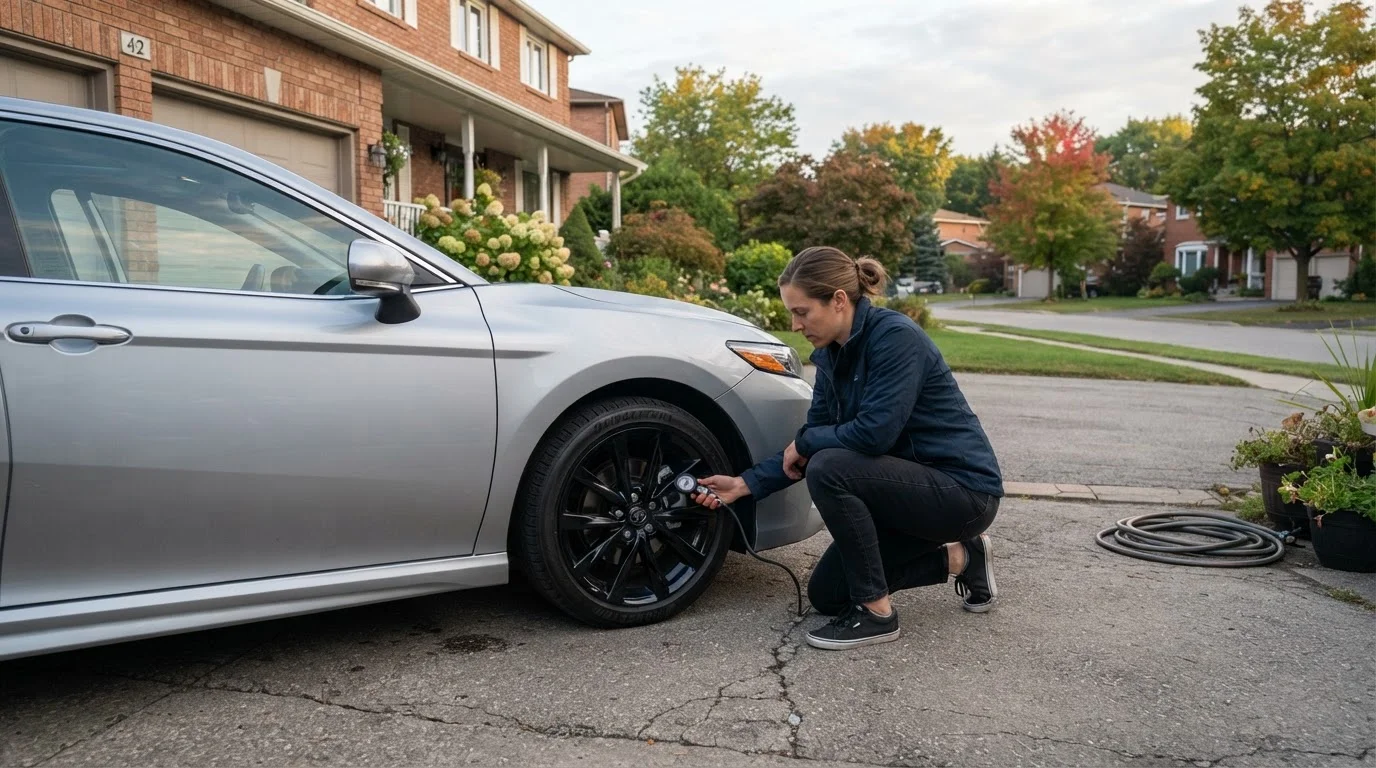
Tyre pressure gauge
Measures tyre inflation accurately so you can match the manufacturer's recommended PSI.
Windshield washer fluid
Keeps the reservoir topped up so wipers can maintain clear forward visibility.
Ice scraper / snow brush
Clears snow and ice from all glass surfaces before driving in winter conditions.
Weather or navigation app
Provides real-time road conditions and route guidance to be set before departure.
The must items are non-negotiable — skipping them meaningfully increases the risk of a preventable incident. Should items represent strong best practice that most drivers will want to incorporate. Any item flagged nice to have adds an extra layer of preparation when time permits.
Exterior Walkaround
Interior & Controls
Dashboard & Systems Check
Readiness & Environment
If you are heading somewhere remote or unfamiliar, consider cross-referencing this walkthrough with the remote destination pre-trip checklist, which adds guidance on connectivity, emergency contacts, and entry requirements relevant to off-the-beaten-path travel.
Never Drive on a Visibly Flat Tyre
Driving even a short distance on a flat tyre can damage the wheel rim and make the vehicle extremely difficult to control. Pull over safely as soon as you notice a flat; do not attempt to "nurse" the car to a garage. If you are unsure whether your tyre is roadworthy, err on the side of caution and call for roadside assistance.
Drowsy Driving Is a Serious Hazard
Fatigue impairs reaction time and decision-making in ways comparable to alcohol impairment. If you feel tired before you even leave, the safest choice is to rest or arrange alternative transport. There is no substitute for being alert behind the wheel.
The content on this site is for informational purposes only and is not a substitute for professional advice. Always consult a qualified professional for guidance specific to your situation.