

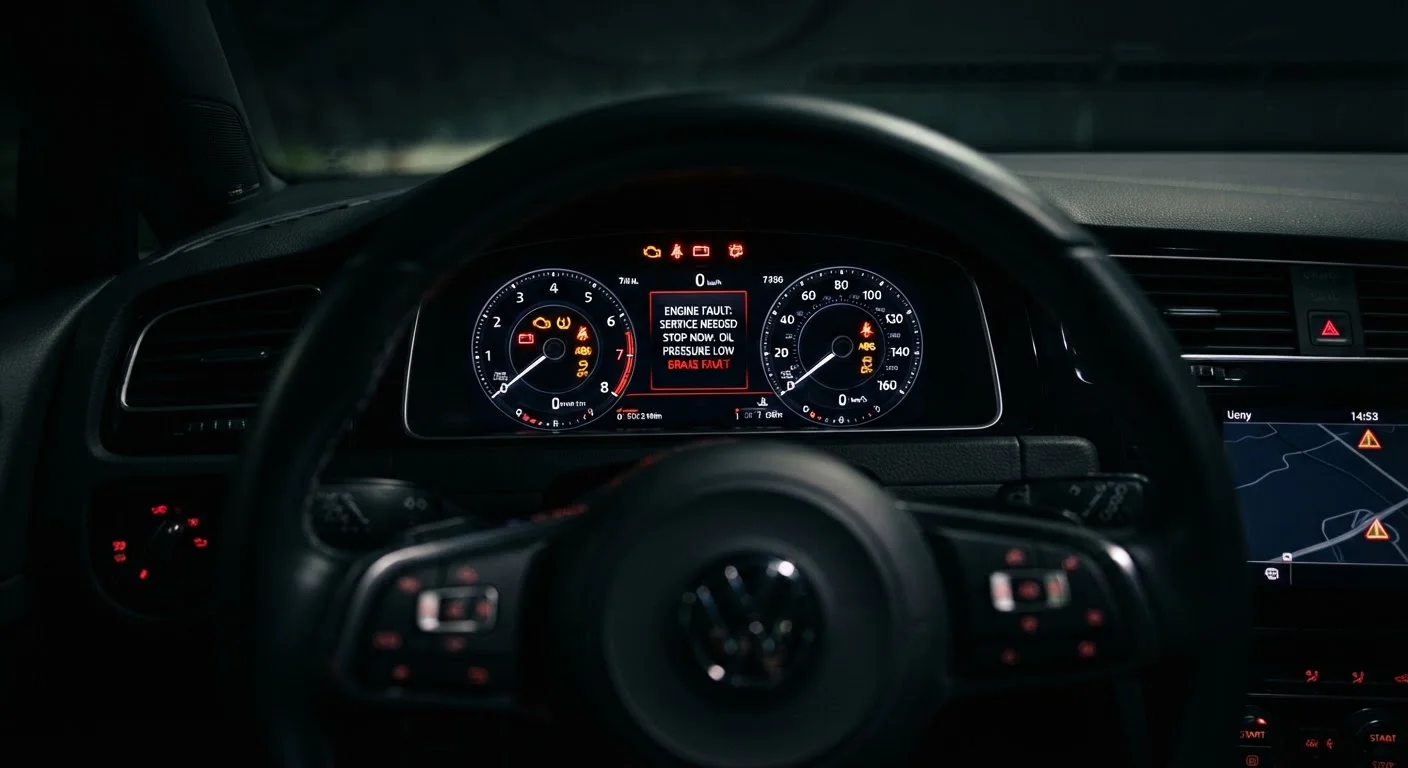
The Color-Code System: Red, Amber, and Green
Every dashboard warning light is assigned a color for a reason. Understanding the hierarchy prevents both unnecessary panic and dangerous complacency.
- Red: Indicates a serious condition requiring immediate or near-immediate action. Common examples include oil pressure loss, engine overheating, low brake fluid, and open doors at speed.
- Amber or Yellow: Signals a fault or condition you need to address soon but that typically doesn't require pulling over immediately. Examples include the Check Engine light (steady), TPMS (tire pressure), traction control malfunction, and low washer fluid.
- Green or Blue: Purely informational. These confirm a system is active — high beams, turn signals, or cruise control engaged.
The moment a red light appears, your priority is to find a safe place to pull over, turn off the engine, and assess the situation. Continuing to drive through a red warning can turn a manageable repair into a costly or dangerous one.
Your Owner's Manual Is Your Best Resource
Symbol shapes and meanings can vary between manufacturers and even between model years of the same vehicle. Always cross-reference an unfamiliar warning light with your owner's manual rather than relying solely on memory or generic guides. Most automakers also offer free digital access to manuals on their official websites.
The Warning Lights You Must Know
While every vehicle has its own symbol set, these are the most critical lights found across the majority of US passenger vehicles:
- Oil Pressure (red oil can symbol)
- Stop the vehicle and shut off the engine as soon as it is safe. Low or absent oil pressure can destroy an engine within minutes of continued running.
- Engine Temperature (red thermometer in water)
- The engine is overheating. Pull over, turn off the engine, and do not open the radiator cap. Allow the engine to cool before checking coolant level.
- Battery / Charging System (red battery)
- The electrical charging system is failing. The vehicle may run for a short period on battery reserve, but plan to reach a workshop quickly to avoid being stranded.
- Check Engine (amber engine outline)
- Steady means a stored fault — drive to a workshop within a day or two. Flashing means an active misfire — stop driving soon and have it checked urgently.
- Brake System (red circle with exclamation)
- Could mean the parking brake is engaged, brake fluid is low, or there is a hydraulic fault. Confirm the parking brake is released first; if the light persists, have brakes inspected before driving further.
- TPMS (amber horseshoe with exclamation)
- One or more tires are significantly underinflated. Check and inflate tires to the placard pressure found on your door jamb before highway driving.
Before any long journey, a pre-departure check can catch issues before warning lights appear — see our pre-trip checklist for a full walk-through.
When to Stop Immediately vs. Drive to a Workshop
Not every illuminated light demands you pull over on the spot. Use this general decision framework:
Take a Photo When a Light Appears
If a warning light comes on and then disappears before you can look it up, take a quick photo of your dashboard (while safely parked) as soon as the light appears. This gives your mechanic valuable information — intermittent faults that don't leave a stored code can be difficult to diagnose otherwise, and a timestamped photo helps establish a pattern.
Stop as soon as safely possible
- Any red warning light that stays on while driving
- A flashing Check Engine light
- Unusual smells (burning oil, coolant, rubber) or smoke accompanying any warning
- A warning light paired with a noticeable change in vehicle behavior — vibration, loss of steering feel, or brake fade
Drive carefully to a workshop (same day or next day)
- Steady amber Check Engine light with no other symptoms
- TPMS light (after confirming tires are safe to drive on)
- Low fuel or washer fluid indicators
- Traction or stability control malfunction light (drive gently; avoid spirited driving)
Keeping a roadside emergency kit in your vehicle ensures you're better prepared if a red light forces an unplanned stop.
Using Your Owner's Manual and OBD-II Tools
Your owner's manual is non-negotiable — it lists every symbol specific to your make, model, and trim level. Digital copies are freely available through most manufacturer websites if you've misplaced the physical version. Refer to it the moment you see an unfamiliar symbol rather than guessing.
For amber warnings, an affordable OBD-II code reader (plugged into the diagnostic port typically located under the dashboard near the steering column) can retrieve the stored fault code that triggered the light. This doesn't replace a professional diagnosis, but it gives you information before visiting a mechanic and helps you have an informed conversation about the repair. Many auto parts retailers will also read codes for free at the counter.
1 in 3
US vehicles with an unaddressed warning light
According to data cited by the Car Care Council, roughly one in three vehicles on US roads has at least one unresolved dashboard warning at any given time.
25%
Tire pressure drop that triggers TPMS alert
Federal regulations require TPMS systems to alert drivers when tire pressure falls 25% or more below the vehicle manufacturer's recommended level.
Staying informed about your vehicle's instrument cluster is part of broader safe driving awareness. Explore the Safe Driving hub for more guidance on keeping yourself and others safe on the road, or review our pre-drive safety walkthrough to build habits that help you spot potential issues before they escalate to dashboard alerts.
Frequently Asked Questions
A steady Check Engine light usually means a fault has been logged but is not immediately dangerous — driving to a workshop within a day or two is generally acceptable. However, a flashing or blinking Check Engine light indicates an active misfire that can damage the catalytic converter and warrants stopping as soon as it is safe. Have it diagnosed promptly.
A red oil pressure light means your engine may not be receiving adequate lubrication. Pull over safely and turn off the engine immediately, as continued driving can cause severe and costly engine damage within minutes. Check oil level once the engine is off; if the level is fine, do not restart — call for roadside assistance.
Yes. Significantly underinflated tires handle poorly, increase stopping distances, and can overheat and fail at highway speeds. The TPMS (Tire Pressure Monitoring System) light alerts you when one or more tires are 25% or more below the recommended pressure. Address it before your next highway trip.
Multiple lights illuminating simultaneously often points to a low battery, a failing alternator, or an electrical/sensor fault rather than a cascade of separate mechanical failures. Have the charging system and any stored fault codes checked by a technician.
Your vehicle's owner's manual has a dedicated section listing every warning light specific to your model — this is always the most accurate source. If you don't have a physical copy, most manufacturers make digital versions available on their official websites.
The content on this site is for informational purposes only and is not a substitute for professional advice. Always consult a qualified professional for guidance specific to your situation.