

Option A
Buying a Car
The path to full ownership and long-term equity.
Best for: Drivers who want to build equity, drive without mileage restrictions, and hold a vehicle for many years.
Option B
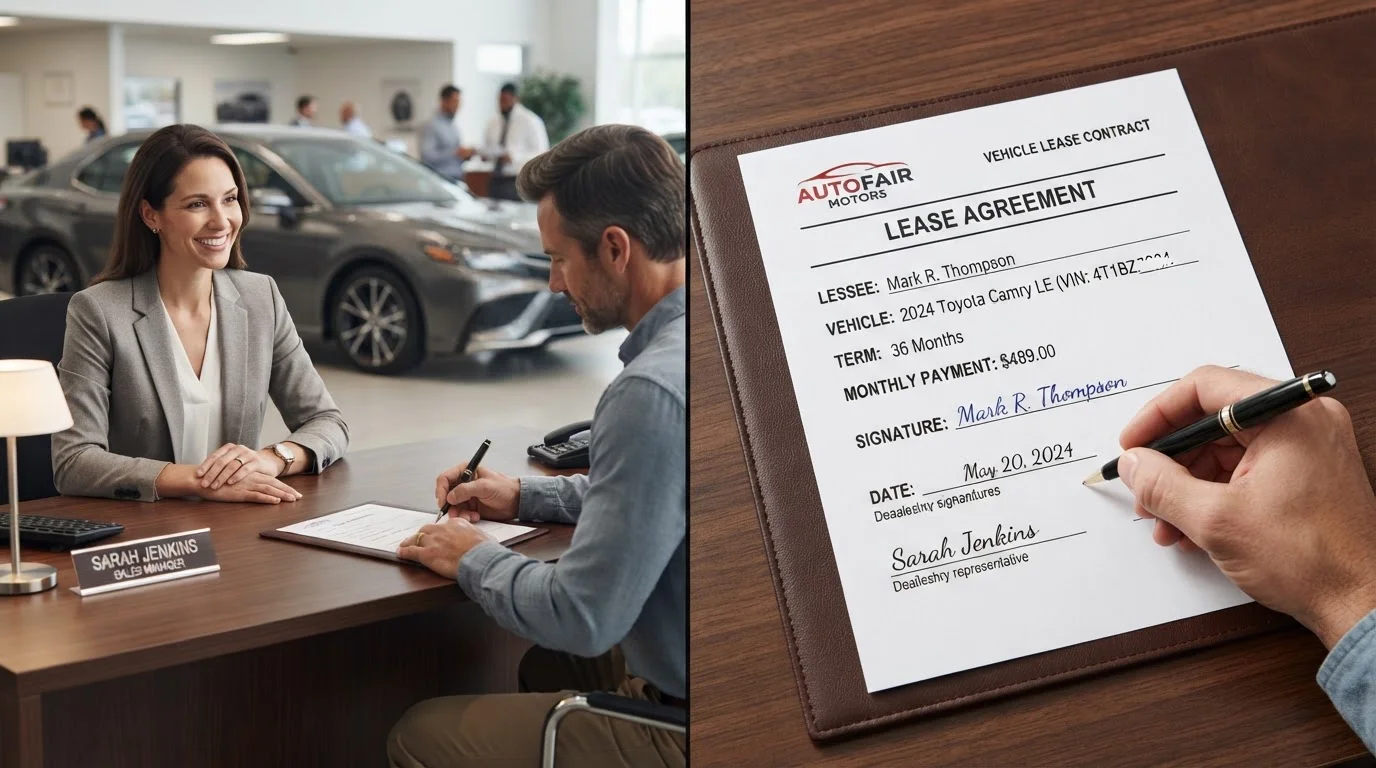
Leasing a Car
Lower monthly payments in exchange for temporary use.
Best for: Drivers who prefer predictable costs, frequent vehicle changes, and lower upfront commitment.
The Core Distinction: Ownership vs. Access
When you buy a car — whether with cash or through an auto loan — legal title transfers to you at the point of sale. You own the asset. When you lease a car, you are paying for the right to use a vehicle owned by a finance company or manufacturer for a fixed period, typically two to four years. At the end of that term, the car goes back.
This distinction matters enormously when considering equity. A purchased vehicle represents an asset on your personal balance sheet, even as it depreciates. Understanding how that depreciation works is foundational — see our overview in Car Depreciation Demystified for a full breakdown. A leased vehicle, by contrast, generates no equity; every dollar paid goes toward usage, not ownership.
| Criterion | Buying | Leasing |
|---|---|---|
| Ownership | Full ownership upon payoff | No ownership; vehicle returned at term end |
| Monthly payment | Higher (full value financed) | Lower (depreciation only financed) |
| Mileage limits | None | Contractually capped (typically 10–15k/yr) |
| Equity | Builds over time | None |
| Customization | Unrestricted | Generally not permitted |
| End-of-contract position | Own an asset outright | Return vehicle or arrange new lease |
| Repair responsibility | Owner bears all costs post-warranty | Often covered by warranty during lease term |
How the Numbers Work
Lease payments are calculated based on the vehicle's depreciation during the contract term, plus a finance charge (called the money factor) and applicable taxes. Because you're only financing the portion of the vehicle you use — not its full value — monthly payments are often noticeably lower than an equivalent purchase loan.
Buying through a loan means your payments cover the full vehicle price (minus any down payment), plus interest over the loan term. Higher monthly outlay, but each payment builds toward outright ownership. Once the loan is cleared, you carry no further payment obligation — a position a lease never reaches.
~30%
Typical first-year vehicle depreciation
Industry data consistently shows new vehicles lose a significant share of value in year one, directly affecting both resale value for owners and lease pricing structures.
2–4 yrs
Typical lease contract length
Most standard automotive leases in the US run between 24 and 48 months, generally aligning with the manufacturer warranty period.
It's also worth framing these correctly in your household budget. Both a loan payment and a lease payment behave as fixed obligations. Our related guide on Fixed vs. Variable Expenses explains why that distinction shapes how much flexibility you actually have to manage cash flow.
Restrictions, Flexibility, and Hidden Costs
Leases come with contractual constraints that ownership does not. The most significant are mileage limits — commonly 10,000 to 15,000 miles per year — with per-mile overage charges if you exceed them. Lessees must also return the car in good condition; excess wear fees can be charged at the end of the term.
Owners face no such restrictions. They can drive freely, customize the vehicle, or sell it at any point. However, ownership comes with its own unpredictability: repair costs, maintenance, and declining resale value are all the owner's responsibility. For a comprehensive view of what those costs look like over time, The True Cost of Owning a Car Beyond the Sticker Price walks through fuel, insurance, depreciation, and maintenance as a combined picture.
Gap Coverage Is Worth Understanding
If a leased or financed vehicle is totaled or stolen, standard auto insurance typically pays only the current market value — which may be less than what you still owe on a loan or what the lease requires you to pay. GAP (Guaranteed Asset Protection) coverage addresses this shortfall. Lessors often require it; buyers should weigh whether it applies to their situation. Consult your insurer for specifics.
Which Model Suits Your Situation?
Neither buying nor leasing is universally superior. The right choice depends on how you drive, how you budget, and what you value over the long term.
Drivers who cover high annual mileage, want to customize their vehicle, or plan to hold a car for many years tend to find ownership more cost-effective overall. The vehicle's long-term ownership economics generally favor buying once depreciation stabilizes and the loan is cleared.
Drivers who prefer lower monthly obligations, value driving newer vehicles with current technology and safety features, or don't want responsibility for major repairs often find leasing a practical fit — provided their mileage stays within contract limits. If you're also weighing powertrain type alongside this decision, Petrol, Diesel, Hybrid, or Electric addresses how running costs differ across fuel types, which can influence whether buying or leasing makes better sense for each.
This article provides general informational content about vehicle financing structures and is not personalised financial or legal advice. Consult a qualified financial professional before making decisions based on your individual circumstances.
The content on this site is for informational purposes only and is not a substitute for professional advice. Always consult a qualified professional for guidance specific to your situation.