

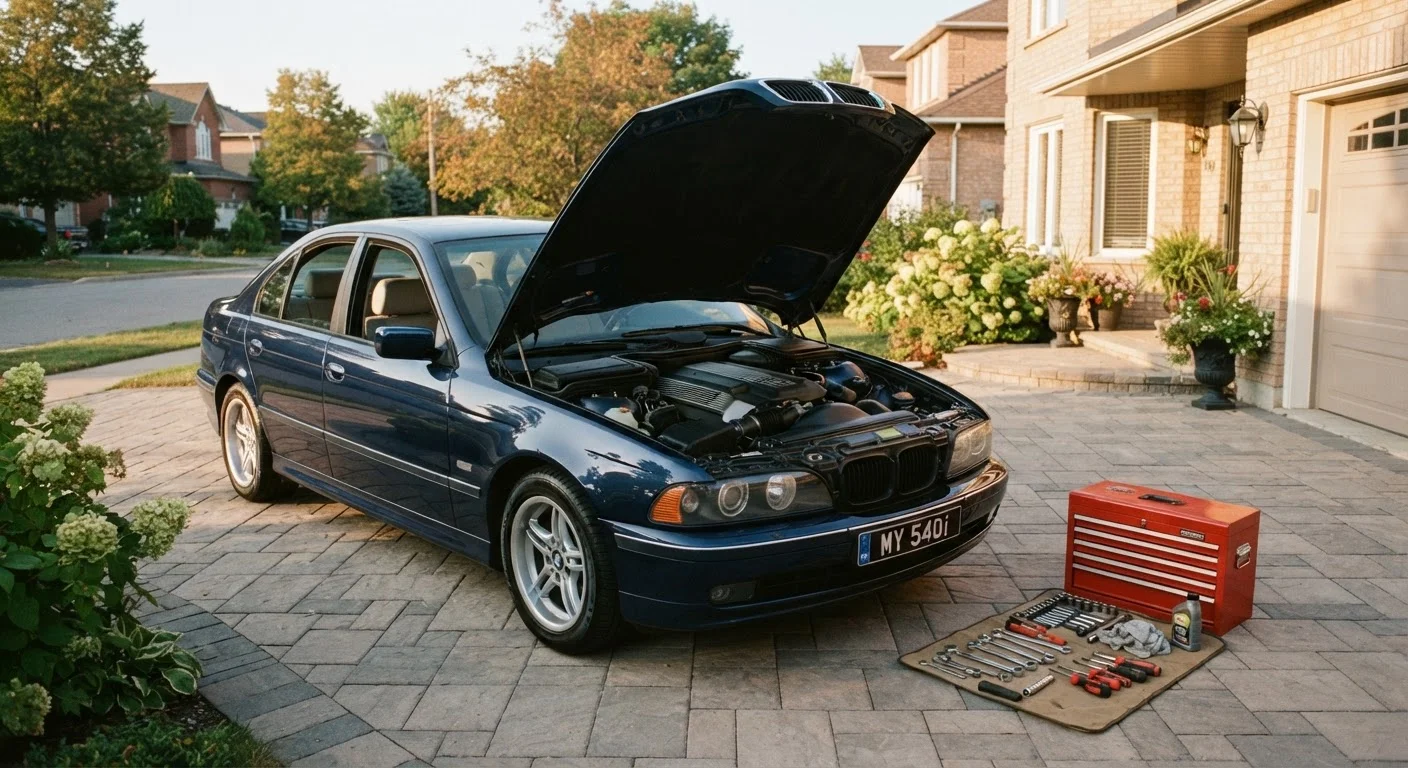
Running In a New Vehicle
The first thousand miles of a new vehicle's life matter more than most owners realise. During this period — often called the break-in or running-in phase — engine pistons, rings, bearings, and transmission components are still seating against one another. Treating these miles gently allows metal surfaces to wear into precise tolerances rather than forcing premature stress patterns that can persist for the vehicle's entire lifespan.
Practical guidance during break-in generally includes:
- Vary engine speed regularly rather than holding a constant RPM for long stretches.
- Avoid hard acceleration or full-throttle driving until the engine has completed its initial conditioning period.
- Keep highway speeds moderate during early trips.
- Allow the engine to warm briefly before demanding heavy loads, particularly in cold weather.
Check your owner's manual for any manufacturer-specific instructions — guidance varies between naturally aspirated, turbocharged, and hybrid powertrains. Some modern engines have shortened or eliminated formal break-in requirements, while others — especially diesels — still benefit from a careful early period.
Read the Owner's Manual Before Anything Else
The owner's manual is the single most authoritative source for your specific vehicle — it outlines break-in guidance, fluid specifications, service intervals, and warning light meanings. Spending an hour with it early pays dividends across the car's entire life.
Building a Maintenance Routine That Holds
No single habit delivers more long-term value than a consistent, schedule-driven maintenance plan. The owner's manual contains a manufacturer-defined service schedule based on mileage and time intervals — this is the most authoritative reference for your specific vehicle, and following it is far more reliable than generic rules of thumb.
~12 years
Average age of vehicles on US roads
According to S&P Global Mobility data, the average age of light vehicles in operation in the United States has reached record highs in recent years.
Up to 30%
Fuel economy loss from poor maintenance
The U.S. Department of Energy notes that neglected maintenance items such as dirty air filters, underinflated tires, and degraded spark plugs can collectively reduce fuel economy measurably.
Key items in a typical ongoing schedule include:
- Engine oil and filter: Interval varies by oil type and driving conditions; severe-duty driving (short trips, extreme temperatures, towing) typically shortens intervals.
- Air filter: Affects fuel efficiency and engine protection; inspect annually in dusty environments.
- Coolant, brake fluid, and transmission fluid: Often overlooked but degrade over time; follow the manual's flush intervals.
- Battery: Most car batteries last three to five years; have it tested annually after the third year.
Keeping a maintenance log — whether a simple notebook in the glove compartment or a digital record — creates a verifiable history that protects resale value and helps identify recurring issues early.
Store every service receipt in a single envelope in the glovebox and photograph it as a backup. A documented maintenance history is worth real money at resale time.
Buyers and dealers consistently value verifiable service records because they reduce uncertainty about a vehicle's mechanical condition and ownership care.
Switch from time-based oil-change reminders to odometer-based tracking — your actual driving patterns matter more than the calendar for determining when oil degrades.
Short frequent trips and stop-and-go driving stress oil faster than steady highway miles; mileage tracking captures this more accurately than fixed-month intervals.
Managing Wear Items and Major Repairs
Certain components are designed to be replaced periodically; understanding their typical lifespans prevents both unexpected breakdowns and unnecessary early replacement. Tires, brake pads, wiper blades, and timing belts fall into this category.
Don't Delay on Timing Belt Replacement
On interference engines, a snapped timing belt can cause catastrophic internal engine damage in seconds, often resulting in a repair bill that exceeds the vehicle's value. Check your manual for the replacement interval — typically between 60,000 and 100,000 miles — and treat it as a hard deadline, not a suggestion.
When a larger repair arises — such as a transmission issue, suspension overhaul, or major electrical fault — owners face a cost-versus-value calculation. A qualified mechanic's written estimate should be weighed against the vehicle's current market value, remaining loan balance (if any), and likely reliability going forward. There is no universal formula, but a vehicle that has been consistently maintained typically justifies more investment than one with a neglected history.
For long drives and road trips where mechanical stress is higher, pre-trip inspection is particularly worthwhile. Our road trip planning hub covers what to check before heading out on extended journeys.
Keeping Safety Current Over the Years
A vehicle's safety profile changes as it ages. Beyond the mechanical items above, several safety-specific systems deserve ongoing attention:
- Tires: Tread depth and sidewall condition directly affect stopping distance and wet-weather handling. The penny-test is a widely cited rough check, but a tread-depth gauge gives more precise readings. Tires older than six years warrant professional assessment regardless of tread remaining.
- Brakes: Squealing, pulling, or extended stopping distances are signals for immediate inspection — do not defer brake concerns.
- Lighting: Headlights, brake lights, and turn signals should be visually checked regularly; oxidised headlight lenses can significantly reduce beam effectiveness.
- Recalls: The National Highway Traffic Safety Administration (NHTSA) maintains a free searchable database of open recalls by VIN. Checking periodically ensures no outstanding safety campaigns are unaddressed.
For a broader grounding in safe driving habits and road rules, the safe driving resource hub is a useful ongoing reference.
NHTSA Recall Checks Are Free and Fast
Owners can check for open safety recalls at any time by entering their 17-character Vehicle Identification Number (VIN) on the NHTSA website (nhtsa.gov). Recall repairs are performed at no charge to the owner at authorised dealerships. It takes under two minutes and should be done at least once a year.
End-of-Life Decisions: Selling, Donating, or Scrapping
When a vehicle reaches the end of its practical life — whether through age, accumulated repair costs, or changing needs — several responsible disposal paths are available.
- Private sale: Typically yields the highest return. Requires an accurate representation of the vehicle's condition, a clear title transfer, and compliance with your state's DMV procedures.
- Trade-in: Convenient when purchasing a replacement, though the return is often lower than a private sale.
- Donation: Several nonprofit organisations accept vehicle donations, often arranging free towing. The tax deduction, if applicable, depends on how the organisation uses or sells the vehicle — consult a tax professional for your specific situation.
- Certified auto recyclers: For vehicles beyond economical repair, a licensed auto recycler handles fluid drainage, parts salvage, and metal recycling in compliance with environmental regulations. Verify that any recycler you use is licensed in your state.
Before the vehicle leaves your hands, remove all personal documents — registration, insurance cards, and any garage-door openers or toll transponders linked to accounts. Just as you would wipe personal data before parting with a device (a process explored in guides on preparing a device before selling or donating it), removing identifiable information from a car protects your privacy.
Complete the Title Transfer Correctly
Failing to properly transfer a vehicle title after a sale can leave you legally liable for the new owner's parking tickets, accidents, or crimes involving the car. Follow your state DMV's exact process for releasing ownership, and keep a copy of the signed title or bill of sale for your records.
Long-term car ownership rewards attentiveness at every stage. Owners who engage with their vehicles — reading the manual, keeping records, acting on early warning signs, and planning for eventual disposal — consistently get more value, more safety, and fewer surprises than those who treat a car as a fully passive asset.
The content on this site is for informational purposes only and is not a substitute for professional advice. Always consult a qualified professional for guidance specific to your situation.