

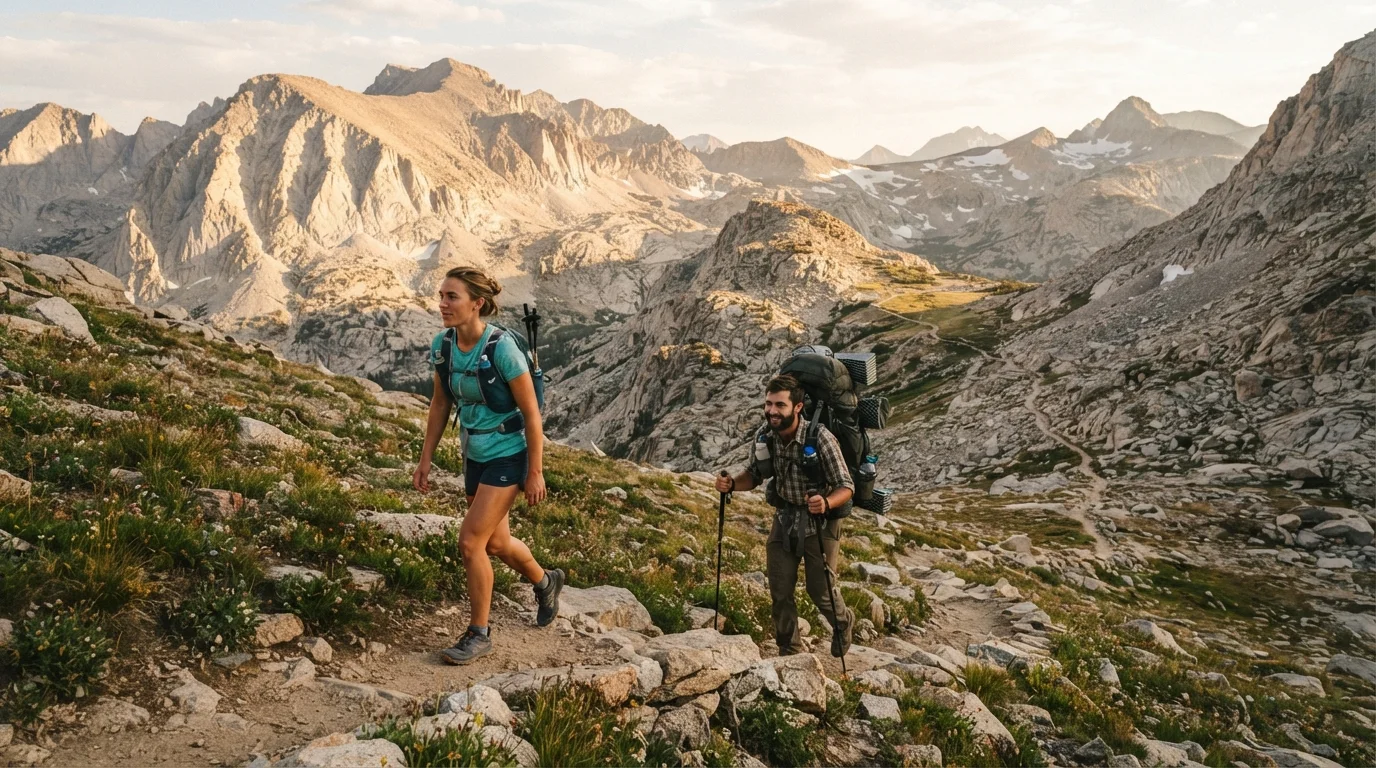
Option A
Day Pack
The lean, agile companion for short adventures.
Best for: Hikers, urban explorers, and travelers covering ground within a single day who need easy access and minimal weight.
Option B
Backpacking Pack
The full-featured hauler built for nights in the backcountry.
Best for: Multi-day trekkers and wilderness campers who need to carry shelter, sleep systems, food, and all their own supplies.
Volume and Load: The Core Difference
The most fundamental distinction between a day pack and a backpacking pack is volume — and everything that flows from it. Day packs typically fall in the 10–35 liter range, enough space for water, snacks, a layer or two, sunscreen, and a basic first-aid kit. Backpacking packs generally begin around 40 liters and can stretch past 75 liters, accommodating a tent, sleeping bag, sleep pad, cook system, and food for multiple days.
More volume means more weight, which is why backpacking packs are engineered with internal aluminum or composite frames and wide, padded hip belts. These structural elements shift the majority of the load from your shoulders onto your hips and core — the body parts best equipped to handle it. Day packs have minimal or no frames, because they simply aren't designed to carry 25–40 lbs of gear safely over long distances.
| Criterion | Day Pack | Backpacking Pack |
|---|---|---|
| Typical volume | 10–35 liters | 40–75+ liters |
| Frame and suspension | Minimal or none | Internal frame + hip belt |
| Ideal carry weight | Up to ~15–20 lbs | 20–50 lbs or more |
| Trip length | Single day or few hours | Overnight to multi-week |
| Packed weight (empty pack) | 0.5–1.5 lbs typical | 3–7 lbs typical |
| Overnight gear capacity | No | Yes |
| Ease of access | High — simple layout | Moderate — more compartments |
Fit, Suspension, and Comfort Over Miles
A backpacking pack's suspension system is its defining engineering feature. Adjustable torso length, contoured hip belts, and load-lifter straps near the shoulder allow the pack to be dialed to your exact body dimensions. Getting a proper fit — ideally with an in-person adjustment — is essential before any multi-day trip. An ill-fitting backpacking pack can cause lower-back pain, shoulder bruising, and postural fatigue.
Day packs trade suspension sophistication for simplicity. Padded shoulder straps and a sternum strap are standard; some include a thin framesheet for light structure. That's sufficient when total pack weight stays under roughly 15–20 lbs, the practical upper limit for most day hikers. For the right multi-day trekking format, the suspension system can make or break the experience.
20–25%
Recommended max load as share of body weight
Many wilderness medicine and hiking organizations suggest keeping pack weight at or below roughly 20–25% of a hiker's body weight to reduce injury risk on long trails.
40L+
Minimum volume for a solo overnight
Gear experts generally agree that carrying a tent, sleeping bag, pad, cook system, and 2–3 days of food requires at least 40 liters of usable volume for most hikers.
Organization, Access, and Convenience
Day packs generally win on accessibility. A single main compartment, one or two front pockets, and hip-belt pockets give you fast access to everything without unpacking. They're easy to swing off your back on a summit and root through mid-hike. This simplicity also makes them ideal companions for travel days, city exploring, and day trips from a base camp.
Backpacking packs offer more specialized compartments — a sleeping bag compartment at the base, a lid pocket for frequently used items, side water-bottle sleeves, and gear loops for trekking poles or ice axes. This organization rewards methodical packers but can feel cumbersome for quick access. If you want to dial in your packing philosophy, our guide to packing strategy is a useful companion regardless of which pack you choose.
Ultralight Backpacking: A Middle Ground
Some experienced backpackers use cuben-fiber or ultralight packs in the 35–45 liter range by dramatically reducing base-layer gear weight. This approach demands deliberate gear selection and experience, and isn't recommended for beginners. If you're new to overnight hiking, starting with a conventionally sized backpacking pack gives you the organizational room and load support to build skills safely.
Matching the Pack to Your Actual Trip
The simplest rule: if you're sleeping outside, you need a backpacking pack. If you're returning to a car, hotel, or basecamp by nightfall, a day pack almost certainly suffices — and will be lighter and less fatiguing throughout the day.
Hybrid scenarios exist. Some travelers carry a large travel pack as checked luggage and a packable day pack for exploring — a pairing worth considering if your itinerary mixes transit days with active hiking. Similarly, adventure travel planning often involves both, especially on expeditions that combine base-camp days with summit attempts requiring only a light summit pack.
Weight matters beyond the pack itself. Before finalizing your choice, audit what you're actually carrying. Many hikers discover they're overpacking and could comfortably downsize. For road-based portions of your trip, smart luggage management — covered in our car-packing guide — complements solid trail-pack selection.
The content on this site is for informational purposes only and is not a substitute for professional advice. Always consult a qualified professional for guidance specific to your situation.