

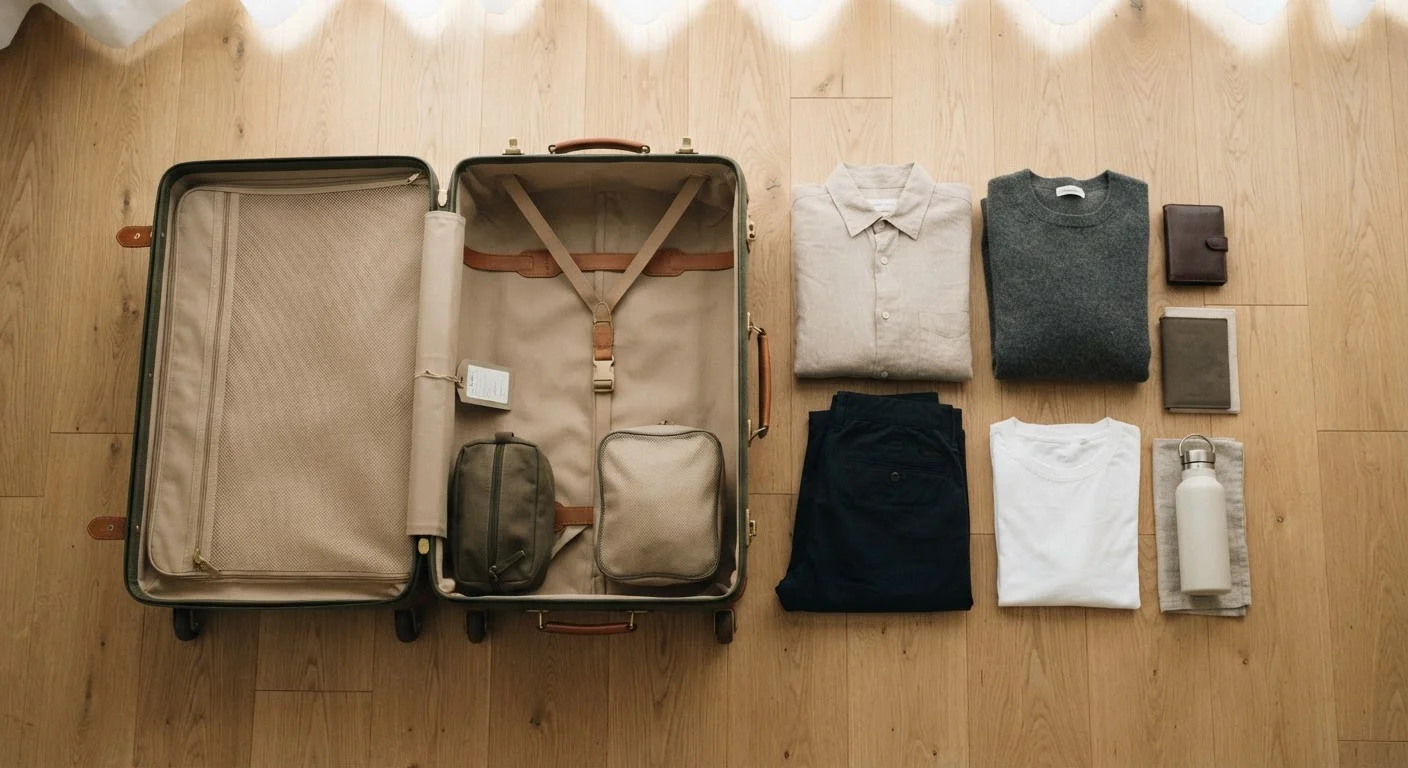
Why Overpacking Is a Structural Problem, Not a Willpower One
Most travelers overpack not because they're careless, but because packing happens at home — where every item feels both accessible and necessary. The mental context of your own closet is fundamentally different from the context of carrying a bag up four flights of stairs in a foreign city. This mismatch is the core problem.
Overpacking carries real costs beyond tired shoulders: checked bag fees, time spent at carousels, the inability to take a spontaneous bus or budget carrier mid-trip, and the cognitive load of managing too much stuff in unfamiliar spaces. The same instinct toward over-scheduling that leaves city travelers seeing nothing applies to packing — more is not more.
The solution isn't a stricter packing list. It's a repeatable process that forces honest evaluation of each item against your trip's actual demands — not its hypothetical worst-case demands.
What you will need
Luggage Scale
Lets you weigh your bag at home so you avoid surprise fees or gate-check situations at the airport.
Packing Cubes
Compress and organize clothing by category, making it easier to see exactly what you're bringing and spot redundancies.
Full-Length Mirror or Flat Surface
Laying every item flat on a bed or floor gives you a complete visual inventory before anything goes into the bag.
How to Pack Strategically: Step-by-Step
Follow these steps in order. Each stage is designed to catch a different category of unnecessary items before they make it into your bag.
Airline Baggage Rules Change Frequently
Carry-on size and weight limits vary by airline, route, and even aircraft type, and they are updated without broad notice. Always verify current restrictions directly with your carrier before you pack. What fits on one flight may incur fees or require gate-checking on the next leg of a multi-carrier itinerary.
Write down your itinerary's real demands
Before touching your closet, list every distinct activity type on your trip: transit days, casual sightseeing, outdoor activities, any formal dinners, beach time, or hiking. Be specific. "Europe trip" is not useful; "four days of city walking, one overnight train, one coastal day" is. Each activity type — not each day — is what drives your packing needs.
Lay every candidate item flat before packing
Pull out everything you're considering and spread it across a bed or floor — nothing goes directly into the bag yet. This visual inventory is essential. Items tucked into corners of a suitcase feel weightless; spread on a surface, the volume becomes obvious. Seeing your full selection at once exposes duplication and wishful thinking immediately.
Apply the versatility filter to clothing
For each clothing item, ask: does this combine with at least two other items on my list to create a different outfit? If the answer is no, set it aside. Prioritize neutral colors, layerable pieces, and fabrics that dry quickly. A single pair of versatile trousers that works for both hiking and a casual restaurant earns its place; a dedicated "just in case" outfit rarely does.
Living out of a carry-on across European climates offers a useful model for how layering and fabric choice replace volume.
Audit toiletries and electronics ruthlessly
These two categories are responsible for a disproportionate share of excess weight. For toiletries, identify what your accommodation likely provides (most hotels supply shampoo, conditioner, and body wash) and what you can buy at your destination if needed. For electronics, question every cable, adapter, and device. Ask: will I genuinely use this on this specific trip, or am I packing it because I own it?
Pack your bag, then remove 20%
Once everything you've approved goes into the bag, zip it and lift it. Then open it and remove roughly one-fifth of the contents — ideally the items you felt least certain about during earlier steps. This forced removal round mimics the real-world constraint you'll face at an airport check-in or when climbing stairs at a station. The items that survive this round are the ones that genuinely earned their place.
Weigh and verify against your airline's limits
Use a luggage scale to check your bag's final weight against your carrier's posted limits for your specific fare class and route. If you're over, return to toiletries and clothing first — these offer the most reclaim without functional loss. Note that weight limits for international and domestic segments on the same itinerary often differ.
The One-Week Rule Works for Any Trip Length
Experienced travelers often observe that a well-chosen week's worth of clothing — with access to laundry — covers trips of almost any duration. Rather than adding items for each additional week, plan one laundry session every five to seven days. Most hotels, hostels, and vacation rentals either provide laundry access or can direct you to a nearby laundromat.
What Good Packing Actually Looks Like in Practice
A well-packed bag for a ten-day trip typically contains no more than a week's worth of clothing, a small toiletry kit limited to what isn't available at the destination, and a tightly curated electronics pouch. It fits in an overhead bin or a standard hiking pack without force.
Packing strategy also depends on your mode of travel. If you're planning a long drive, road trip packing guides address the different logic of vehicle-based travel, where weight matters less but organization and access still matter enormously.
The deeper shift is learning to trust that most things you forget can be sourced locally — and that traveling with less leaves room for what a trip is actually for: presence, flexibility, and the confidence that comes from moving through the world without being slowed down by your own luggage.
Don't Pack Medications in Checked Luggage
Checked bags can be delayed, misdirected, or temporarily inaccessible. Keep all essential medications, medical devices, and relevant documentation in your carry-on where they remain within reach. Consult your healthcare provider about managing prescriptions across time zones or extended trips before you travel.
The content on this site is for informational purposes only and is not a substitute for professional advice. Always consult a qualified professional for guidance specific to your situation.