

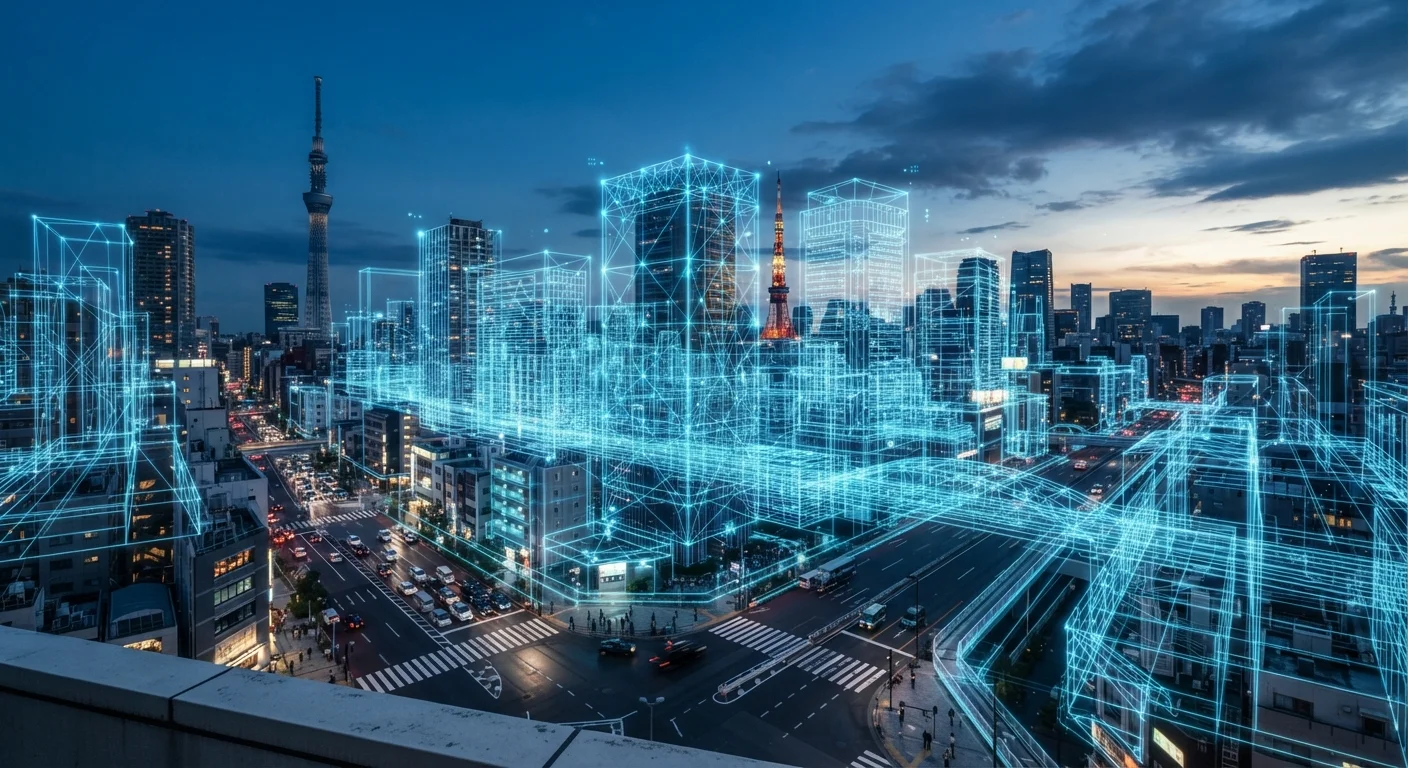
More Than a 3D Model
Most people picture a digital twin as a detailed 3D graphic — a building rendered in software, or a mechanical part rotating on a screen. That image undersells the concept considerably. What makes a digital twin genuinely powerful is its live connection to the physical world.
Sensors embedded in the real object continuously stream data — temperature, pressure, vibration, flow rates, structural stress — into the virtual model. The twin updates itself accordingly, so at any given moment it reflects what is actually happening, not what engineers assumed would happen when they built the model. This is the characteristic that separates a digital twin from a standard computer simulation, which runs on fixed starting conditions and then stops.
The term was first used in an engineering context in the early 2000s, but the underlying idea — maintaining a synchronized virtual counterpart to a physical system — has been developed and refined over decades of aerospace and manufacturing research. It has since expanded far beyond industrial settings. For a broader look at how this concept fits into the wider world of emerging technology vocabulary, see The Vocabulary of Emerging Tech.
$73.5B
Projected global digital twin market size by 2027
According to market research aggregated by MarketsandMarkets, the digital twin market was forecast to grow substantially through the latter half of the 2020s, driven by adoption in manufacturing and smart infrastructure.
~26B
IoT devices globally providing twin data streams
Statista and industry analysts have estimated the global installed base of IoT-connected devices in the tens of billions, forming the sensor backbone that makes large-scale digital twin deployments feasible.
15–25%
Reduction in maintenance costs cited by industrial users
Industrial case studies reported by organizations including Deloitte and McKinsey have cited predictive maintenance enabled by digital twins as contributing to meaningful reductions in unplanned downtime and maintenance expenditure.
Where Digital Twins Are Being Deployed Today
The range of domains now using digital twins is striking, and it illustrates how broadly the concept translates across industries.
Manufacturing and Industrial Equipment
Factories use digital twins of machinery to monitor wear in real time. When sensor data indicates that a component is behaving outside normal parameters, engineers can investigate and schedule maintenance before a breakdown occurs — a practice called predictive maintenance. This approach can reduce unplanned downtime significantly without requiring engineers to physically inspect every machine on a set schedule.
Smart Cities and Infrastructure
Several cities around the world have developed digital twins of their road networks, utility grids, and drainage systems. Urban planners can model the effects of a new development project on traffic flow, or simulate how a major storm would stress the drainage infrastructure, before committing to any physical changes. Singapore's Virtual Singapore project is a widely cited early example of city-scale digital twin development.
Aerospace and Engineering
Aircraft manufacturers have long used digital twins to monitor the health of engines and airframe components throughout a plane's service life. Each physical aircraft accumulates a data history that its virtual counterpart mirrors, allowing engineers to model fatigue and forecast when parts need replacement.
Healthcare and Human Biology
Perhaps the most striking frontier is medicine. Researchers are exploring digital twins of individual organs — a heart, a lung — built from patient imaging data and physiological measurements. These models could allow clinicians to simulate how a particular patient might respond to a drug or a surgical procedure before any intervention takes place. This field is still largely experimental, and anyone with health questions should consult a qualified medical professional for guidance relevant to their situation.
The Technology Underneath
Digital twins sit at the intersection of several technologies that have matured simultaneously. IoT sensors provide the data pipeline. Cloud computing provides the storage and processing power needed to handle continuous data streams at scale. Physics-based modeling defines how the virtual system behaves under various conditions. And increasingly, machine learning layers on top to identify patterns and generate predictions that rule-based models alone would miss.
This convergence is part of why digital twins have moved from theoretical engineering concept to practical deployment tool within a relatively short period. The infrastructure required to run them — affordable sensors, high-bandwidth connectivity, scalable cloud platforms — simply did not exist at the necessary scale until recently.
The relationship between digital twins and spatial computing is worth noting: as spatial computing matures, digital twin data is expected to become one of the primary inputs for how we interact with blended physical-digital environments.
“The digital twin is not just a tool for engineers. It is becoming the operating system through which we understand and manage complex physical systems — from a single pump to an entire city.”
— Grieves, Michael W., Executive Director, Advanced Manufacturing Research, Florida Institute of Technology; widely credited with formalizing the digital twin concept
Privacy, Security, and the Limits of the Concept
Digital twins do not come without complications. When a twin models a physical environment that includes people — a hospital ward, a city block, a workplace — the data flowing into that model inevitably captures human behavior. Questions about who owns that data, who can access it, and how it can be used are not yet resolved in most jurisdictions.
Security is an equally serious concern. A digital twin that is connected to critical infrastructure — a power grid, a water treatment plant — represents both an asset and a potential attack surface. Compromising the twin's data integrity could mislead operators about the real state of the system it represents.
It is also worth being clear about what digital twins are not. They are distinct from the kind of digital identity concepts discussed in privacy contexts. If you are thinking about how your online behavior is tracked and profiled, that is a different conversation — one explored in detail in the article Digital Footprint vs. Digital Shadow.
How to Evaluate Digital Twin Claims
When you encounter news stories about digital twins, ask two questions: Is the virtual model continuously updated with live data, or is it a one-time simulation? And what happens when the real-world system changes significantly — does the twin adapt? A genuine digital twin answers yes to both. Marketing language sometimes applies the term loosely to static models or dashboards that lack real-time synchronization.
Frequently Asked Questions
A digital twin is a virtual copy of something real — a machine, a building, a city, or even a body organ — that updates in real time using sensor data. It allows users to observe, test, and predict without interacting with the actual physical object.
Traditional simulations run once using fixed assumptions. A digital twin is continuously synchronized with its real-world counterpart through live data, so it reflects current conditions rather than a snapshot in time.
Digital twins are actively used in manufacturing (monitoring factory equipment), aerospace (testing aircraft components), smart cities (managing traffic and utilities), and medical research (modeling organs and surgical procedures).
Not exactly. Digital twins are purpose-built operational tools grounded in real-world data, while the metaverse and VR are primarily focused on immersive user experiences. There is overlap — spatial computing can incorporate digital twin data — but they serve different primary functions.
Yes, particularly when applied to human health or urban populations. A digital twin that models a person's physiology or a city's movement patterns collects sensitive data that requires careful governance, security safeguards, and clear consent frameworks.
Research programs and some healthcare institutions are exploring personalized digital twins — virtual models of a patient's anatomy or physiology used to plan treatment. This remains largely experimental and is distinct from the consumer-facing digital identity concepts described in everyday privacy discussions.
The content on this site is for informational purposes only and is not a substitute for professional advice. Always consult a qualified professional for guidance specific to your situation.