

Why Apps Are Built to Interrupt You
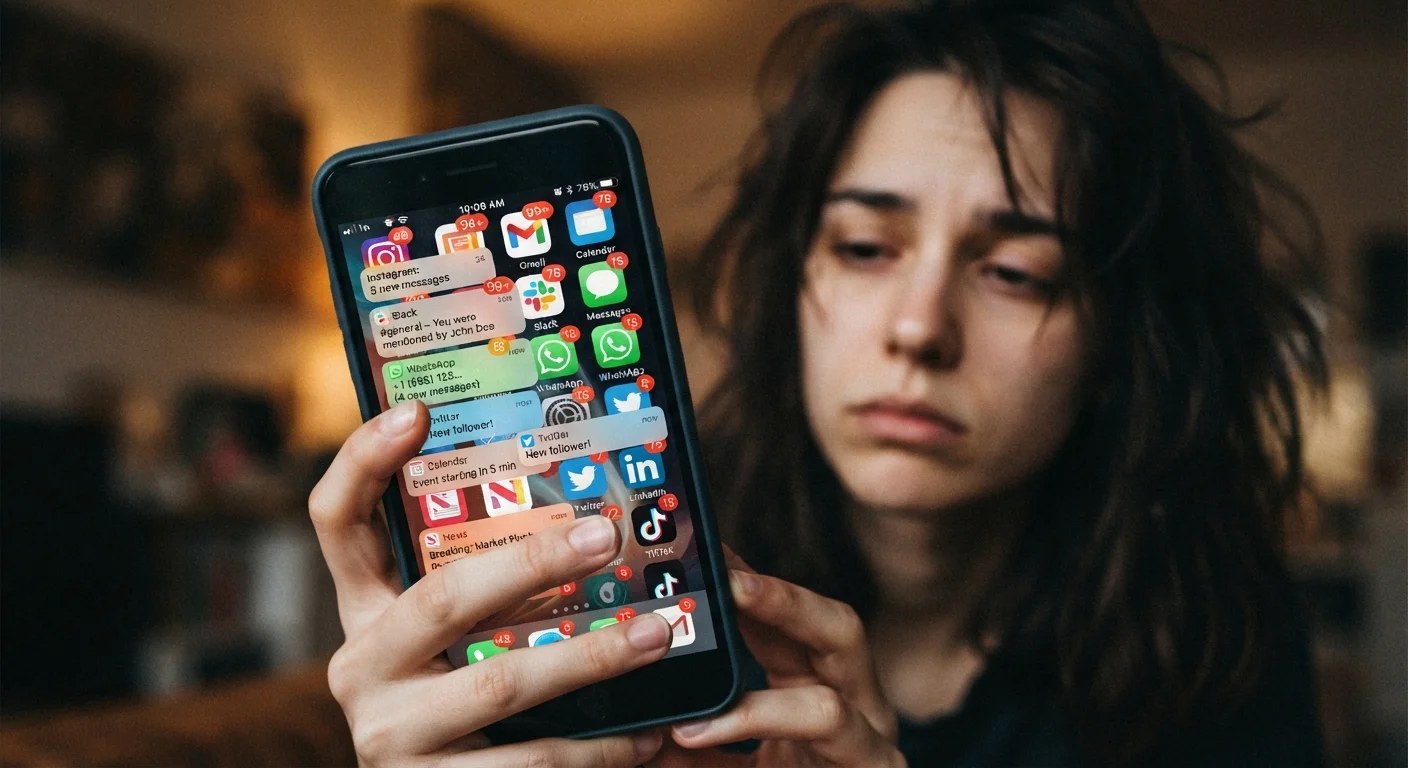
Every notification badge, chime, and lock-screen banner you receive exists because someone decided it should. Notifications are not incidental features — they are deliberate product decisions, engineered to return your attention to an app at the moment its engagement metrics need a boost.
The business model is straightforward: most consumer apps are free because the product being sold is your attention. Advertisers pay for eyeballs and time-on-platform. The longer you spend in an app, the more ad inventory a platform can sell. Notifications are the most direct lever for driving re-engagement.
This is the core logic of the attention economy — a term coined in academic literature to describe the competitive marketplace where apps, media, and platforms vie for a finite human resource: focused attention. Unlike money, attention cannot be saved or stored. Once it is spent, it is gone.
“We've created a world in which online connection has become primary, and we've done this largely because it serves the economic interests of the companies that have figured out how to sell our attention to advertisers.”
— Cal Newport, Computer science professor and author on digital minimalism
The Cognitive Cost of Constant Interruption
Every interruption carries a recovery cost that goes well beyond the seconds it takes to glance at a screen. Research in cognitive psychology has consistently shown that switching tasks — even briefly — requires a mental "reset" period before full concentration is restored. This phenomenon, sometimes called the attention residue effect, means a single notification can degrade your focus for far longer than the interruption itself lasted.
Studies have also found that the mere presence of a smartphone on a desk — even face down and silent — measurably reduces available working memory, as a portion of cognitive bandwidth is unconsciously spent resisting the urge to check it.
65–80+
Average daily notifications per smartphone user
Industry and academic estimates suggest most users receive dozens of alerts daily, many of which go unread but still generate momentary distraction.
~23 min
Average time to regain full focus after an interruption
Research by Gloria Mark at the University of California, Irvine, found it takes an average of about 23 minutes to fully return to a task after an interruption.
Measurably reduced
Working memory with phone visible on desk
A 2017 study published in the Journal of the Association for Consumer Research found cognitive capacity was lower when a smartphone was nearby, even when switched off.
At scale, these micro-interruptions add up. A knowledge worker interrupted dozens of times a day accumulates hours of fractured attention weekly — time spent not in deep, productive work, but in the shallow cognitive mode of scanning, reacting, and recovering.
How Behavioral Design Deepens the Problem
Notifications don't just interrupt — they are calibrated to feel impossible to ignore. App designers draw on established behavioral psychology, particularly the concept of variable-ratio reinforcement: the idea that unpredictable rewards are more compelling than predictable ones. A notification might deliver something trivial, or it might deliver a meaningful social response. That unpredictability is precisely what makes checking feel irresistible.
Social proof cues — "X people liked your post" — add urgency. Red badge counters tap into loss aversion. Personalized timing, driven by machine learning, delivers alerts when individual users are statistically most likely to re-engage. None of this is accidental; it is the product of extensive A/B testing and optimization.
Audit Your Notification Permissions
Go to your phone's settings and review which apps have notification access enabled. As a rule of thumb, only apps that need to reach you immediately — such as calls, messages from real contacts, or critical alerts — warrant persistent notifications. Everything else can be silenced or checked on your schedule.
Understanding these mechanisms is genuinely empowering. Once you recognize that an alert is engineered to provoke a reflexive response, you have more capacity to pause before acting on it. This is the first step toward intentional digital habits rather than reactive ones.
Reclaiming Your Attention: What the Research Suggests
The growing field of human-computer interaction research offers some clear guidance. Studies consistently show that users who take deliberate control of their notification settings report lower stress, better sleep quality, and improved ability to sustain focus. The intervention does not require dramatic digital detoxes — targeted, incremental changes produce real results.
Practical starting points include: disabling non-time-sensitive notifications entirely, consolidating alerts into scheduled check-in times (sometimes called "notification batching"), and using built-in focus or do-not-disturb modes during work and sleep hours. For a comprehensive look at the settings available on most smartphones, see our guide to notifications, focus modes, and app permissions.
If you want to go further, reviewing which apps are installed and what data they collect is a logical next step — our app audit walkthrough can help. It is also worth noting that some apps marketed for wellbeing carry their own design trade-offs; see The Pros and Cons of Mental Health Apps for Everyday Wellbeing for a balanced look at that category.
The attention economy will not redesign itself in your favor. But the settings to push back already exist on your device — the knowledge to use them effectively is what makes the difference.
This Is General Information, Not Medical Advice
If you are experiencing significant anxiety, sleep disruption, or distress that you associate with technology use, speaking with a qualified mental health professional is worthwhile. The patterns described here are broadly documented, but individual experiences vary and personal circumstances matter.
Frequently Asked Questions
Notification overload occurs when the volume and frequency of digital alerts exceeds a user's ability to process them meaningfully. It matters because constant interruptions fragment concentration, increase stress, and train the brain to expect frequent stimulation, making sustained focus harder over time.
Yes, in many cases. App designers use behavioral psychology principles — including variable rewards and social triggers — to make notifications feel urgent and compelling. The goal is to maximize time-on-app, which drives advertising revenue.
Research and industry data suggest smartphone users receive anywhere from 65 to over 80 notifications per day on average, though this varies widely by app mix and settings. Many of these go unread, yet each one still creates a moment of potential disruption.
Studies in human-computer interaction indicate that reducing notification frequency lowers self-reported stress and improves task performance. Small changes — like disabling non-essential alerts — can meaningfully reduce the number of cognitive interruptions throughout a day.
Begin with a notification audit: review which apps have permission to send alerts and disable any that don't require immediate action. See our <a href="/tech-gadgets/everyday-devices/notifications-focus-modes-and-app-permissions-taking-back-control-of-your-phone">guide on notifications and focus modes</a> for a practical walkthrough.
Many apps request permissions — including location access and background data — that remain active between sessions. For a plain-language breakdown of what apps collect, see <a href="/tech-gadgets/digital-life/what-your-apps-actually-know-about-you">What Your Apps Actually Know About You</a>.
The content on this site is for informational purposes only and is not a substitute for professional advice. Always consult a qualified professional for guidance specific to your situation.