

Start here
What Counts as an Exotic or Non-Traditional Pet?
Next
Animal Welfare: Can You Meet Their Needs?
Then
Legal Landscape: What's Permitted Where You Live
Go deeper
Ecological and Conservation Concerns
When you're ready
Making a Responsible Decision
What Counts as an Exotic or Non-Traditional Pet?
The term exotic pet generally refers to any animal that is not a domesticated dog, cat, or common farm animal. This broad category spans reptiles such as iguanas and ball pythons, birds like macaws and cockatoos, small mammals including sugar gliders and hedgehogs, and more unusual animals such as fennec foxes or certain primates. The boundary between "exotic" and "non-traditional" can blur — animals legal and widely kept in one state may be prohibited in a neighboring one.
What unites these animals is that, unlike domestic dogs or cats shaped by millennia of human cohabitation, most exotic species retain wild behavioral traits, specialized physiological needs, and ecological roles that didn't evolve alongside human households. That distinction matters enormously when evaluating whether ownership is appropriate. For broader context on responsible ownership principles, see what responsible pet ownership actually means.
Exotic pet
Any animal kept as a companion that is not a traditionally domesticated species such as a dog or cat. Examples include reptiles, parrots, and small wild mammals.
Five Domains model
A framework used in animal welfare science to assess an animal's wellbeing across nutrition, environment, health, behavior, and mental state.
CITES
The Convention on International Trade in Endangered Species — an international agreement that regulates trade in wild plants and animals to prevent their overexploitation.
Invasive species
A non-native organism that establishes a self-sustaining wild population in a new habitat, often causing harm to native wildlife and ecosystems.
Captive-bred
An animal that was born and raised in a controlled setting rather than captured from the wild, generally considered a more ethical source for exotic pets.
Stereotypic behavior
Repetitive, seemingly purposeless movements or actions seen in captive animals that indicate chronic stress or unmet behavioral needs.
Animal Welfare: Can You Meet Their Needs?
Welfare is the cornerstone of any ethical discussion about exotic pets. The Five Domains model, widely used in animal welfare science, evaluates an animal's nutrition, environment, health, behavior, and mental state. For most exotic species, replicating even a fraction of their natural environment at home is a significant challenge.
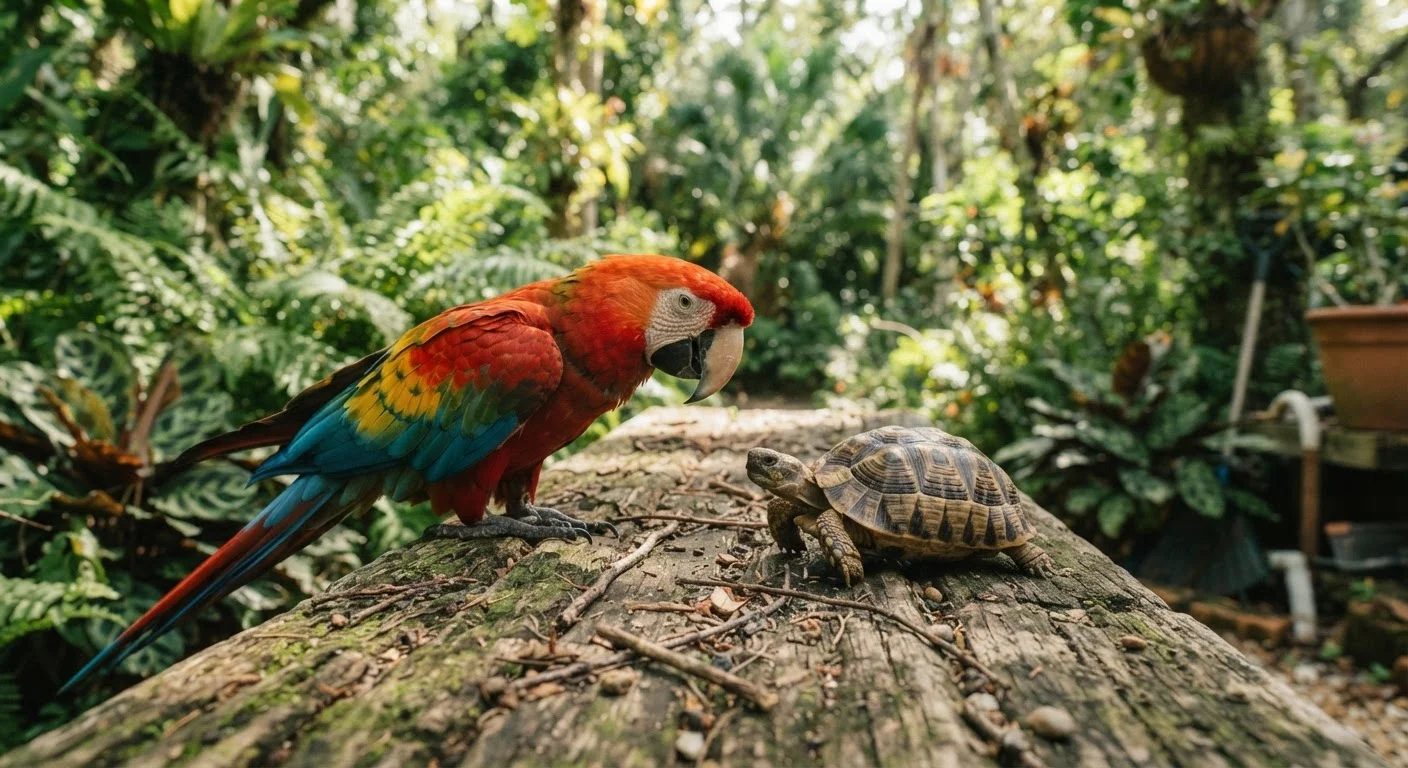
Consider a ball python: it requires precisely controlled temperature gradients, humidity levels, appropriate hides, and a prey diet matched to its natural feeding behavior. A macaw needs hours of social interaction, cognitive stimulation, and space for flight — needs that are rarely met in standard household settings. Falling short on any of these domains doesn't just make an animal uncomfortable; it can cause chronic stress, stereotypic behaviors (repetitive, purposeless movements), immune suppression, and shortened lifespan.
Before acquiring any exotic animal, consult an exotic animal veterinarian to honestly assess whether you can meet the animal's full range of needs. The questions every prospective pet owner should sit with apply equally — and with even higher stakes — when the animal in question is non-traditional.
Find a Vet Before You Commit
Exotic animal veterinarians are far less common than small-animal practitioners, and in some regions they may be hours away. Confirm that qualified veterinary care is accessible in your area before you acquire the animal — not after. The Association of Reptilian and Amphibian Veterinarians (ARAV) and the Association of Avian Veterinarians (AAV) maintain directories of credentialed exotic practitioners.
Legal Landscape: What's Permitted Where You Live
Owning an exotic pet in the U.S. involves navigating a layered legal framework. At the federal level, laws such as the Endangered Species Act, the Lacey Act, and the Wild Bird Conservation Act prohibit or restrict trade in many species. State laws add another layer — California, for instance, prohibits ferrets; Hawaii bans nearly all exotic species to protect its fragile island ecosystem. County and municipal ordinances may be stricter still.
Certain species require state or federal permits even where ownership is technically allowed. Failing to comply can result in the animal being confiscated, substantial fines, and in some cases criminal charges. Our guide to the legal side of owning a pet covers registration and documentation requirements in more detail. Always contact your state's fish and wildlife agency and local animal control authority to verify what is permitted before acquiring any exotic animal.
Laws Change — Always Verify Before You Buy
State and local regulations governing exotic animals are updated regularly and vary dramatically by jurisdiction. Relying on information from breeders, hobbyist forums, or even older published guides can lead to unintentional violations. Contact your state fish and wildlife agency and local animal control authority directly to confirm what is currently legal in your specific location.
Ecological and Conservation Concerns
The exotic pet trade has documented links to wildlife population decline. Wild capture for the pet market — even when legally permitted — removes animals from breeding populations and carries high mortality rates during capture and transport. Some species, including many parrot species and certain reptiles, are listed under CITES, which regulates their international trade. Purchasing wild-caught individuals of these species, even unknowingly, can contribute to their decline.
A separate but equally serious concern is invasive species. When exotic pets escape or are released, they can establish breeding populations in ecosystems that have no natural predators for them. Burmese pythons in South Florida represent one of the most widely studied cases, with measurable impacts on native mammal populations documented by researchers at institutions such as the U.S. Geological Survey. Responsible exotic owners must invest in secure, escape-proof enclosures and have a plan for the animal's lifetime care — including what happens if they can no longer keep it. Releasing an exotic animal into the wild is never an acceptable option. For a parallel discussion about domestic animals and ecological impact, see our article on the indoor vs. outdoor cat welfare debate.
Making a Responsible Decision
Ethical exotic pet ownership is not impossible, but it demands a higher threshold of research, resources, and long-term commitment than most people anticipate. A responsible path forward looks like this: research the species thoroughly using veterinary and wildlife resources, not just hobbyist forums; locate a veterinarian experienced with that species before acquisition; verify all applicable laws; and source the animal only from a licensed captive-breeding operation or a rescue organization.
Ask yourself honestly whether the animal's social, spatial, and dietary needs fit your home, schedule, and budget for the full span of its likely lifespan — which can be decades for parrots, tortoises, and some reptiles. Consider also the community dimension: neighbors, landlords, and household members are all affected. Our guide to being a good pet owner in a shared community addresses some of those social responsibilities. If after thorough reflection the answer is that you can genuinely provide what the animal needs, responsible exotic ownership is a meaningful commitment. If any major need cannot be met, the most ethical decision may be to choose a species better matched to your circumstances.
This article provides general educational information about exotic and non-traditional pets. It is not legal advice or veterinary guidance. Always consult qualified professionals and verify laws with your local and state authorities before acquiring any exotic animal.
U.S. Fish & Wildlife Service — CITES Information
Official federal resource explaining which species are protected under CITES and what documentation is required for legal ownership or trade in the United States.
Association of Reptilian and Amphibian Veterinarians (ARAV)
A professional organization of veterinarians specializing in reptile and amphibian care, offering a directory to help owners locate qualified practitioners nationwide.
Association of Avian Veterinarians (AAV)
The leading professional body for bird veterinary medicine, providing a practitioner directory and educational resources for parrot and avian pet owners.
State Wildlife Agency Directory (AFWA)
The Association of Fish and Wildlife Agencies provides links to every U.S. state wildlife agency, where you can verify current exotic pet regulations in your jurisdiction.
Frequently Asked Questions
Legality depends heavily on the species and your location. Federal laws like the Endangered Species Act restrict certain animals nationwide, while each state and municipality may add further prohibitions or permit requirements. Always verify with your state wildlife agency before acquiring any exotic animal.
Most exotic animals have specific habitat, dietary, social, and psychological needs that are difficult to meet in captivity. Stress, nutritional deficiency, and behavioral abnormalities are common outcomes when those needs go unmet. A qualified exotic animal veterinarian can help you evaluate whether you can realistically provide adequate care.
Yes. Animals that escape or are released can establish invasive populations that harm native wildlife and habitats. Burmese pythons in Florida are a well-documented example of this problem. Responsible owners must prevent escapes and never release exotic animals into the wild.
Captive-bred individuals from reputable, licensed breeders or rescue organizations are generally considered more ethical sources than wild-caught animals. Wild capture drives population decline and the stress of capture causes high mortality in transport. Always ask for documentation of origin.
Many exotic species are not well-suited for households with young children due to stress sensitivity, zoonotic disease risk, or unpredictable behavior. Researching species-specific temperament and consulting a veterinarian familiar with the animal is essential before making any decision.
Never release the animal into the wild. Contact a licensed wildlife sanctuary, exotic animal rescue organization, or your state wildlife agency for surrender options. Some species-specific clubs and herpetological societies also facilitate responsible rehoming.
The content on this site is for informational purposes only and is not a substitute for professional advice. Always consult a qualified professional for guidance specific to your situation.