

Why Enrichment Matters Even on a Packed Day
Boredom in pets is not a minor inconvenience — it frequently drives destructive chewing, excessive vocalization, repetitive behaviors, and anxiety. The American Veterinary Medical Association and certified animal behaviorists consistently point to environmental enrichment as a foundational component of behavioral wellness, not an optional bonus. Understanding how pets think and respond to their environment helps clarify why a mentally stimulated pet is generally a calmer, healthier companion.
The good news: enrichment does not require hours of free time or expensive equipment. The activities below are designed to slot into real-world schedules — a few minutes in the morning, a brief pause at lunch, or a quick wind-down before bed. Pairing consistent enrichment with a structured daily feeding routine can further support your pet's overall wellbeing.
Use Mealtimes as Training Sessions
Instead of placing food in a bowl and walking away, use a portion of your pet's daily kibble or appropriate food as training currency. Five minutes of simple cue practice — sit, stay, touch, down — provides cognitive work and reinforces communication between you and your pet. Dogs and cats can both learn cue-response behaviors using positive reinforcement, and even brief daily sessions accumulate quickly into measurable skill development. This approach costs nothing extra and turns a routine task into meaningful interaction.
Five minutes of cue training during mealtime turns feeding into genuine mental exercise.
Introduce Foraging and Puzzle Feeders
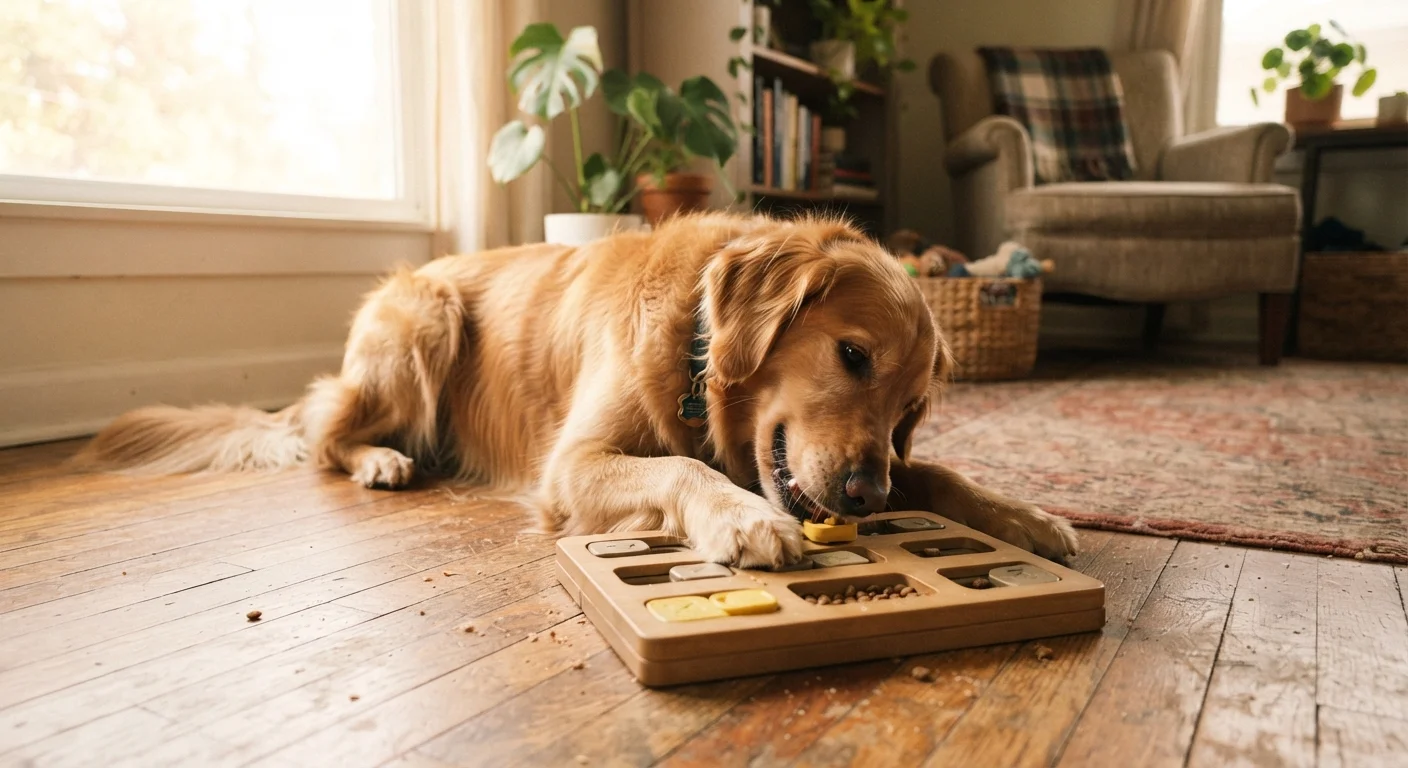
Scatter feeding — spreading dry food across a textured mat, in a muffin tin, or across a patch of grass — taps into an animal's natural drive to search and work for food. Puzzle feeders extend this further by requiring pets to manipulate levers, flaps, or chambers. Research on captive and domestic animals consistently shows that animals often prefer food they have worked for over food presented freely, a concept known in behavioral science as contrafreeloading. Rotate puzzle types every few days to prevent habituation.
Animals often prefer food they've worked for — foraging activities tap directly into that drive.
Rotate Toys on a Weekly Cycle
Novelty sustains interest. A toy ignored after three days of continuous access can become engaging again after a week in a drawer. Divide your pet's toys into two or three groups and rotate access on a weekly schedule. For cats, this is especially effective with prey-type wand toys and crinkle balls. For dogs, rotating chew items, tug toys, and fetch objects keeps play sessions fresh. You don't need to buy more — reorganizing what you already own is often enough.
Rotating toy access weekly restores novelty and re-engages pets with items they'd started to ignore.
Offer Sensory Exploration Opportunities
Pets gather enormous information through smell, sound, and texture. Bringing a handful of safe outdoor materials inside — dry leaves, a pine cone, a small log — gives dogs and cats new olfactory landscapes to investigate. Playing nature sound recordings at low volume can engage curious cats. For rabbits and guinea pigs, rearranging cage furniture or introducing safe cardboard tunnels achieves similar novelty. These micro-changes to the environment require minimal effort but reliably stimulate exploratory behavior.
A simple pine cone from the yard can provide minutes of focused sensory investigation for most pets.
Incorporate Short Sniff Walks
A fifteen-minute sniff walk — where the dog sets the pace and chooses where to stop — is more mentally tiring than a brisk structured walk of the same length. Olfactory processing is cognitively demanding for dogs; allowing them to investigate scents freely satisfies a core behavioral need. Resist the urge to keep moving. Letting your dog linger at a fence post or leaf pile is not wasted time — it is the point. Short, dog-directed sniff sessions fit easily into a lunch break or post-work routine.
A dog-directed sniff walk is more mentally tiring than a brisk structured walk of equal length.
Create a Window Perch or Bird Feeder View
Cats in particular benefit from passive visual enrichment. Positioning a cat tree, shelf, or cushioned surface near a window — especially one that overlooks a bird feeder or active garden — provides sustained engagement throughout the day without any real-time input from you. For apartment cats with limited outdoor access, this kind of environmental setup can measurably reduce restless and attention-seeking behaviors. A basic window bird feeder is an inexpensive, set-it-and-forget-it enrichment tool.
A window bird feeder provides hours of passive visual enrichment for indoor cats with no effort required.
Practice Nose Work Games
Nose work — hiding small treats in boxes, under cups, or around a room for your pet to find — requires no special equipment and takes about five minutes to set up. It builds focus, reduces anxiety, and gives dogs a structured outlet for scent-driven instincts. Start simple: hide a treat under one of three overturned cups and let your pet indicate the correct one. Gradually increase complexity as their confidence grows. Many certified animal behaviorists recommend nose work specifically for high-energy or anxious dogs as a calming outlet.
Nose work games take five minutes to set up and are especially effective for anxious or high-energy dogs.
Building Enrichment Into the Life You Already Have
None of these activities requires a blank afternoon. The key is intention: treat enrichment as a non-negotiable part of your pet's daily care rather than an occasional treat. Even rotating just two or three of these strategies each week will meaningfully reduce stress behaviors and strengthen the bond between you and your animal.
Start Small and Build a Habit
If enrichment feels overwhelming, begin with just one activity per day for two weeks. Consistency matters more than variety in the early stages. Once a single activity becomes a natural part of your routine, adding a second is straightforward. Think of it like any habit: attach it to something you already do reliably, such as your morning coffee or evening wind-down.
If you share your home or building with neighbors, some enrichment activities — particularly those involving sound or off-leash indoor movement — are worth thinking about in the context of community-minded pet ownership. Small adjustments keep everyone comfortable. Owners of rabbits, guinea pigs, or hamsters should also remember that enrichment for small pets often looks quite different — see care fundamentals for small pets for species-specific guidance.
This article is for general informational purposes only. Consult a licensed veterinarian or certified animal behaviorist if your pet displays persistent anxiety, aggression, or compulsive behaviors.
The content on this site is for informational purposes only and is not a substitute for professional advice. Always consult a qualified professional for guidance specific to your situation.