

Why Pet Dental Health Deserves More Attention
Oral disease is one of the most frequently diagnosed conditions in veterinary medicine, yet it remains one of the least addressed by pet owners at home. The American Veterinary Medical Association (AVMA) notes that most dogs and cats show signs of periodontal disease — infection and inflammation of the tissues surrounding the teeth — by the time they reach three years of age.
The consequences extend well beyond the mouth. Chronic oral infection has been associated with strain on the heart, kidneys, and liver, though veterinary researchers continue to study the precise relationship. What is clear is that pain from dental disease often goes undetected because pets instinctively mask discomfort, and owners may not recognize subtle behavioral shifts as oral pain. Understanding the common mistakes owners make is the first step toward changing that pattern. You can also learn more about recognizing hidden discomfort in our guide to reading your pet's body language.
Assuming bad breath is normal in pets.
Why it happens: Many owners treat pet breath as an unavoidable quirk rather than a health indicator, often because mild odor develops gradually and becomes the new baseline.
Skipping at-home toothbrushing because the pet resists.
Why it happens: Toothbrushing is unfamiliar and potentially uncomfortable for pets, especially if introduced abruptly in adulthood. Early resistance causes many owners to give up entirely.
Relying solely on dental chews or water additives as a complete oral care solution.
Why it happens: These products are heavily marketed and feel like an easy, passive fix. Owners understandably prefer them over the effort of daily brushing.
Waiting for obvious symptoms before seeking dental evaluation.
Why it happens: Pets rarely vocalize tooth pain, and owners often assume a pet that is eating normally has no dental problems. By the time signs are obvious, disease is often advanced.
Believing that dry kibble keeps teeth clean on its own.
Why it happens: This is one of the most persistent myths in pet nutrition. The idea that crunching kibble acts like a toothbrush has been repeated so often it's accepted as fact.
Building a Dental Care Routine That Actually Works
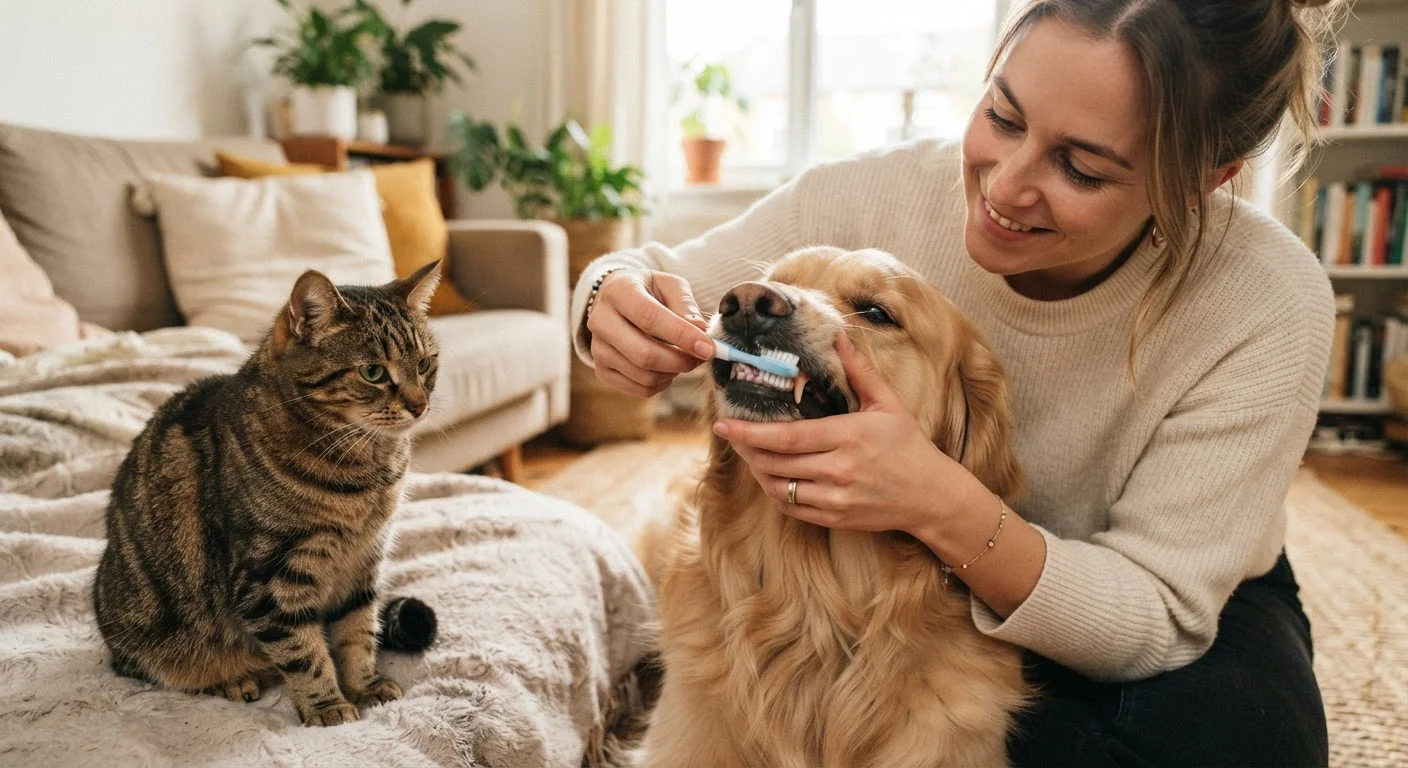
Correcting these mistakes doesn't require expensive tools or professional expertise — it requires consistency. Start toothbrushing gradually: let your pet sniff and lick the toothpaste (always use a formulation designed for animals, never human toothpaste), then introduce a finger brush, and progress to a soft-bristled brush over days or weeks.
Pair dental care with an existing daily habit — feeding time or a grooming session — so it becomes automatic. Owners who struggle with at-home grooming routines more broadly may find our article on grooming your dog at home without stressing them out helpful for building calm, cooperative habits.
Anesthesia-Free Dental Cleanings Are Not Equivalent
Some groomers and non-veterinary providers offer dental scaling without anesthesia. While the teeth may look cleaner afterward, this procedure cannot address the area below the gumline — where periodontal disease actually develops. The American Veterinary Dental College (AVDC) has stated that anesthesia-free dental scaling provides a false sense of security and may delay necessary treatment. Speak with your veterinarian about professionally supervised cleanings.
Professional dental cleanings performed by a veterinarian under anesthesia remain the standard of care for removing tartar below the gumline — something no chew or rinse can accomplish. Talk with your vet about how often your individual pet needs a professional cleaning, since breed, age, and diet all play a role. For a broader picture of what preventive veterinary care involves, see our guide on preventive care vs. reactive treatment.
This article is for general informational purposes only and is not a substitute for professional veterinary advice. Always consult a licensed veterinarian for guidance specific to your pet's health needs.
The content on this site is for informational purposes only and is not a substitute for professional advice. Always consult a qualified professional for guidance specific to your situation.