

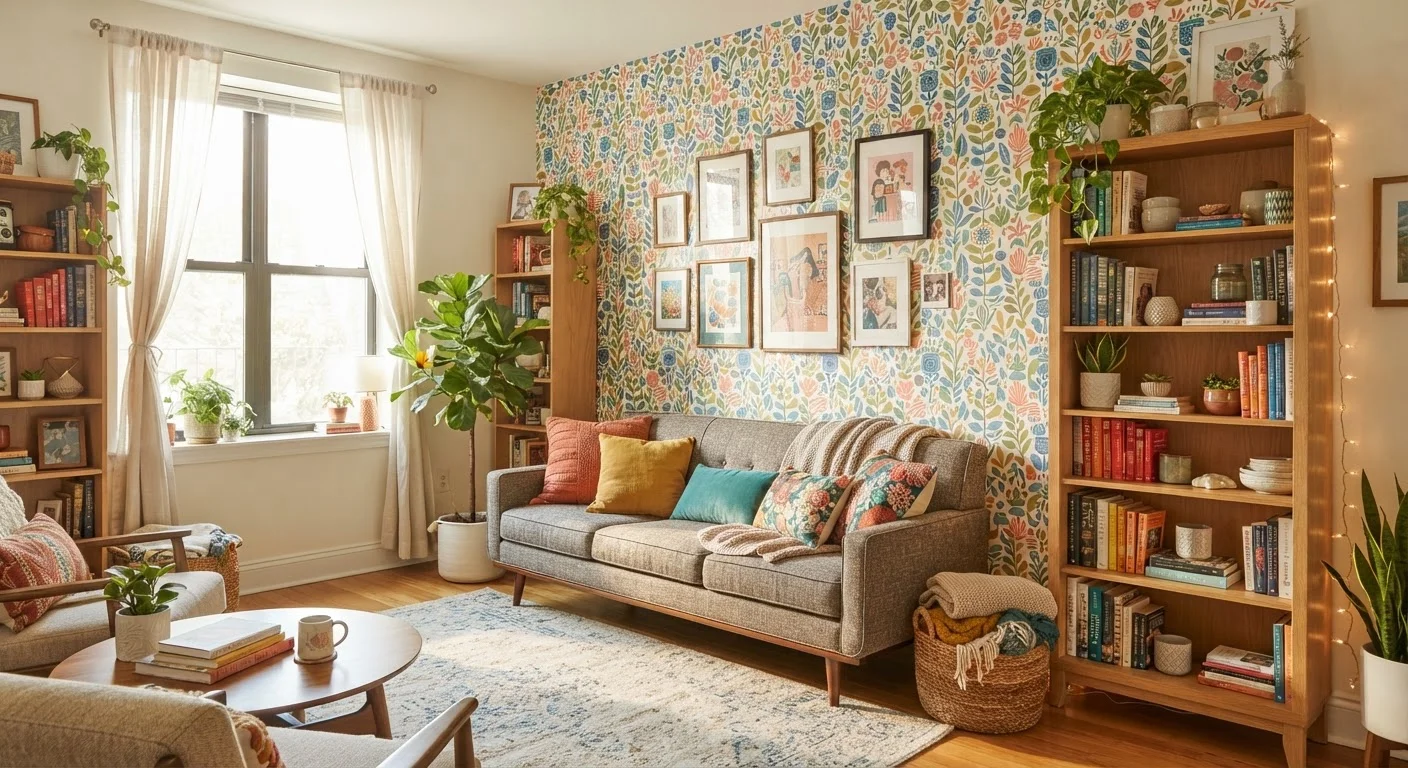
Making a Rental Feel Like Home
Renting comes with real constraints — no painting the walls a bold teal, no drilling permanent shelving into tile, no ripping out dated fixtures. But those restrictions don't have to mean living in a space that feels generic or temporary. With a thoughtful approach, renters can layer in personality, comfort, and style using methods that leave no lasting trace.
Before diving in, a good first step is a clear-eyed assessment of the space. Our room-by-room decluttering guide walks through how to audit each room before making any decorating decisions — especially useful when you're working within fixed architectural limits.
The strategies below focus on reversible, low-risk interventions that satisfy most standard lease agreements. That said, always review your specific lease and check with your landlord before making any changes, even temporary ones.
Use Peel-and-Stick Wallpaper for Accent Walls
Removable peel-and-stick wallpaper has become one of the most reliable tools for renters wanting a dramatic visual change. Applied carefully to a clean, dry wall, it creates a genuine accent wall effect — botanical prints, geometric patterns, faux brick, or linen textures — and peels away cleanly without pulling paint if removed properly.
Key application tips: start from a level baseline, work panel by panel to avoid air bubbles, and use a squeegee or flat card to smooth as you go. When removing, pull slowly at a low angle and warm stubborn sections with a hair dryer on a low heat setting. For more context on wall treatments generally, see our paint vs wallpaper comparison.
Removable wallpaper peels away cleanly — and transforms a plain wall into a design statement.
Swap Out Lighting Without Touching the Wiring
Overhead lighting in rentals is often flat and unflattering. Rather than replacing fixtures (which typically requires an electrician and landlord permission), renters can layer in plug-in pendant lights, floor lamps, LED strip lighting behind furniture, and rechargeable battery-powered sconces. These options plug into standard outlets or adhere with removable strips and add warmth, ambiance, and task lighting wherever needed.
If you want to remove a landlord-provided ceiling fixture temporarily and cap the wires, always consult a licensed electrician — this is not a DIY task. Store any original fixtures carefully and reinstall them before moving out.
Plug-in pendants and floor lamps can reinvent a room's lighting without touching a single wire.
Hang Art and Shelves with Damage-Free Hardware
Adhesive picture-hanging strips rated for heavier loads have made gallery walls and floating shelf displays accessible to renters. These products work by distributing weight across a wider adhesive surface and release cleanly when pulled downward at the correct angle. Always check the weight rating on packaging — most strips are designed for specific load ranges.
For heavier items or areas with high humidity (like bathrooms), adhesive solutions may not hold reliably. In those cases, consider leaning framed art against walls on a mantle, shelf, or floor ledge rather than hanging it. Command-style hooks also work well for lightweight items on smooth painted surfaces.
Adhesive strips rated for heavier loads make gallery walls possible without drilling a single hole.
Use Tension Rods to Add Curtains, Dividers, and Storage
Tension rods require no hardware installation — they hold in place by pressing outward against two opposing surfaces. Inside a window frame, they support curtains that soften light and add softness to a room. Inside a closet or under a sink, they create a second hanging tier or a small curtain to conceal cluttered shelving.
In open-plan spaces, a ceiling-mounted tension rod system (available in various sizes) can support a fabric room divider, creating visual separation between sleeping and living areas without building a permanent wall. This pairs well with the layout strategies in our small-space furniture guide.
Tension rods create curtain hangs, storage tiers, and room dividers — with no tools required.
Layer Rugs and Textiles to Redefine a Space
Flooring in rentals is rarely ideal — scuffed hardwood, beige carpet, or cold tile. Area rugs are one of the most immediate fixes: they define zones, add warmth underfoot, and can visually anchor a seating arrangement or dining area. Layering a smaller printed rug over a larger neutral one adds depth and visual interest.
Beyond rugs, textiles do significant heavy lifting: throw blankets over sofas, curtains at doorways, tapestries on bare walls, and textured cushion covers all shift the feel of a room considerably. Textiles are also easy to pack, store, and reuse across different homes — making them a worthwhile investment for renters who move periodically.
Area rugs define zones and add warmth while concealing flooring that can't be replaced.
Invest in Freestanding Furniture That Moves With You
Furniture that doesn't rely on walls — bookshelves, storage ottomans, open shelving units, sideboards — builds out storage and display space without any installation. These pieces travel with you at the end of a tenancy and can be reconfigured in a new space. For renters unsure whether freestanding or built-in solutions make more sense for their situation, our freestanding vs built-in furniture guide covers the trade-offs in practical detail.
When choosing freestanding shelving, prioritise stability — tall units should sit on non-slip pads and may need to be secured against tipping, particularly in households with children or pets. Anchor options that don't permanently damage walls, such as tension-based anti-tip straps, are worth considering for safety.
Freestanding shelving and storage pieces build out your space — and move with you when you go.
Keep It Personal, Keep It Reversible
The most effective renter-friendly spaces tend to rely on layering rather than renovation. Textiles, lighting, and moveable furniture collectively do more visual work than a single painted wall — and they move with you when the lease ends.
Document the Space Before You Start
Before making any changes — even reversible ones — photograph every room thoroughly on move-in day. Capture existing scuffs, stains, and wear in good lighting. Store these photos securely with timestamps. This documentation protects you when it comes to the final deposit inspection and removes ambiguity about what was present before your tenancy began.
For renters navigating small footprints, smart furniture placement matters as much as decor. Our guide to furniture arrangements for small spaces covers how to configure rooms so they feel open and functional, not crowded. And if you're weighing whether to invest in freestanding storage or built-in options, the built-in vs freestanding furniture comparison lays out the practical trade-offs clearly.
Personalising a rental home is less about working around the rules and more about learning where creativity actually has the most room to breathe. The right combination of removable, portable, and temporary solutions can make almost any space feel genuinely yours.
The content on this site is for informational purposes only and is not a substitute for professional advice. Always consult a qualified professional for guidance specific to your situation.