

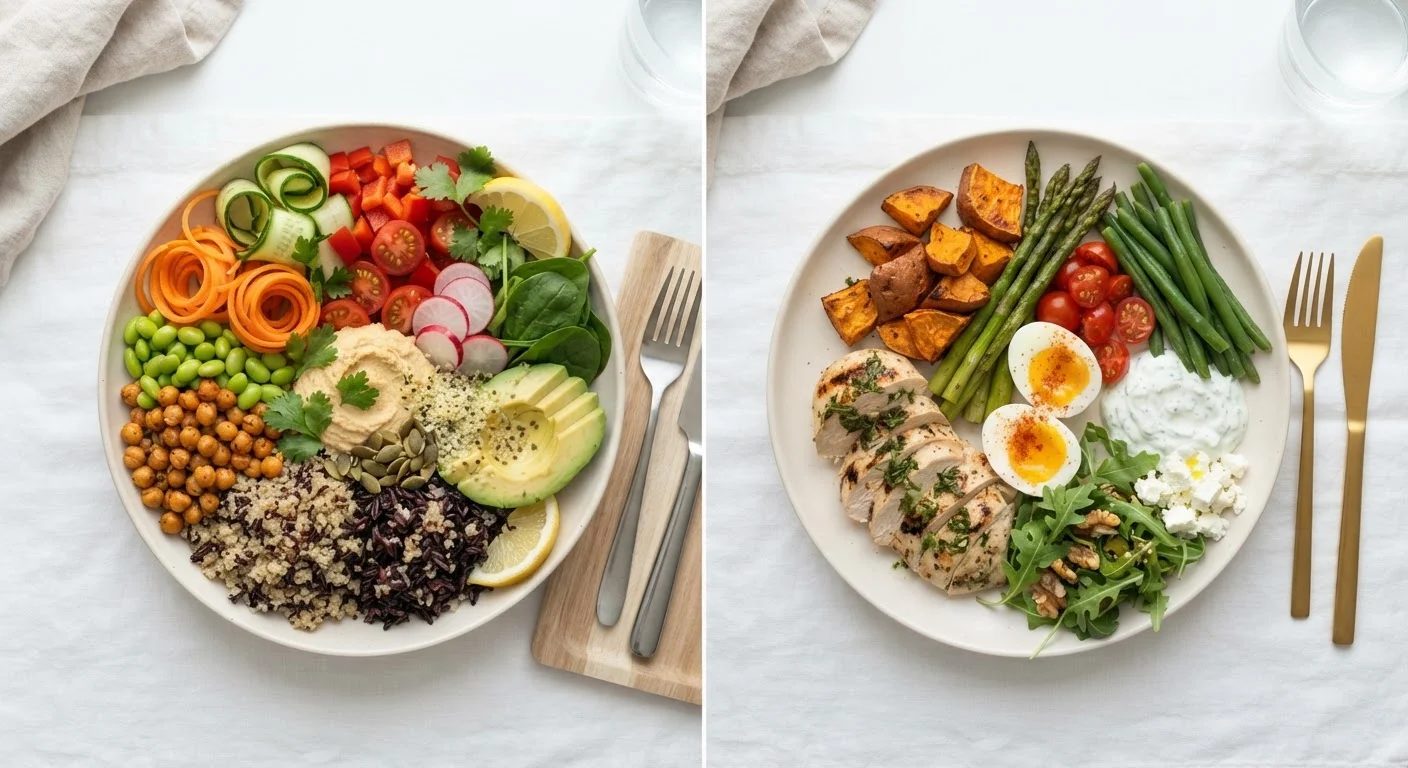
Our Verdict
Both plant-based and omnivorous eating patterns can support long-term health, but each carries distinct nutritional trade-offs. The most evidence-backed outcomes come from diets rich in whole plant foods regardless of whether animal products are included. Individual health status, food access, and personal preference all shape which approach works best.
| Best for | Recommended |
|---|---|
| Those seeking to reduce cardiovascular and metabolic disease risk | Plant-Based Diet |
| Those who struggle to meet B12, heme-iron, or complete-protein needs through food alone | Omnivorous Diet |
| Individuals wanting flexibility with lower planning burden | Omnivorous Diet |
| Those prioritizing high fiber intake and diverse phytonutrients | Plant-Based Diet |
Defining the Two Patterns
The term plant-based diet covers a spectrum — from fully vegan (no animal products) to flexitarian (predominantly plants, occasional animal foods). An omnivorous diet includes both plant and animal foods without systematic exclusion of either group. Neither label describes a single fixed menu; daily food choices within each pattern vary enormously, which is why broad comparisons require nuance.
When researchers compare these patterns, they typically look at dietary quality scores, nutrient intake data, and long-term health outcomes across large populations — not individual meal plans. Understanding what the evidence actually measures helps avoid oversimplification. For a practical visual framework that works across both patterns, see the plate portioning method.
Nutritional Strengths of Plant-Based Eating
Well-planned plant-based diets consistently deliver higher intakes of dietary fiber, folate, potassium, magnesium, and a wide range of antioxidants and phytonutrients. Population studies, including analyses from the Adventist Health Studies, associate plant-predominant eating with lower rates of type 2 diabetes, hypertension, and certain cancers, though observational data cannot establish direct causation.
Fiber deserves particular attention: most Americans consume well below the recommended daily intake, and plant-based eaters typically close this gap more easily. Fiber supports gut microbiome diversity, helps regulate blood glucose, and is associated with cardiovascular benefit. The research on whole versus ultra-processed foods reinforces that the source of plant foods matters — a vegan diet heavy in refined grains and processed meat alternatives does not confer the same advantages as one built around legumes, vegetables, fruits, and whole grains.
Boost Iron Absorption from Plant Foods
Non-heme iron from legumes, tofu, and leafy greens is absorbed less efficiently than the heme iron in meat. Eating these foods alongside vitamin C-rich sources — such as bell peppers, citrus, or tomatoes — can meaningfully improve uptake. Avoiding tea or coffee immediately around iron-rich meals can also help, as tannins inhibit absorption.
Nutrient Gaps That Require Active Management
Plant-based diets carry well-documented nutritional vulnerabilities. Vitamin B12 is found almost exclusively in animal-derived foods; anyone avoiding those foods entirely requires a reliable supplement or fortified foods — this is not optional. Heme iron (from meat) is more bioavailable than non-heme iron from plants; pairing iron-rich plant foods with vitamin C improves absorption but may not fully compensate for everyone. Zinc, calcium, iodine, and long-chain omega-3 fatty acids (EPA and DHA) also warrant attention on plant-only diets.
Omnivores are not without gaps. Research consistently shows many omnivores under-consume fiber, folate, and a range of phytonutrients — partly because animal foods crowd plant foods off the plate. Saturated fat and sodium intakes also tend to run higher when diets lean heavily on processed meats and full-fat dairy.
Understanding how to evaluate fortified foods and supplements is useful for both groups. Learn what supplements realistically offer and what conversations to have with a healthcare provider before adding them.
| Nutrient / Factor | Plant-Based Diet | Omnivorous Diet | |
|---|---|---|---|
| Dietary Fiber | Typically high | Often below recommended levels | |
| Vitamin B12 | Requires supplement or fortified foods | Generally adequate from animal foods | |
| Iron | Non-heme only; lower bioavailability | Both heme and non-heme; higher bioavailability | |
| Omega-3 (EPA/DHA) | Low unless algae-based sources used | Available via fatty fish and seafood | |
| Phytonutrients & Antioxidants | Typically abundant | Depends heavily on plant food variety | |
| Saturated Fat Intake | Generally lower | Varies; can be high with processed meats/dairy | |
| Planning Complexity | Higher; more gaps to monitor | Lower, but quality still requires attention |
Practical Planning and Label Literacy
Regardless of dietary pattern, practical skills matter more than ideology. Reading food labels accurately helps both plant-based and omnivorous eaters make choices that align with their nutritional goals — especially when navigating packaged foods where marketing language can be misleading. Decoding ingredient lists and daily value percentages is a foundational skill for anyone trying to eat thoughtfully.
Common pitfalls affect both camps: plant-based eaters may over-rely on highly processed meat alternatives that are high in sodium; omnivores may assume that including vegetables as a garnish is sufficient. Translating good nutrition intentions into actual purchases is where many plans break down.
Both patterns benefit from a whole-foods emphasis, variety across food groups within their chosen framework, and periodic review with a registered dietitian — particularly for people managing chronic conditions, pregnancy, or other life stages with elevated nutritional demands.
Don't Assume 'Plant-Based' Means Nutritionally Complete
Heavily processed plant-based products — including some meat alternatives and packaged snack foods — can be high in sodium, saturated fat from tropical oils, and refined carbohydrates. A plant-based label on packaging does not guarantee a nutritionally sound choice. Evaluate these products using the nutrition facts panel, just as you would any other packaged food.
This article is for general informational and educational purposes only and is not a substitute for professional medical or nutritional advice. Consult a qualified healthcare provider or registered dietitian before making significant changes to your diet.
The content on this site is for informational purposes only and is not a substitute for professional advice. Always consult a qualified professional for guidance specific to your situation.