

What the Plate Model Is — and Where It Comes From
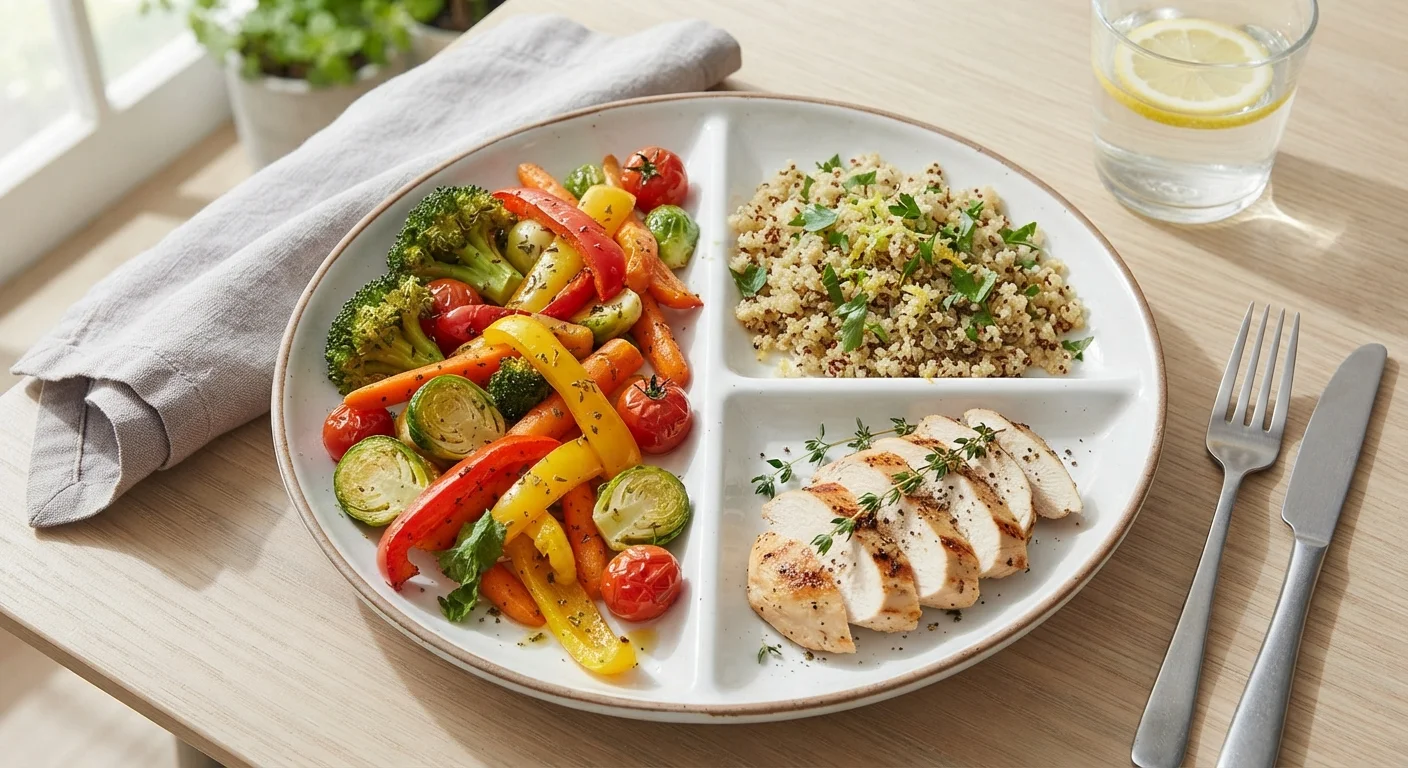
The plate model is a visual portioning framework that translates broad dietary guidelines into an immediately usable meal structure. Rather than tracking grams of protein or counting calories, you divide a standard plate into proportional sections for vegetables, protein, and carbohydrates. The logic is built into the arrangement itself.
Several national and international health bodies have developed plate-based tools. The U.S. Department of Agriculture's MyPlate is one widely recognized version, emphasizing fruits and vegetables as the largest combined share of the plate. Similar frameworks exist in Canada, Australia, and the United Kingdom. While specifics differ slightly by region, the underlying principle — prioritizing vegetables, moderating starchy carbohydrates, including adequate protein — reflects consistent themes across mainstream nutritional science.
Understanding how to read food packaging can reinforce the plate model in practice. Our article on reading a nutrition label without getting lost in the numbers explains how to interpret the information that already appears on packaged foods.
This Is General Nutrition Education
The plate model is a general framework developed from widely accepted dietary guidelines. It is not personalized medical or nutrition advice. Individual needs vary based on age, health status, activity level, and medical conditions. Consult a registered dietitian or qualified healthcare provider before making significant changes to your diet.
How to Build Your Plate: Step-by-Step
The following steps walk through applying the plate model at a typical main meal. The approach requires no special equipment and works with home-cooked food, takeout, or restaurant meals.
What you will need
A standard dinner plate (9–10 inches in diameter)
Provides the visual reference for portioning — larger plates can distort proportions.
Measuring cups (optional)
Useful when first learning to eyeball portions; not needed once proportions become intuitive.
Registered Dietitian
Can adapt the plate model to specific health conditions, nutrient needs, or dietary restrictions.
Fill half your plate with non-starchy vegetables (or fruit at breakfast)
Non-starchy vegetables — such as leafy greens, broccoli, peppers, cucumbers, tomatoes, and carrots — are high in fiber, vitamins, and minerals while contributing relatively few calories relative to their volume. Covering half the plate with these foods helps promote satiety and nutrient density at every meal.
At breakfast, where vegetables are less conventional, fruit can serve a similar role. Berries, sliced citrus, or melon occupy this half effectively and contribute fiber alongside natural sugars.
Assign one quarter to a quality protein source
Protein supports muscle maintenance, immune function, and satiety. Aim to fill roughly one quarter of your plate with a protein-rich food. Options include fish, poultry, eggs, legumes (such as lentils, chickpeas, or black beans), tofu, tempeh, or lean cuts of meat.
Plant-based proteins like legumes do double duty — they also contribute fiber and complex carbohydrates. For more on comparing plant and animal protein sources, see our guide to plant-based versus omnivorous eating.
Fill the remaining quarter with whole grains or starchy carbohydrates
The final quarter of the plate accommodates energy-providing carbohydrates. Whole grain options — such as brown rice, quinoa, whole wheat bread, oats, or barley — retain their fiber and micronutrient content compared with refined equivalents. Starchy vegetables like sweet potato, corn, or squash also fit here.
This portion provides sustained energy, particularly important around periods of physical activity.
Add a sensible beverage and small healthy fat
Water is the default beverage recommendation in most dietary frameworks. Unsweetened coffee, tea, or low-fat dairy also fit within the model for most people. Limit sugar-sweetened drinks, which add calories without meaningful nutritional benefit.
A small amount of healthy fat — a drizzle of olive oil, a few slices of avocado, or a handful of unsalted nuts — can be incorporated into the meal without displacing the core plate proportions. Fats support absorption of fat-soluble vitamins (A, D, E, and K) and contribute to satiety.
Adjust proportions for your context and consistency
The plate model is a guide, not a rigid prescription. On high-activity days, the grain quarter may naturally — and appropriately — grow. When illness reduces appetite, smaller portions across all sections are sensible. Cultural food traditions may present meals as shared dishes or stews rather than individually plated food; the proportional logic still applies to what ends up in your bowl.
Consistency across most meals matters more than perfection at every meal. For strategies on maintaining this pattern across a full week, see building a weekly meal pattern that actually sticks.
Apply the Model to Mixed Dishes
The plate model works beyond simple plated meals. For stews, stir-fries, or grain bowls, mentally estimate whether roughly half the ingredients are vegetables, a quarter protein, and a quarter starch. You can also use the method to evaluate a restaurant meal before ordering — no special tools required.
Special Populations: Seek Professional Guidance
If you are pregnant, breastfeeding, managing a chronic condition such as diabetes or kidney disease, or caring for a child or older adult, standard plate proportions may not be appropriate for your situation. Please consult a qualified healthcare professional for guidance tailored to your specific needs.
For context on meal timing and frequency — a related but distinct question — see why meal timing is more complicated than eating every three hours. And for a broader grounding in nutrition principles, our complete nutrition resource covers macronutrients, food quality, and long-term eating habits in depth.
This article is for general informational and educational purposes only and does not constitute medical or dietary advice. Individual nutritional needs vary. Always consult a qualified healthcare professional or registered dietitian for guidance specific to your health situation.
The content on this site is for informational purposes only and is not a substitute for professional advice. Always consult a qualified professional for guidance specific to your situation.