

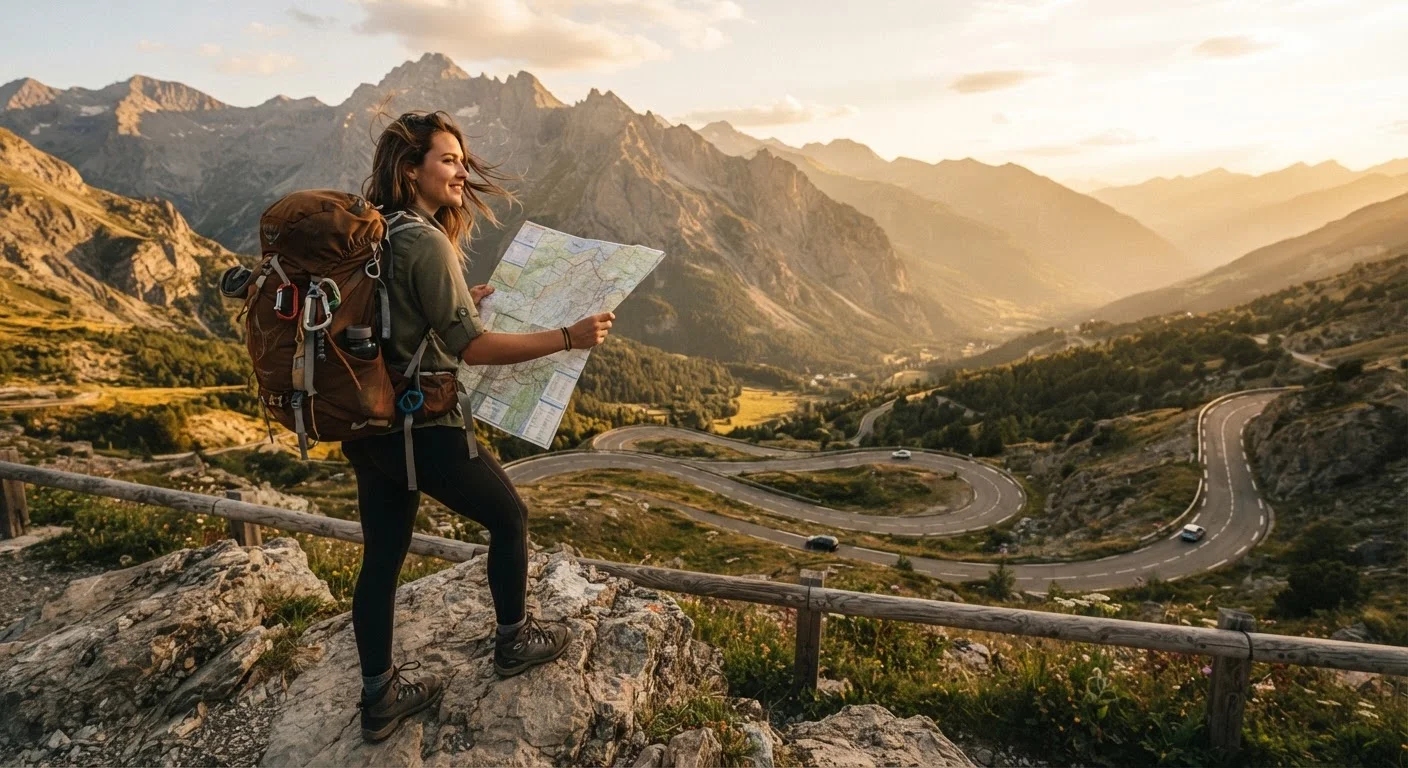
Why Solo Travel Demands a Different Planning Mindset
Solo travel is one of the most liberating experiences a person can pursue — but it also shifts every decision entirely onto your shoulders. There's no travel companion to split navigation duties with, no one to watch your bag while you use the restroom, and no backup plan if your accommodation falls through. That's not a reason to stay home; it's a reason to plan smarter.
The planning process for a solo trip differs from a group trip in a few key ways. For a start, your risk tolerance and contingency planning matter more. If something goes wrong on a group trip, the group absorbs the disruption. Solo, you absorb it alone. If you're curious how the two experiences compare more broadly, our guide to group travel planning is a useful contrast.
Solo travel also rewards flexibility — one of its greatest gifts. But flexibility without a safety framework becomes vulnerability. The goal of good solo planning is to protect your freedom, not to restrict it.
25%
Of U.S. adults who travel solo at least once a year
According to travel industry surveys, solo travel has grown steadily as a share of overall leisure travel bookings in recent years.
72%
Solo travelers who cite flexibility as the top benefit
Traveler motivation surveys consistently find autonomy and flexible scheduling rank highest among solo travel appeals.
Choosing the Right Destination
Not every destination is equally well-suited for solo travel, and that's worth acknowledging honestly. Factors to weigh include local infrastructure for independent travelers (reliable transport, accommodation variety, accessible healthcare), general safety reputation, language accessibility, and the presence of an established traveler community.
Solo-friendly destinations typically offer well-marked transit networks, hostels or guesthouses familiar with independent travelers, and tourist information that's available in English or widely spoken second languages. Our destination guides hub covers a range of locations with these practical realities in mind — from urban centers to remote landscapes.
For those considering off-the-beaten-path destinations, factor in how remoteness changes your risk profile. Our overview of the Scottish Highlands for independent travelers is a good model for how to think through infrastructure, weather, and emergency access before committing to a more rugged route.
Research a destination's solo-traveler forums before booking — real traveler reports from the past six months are more reliable than guidebook descriptions for current safety and infrastructure conditions.
Guidebooks have long publication cycles; community forums like those on major travel discussion platforms surface timely, practical ground-truth information that editorial sources can't match.
Build a one-night buffer into your arrival city before onward connections — it absorbs flight delays, jet lag, and allows you to orient before heading somewhere less familiar.
Experienced solo travelers find that arrival-day stress is disproportionately high; a built-in buffer night dramatically reduces the chance that a minor disruption cascades into a larger problem.
Accommodation Strategies for Solo Travelers
Where you sleep affects far more than comfort — it shapes your social life, your safety, and your budget. Solo travelers generally have three practical accommodation tiers to consider:
- Hostels and guesthouses: Often the most social option and frequently the most economical. Dorm rooms offer built-in community; private rooms in hostels provide quiet without isolation.
- Hotels: More privacy and typically stronger security infrastructure, but can feel isolating and cost more for a single occupant (most rates are set for two).
- Short-term rentals: Useful for longer stays in one place, but require more due diligence — verify host reputation, understand cancellation policies, and confirm the listing matches photos before arrival.
Regardless of accommodation type, always confirm your booking with a written record and save confirmation numbers offline. Arriving in an unfamiliar city without proof of a booking is a stressful and avoidable situation.
Book Your First Night Before You Arrive
Even if you prefer spontaneous travel, always pre-book at least your first night in each new city. Arriving tired and without a confirmed place to stay is when poor decisions get made. Once you're settled, you can plan the rest as freely as you like.
Staying Connected and Safe on the Road
Connectivity is a safety tool as much as a convenience. Before departure, sort out how you'll stay reachable: international SIM cards, local prepaid plans, or portable Wi-Fi devices each have tradeoffs in cost and coverage. Download offline maps (apps like Maps.me or Google Maps offline mode) for destinations where data may be unreliable.
For solo hikers or travelers venturing into remote terrain, the stakes rise further. Our solo hiking risk guide addresses the specific considerations that come with heading into backcountry alone, including communication devices like satellite messengers.
In urban settings, keep digital and physical copies of key documents — passport, insurance details, emergency contacts — stored separately from each other. A photo stored in cloud backup costs nothing and has rescued countless travelers from bureaucratic nightmares.
Don't Rely on a Single Communication Method
Depending solely on your home carrier's international roaming plan is a common mistake — coverage gaps in rural or developing regions can leave you unreachable for extended periods. Carry a backup option such as a local SIM or a pocket Wi-Fi device, and always know the location of the nearest reliable internet point in each area you visit.
Building Your Pre-Departure Safety Net
The final step before any solo trip is assembling what we call a safety net: a set of actions and information that gives you — and people who care about you — a clear picture of where you'll be and how to reach you.
This includes: sharing a detailed itinerary with at least one trusted contact at home; registering with your country's traveler registration program (U.S. citizens can use the State Department's STEP program, for example); confirming travel insurance coverage that includes medical evacuation; and reviewing the latest travel advisories from official government sources for your destination.
For a comprehensive stage-by-stage checklist covering documents, bookings, finances, and home prep, see our pre-trip checklist guide. If you're planning a solo road trip specifically, our comparison of solo vs. group road trips covers what logistical shifts to anticipate.
Solo travel is ultimately about self-reliance — and a well-constructed safety net makes that self-reliance sustainable across many trips, not just one.
U.S. State Department STEP Program
The Smart Traveler Enrollment Program (STEP) allows U.S. citizens abroad to register their trip with the nearest embassy or consulate. It's free, takes minutes, and ensures you can be contacted in an emergency.
Pre-Trip Checklist Guide
A stage-by-stage checklist covering documents, bookings, finances, and home prep before any trip — essential reading before any solo departure.
Offline Maps Setup Guide
Detailed instructions for downloading and using offline maps on popular mobile apps — a critical connectivity backup for destinations with unreliable data coverage.
The content on this site is for informational purposes only and is not a substitute for professional advice. Always consult a qualified professional for guidance specific to your situation.