

Our Verdict
Neither cash nor cards win outright — the smarter move is a deliberate combination of both, calibrated to your destination's infrastructure and your own spending habits. Cards generally offer convenience and favorable exchange rates in card-friendly cities, while cash remains indispensable in rural areas, local markets, and countries with limited digital payment adoption. Understanding the specific costs and risks of each method before you depart is what separates a stress-free trip from an expensive, panicked one.
Travelers heading to destinations with mixed payment infrastructure, or anyone who wants to avoid surprise fees and keep spending under control across a multi-stop itinerary.
Why This Decision Matters More Than Most Travelers Realize
Choosing how to access money abroad isn't just a logistical detail — it directly shapes your costs, your safety exposure, and how smoothly your trip runs when things don't go as planned. Currency conversion losses, ATM fees, and card declines at critical moments are some of the quieter budget drains that compound fast. As explored in our guide to hidden travel costs, currency-related expenses are frequently overlooked until they show up on a statement back home.
The debate isn't really cash versus cards — it's about knowing when each method works in your favor and building a payment strategy around your specific itinerary rather than habit or convenience alone.
The Case for Carrying Cash
Cash has real, practical advantages that no digital workaround fully replaces — especially outside major urban centers.
Universally accepted in cash-dependent destinations
Markets, rural areas, and smaller local businesses rarely have card readers. Having local currency on hand prevents being stranded without payment options.
No technology or connectivity required
Cash works when networks are down, card readers malfunction, or you're in areas with no reliable infrastructure — situations that happen more often than travelers expect.
Supports natural spending discipline
Physically counting out cash makes spending feel tangible, which many travelers find helps them stick to a daily budget without needing an app.
No foreign transaction fees on the transaction itself
Once you have local currency, each individual purchase doesn't attract an additional card processing fee, which adds up across many small transactions.
Many local markets, street food vendors, rural guesthouses, and small transportation providers operate entirely in cash. In parts of Southeast Asia, Central America, and much of sub-Saharan Africa, card readers are genuinely scarce. Arriving without local currency can mean being unable to pay for a taxi from the airport or a meal in a neighborhood restaurant.
Cash also imposes a natural spending discipline. When you can physically see what you have left, overspending becomes harder — a dynamic similar to envelope budgeting, where physical money makes limits feel real.
Check Your Destination's Cash Norms First
Payment culture varies dramatically by country and even by region within a country. Scandinavia has moved heavily toward cashless transactions, while many parts of Southeast Asia and Eastern Europe remain predominantly cash-based. A quick search of your specific destination's payment norms before departure — not at the airport — saves real money and stress.
The Case for Using Cards Abroad
For travelers visiting card-friendly destinations — most of Western Europe, Japan, Australia, Canada, and major cities globally — cards offer genuine advantages in cost and security.
Lost or stolen cash is unrecoverable
Unlike a card with fraud protection, stolen or misplaced banknotes cannot be reversed or refunded. Carrying large amounts elevates the risk significantly.
Airport and exchange desk rates are often poor
Physical currency exchange services — especially in airports — routinely apply wide spreads between buy and sell rates, effectively charging a premium for the convenience.
Card fraud protections don't apply to cash
If a vendor overcharges you or a transaction goes wrong with cash, there is no dispute process. You are largely without recourse once notes change hands.
ATM access may be limited or expensive abroad
International ATM networks charge variable withdrawal fees, and machine availability is not guaranteed in rural or less-touristed areas where cash is most needed.
Cards issued by banks with no foreign transaction fees and favorable interbank exchange rates typically give you better conversion than airport currency kiosks or hotel exchanges. Fraud protection is a significant benefit too: disputed card charges can often be reversed, whereas stolen cash is simply gone.
2–3%
Typical foreign transaction fee on many cards
Many standard US-issued credit and debit cards charge a foreign transaction fee of 2–3% on every international purchase, according to general industry disclosures.
~$5
Average international ATM surcharge per withdrawal
Out-of-network and international ATM fees commonly range from $3 to $5 or more per transaction, per general banking disclosures and consumer finance reporting.
Security on the digital side does require its own attention. Two-factor authentication on your accounts and setting up travel notifications with your bank before departure are practical steps that reduce the risk of a card freeze at the worst possible moment.
The Costs You Need to Actively Avoid
Both cash and cards come with avoidable fees that quietly erode your travel budget if you're not watching for them.
Dynamic Currency Conversion (DCC): When a card terminal or ATM offers to charge you in your home currency instead of the local one, it almost always applies a worse exchange rate. Always choose to be charged in the local currency.
Airport and hotel exchange desks: Convenience pricing is steep here. If you need local cash on arrival, withdrawing from a bank ATM inside or near the airport generally offers better rates than physical exchange counters.
ATM surcharges: Many international ATMs charge flat withdrawal fees on top of any fees your own bank adds. Larger, less frequent withdrawals typically reduce total fee exposure compared to multiple small withdrawals.
Planning your full payment approach is part of structured trip budgeting. Understanding how travel costs are actually structured makes it much easier to anticipate where these charges will appear.
Building a Practical Hybrid Strategy
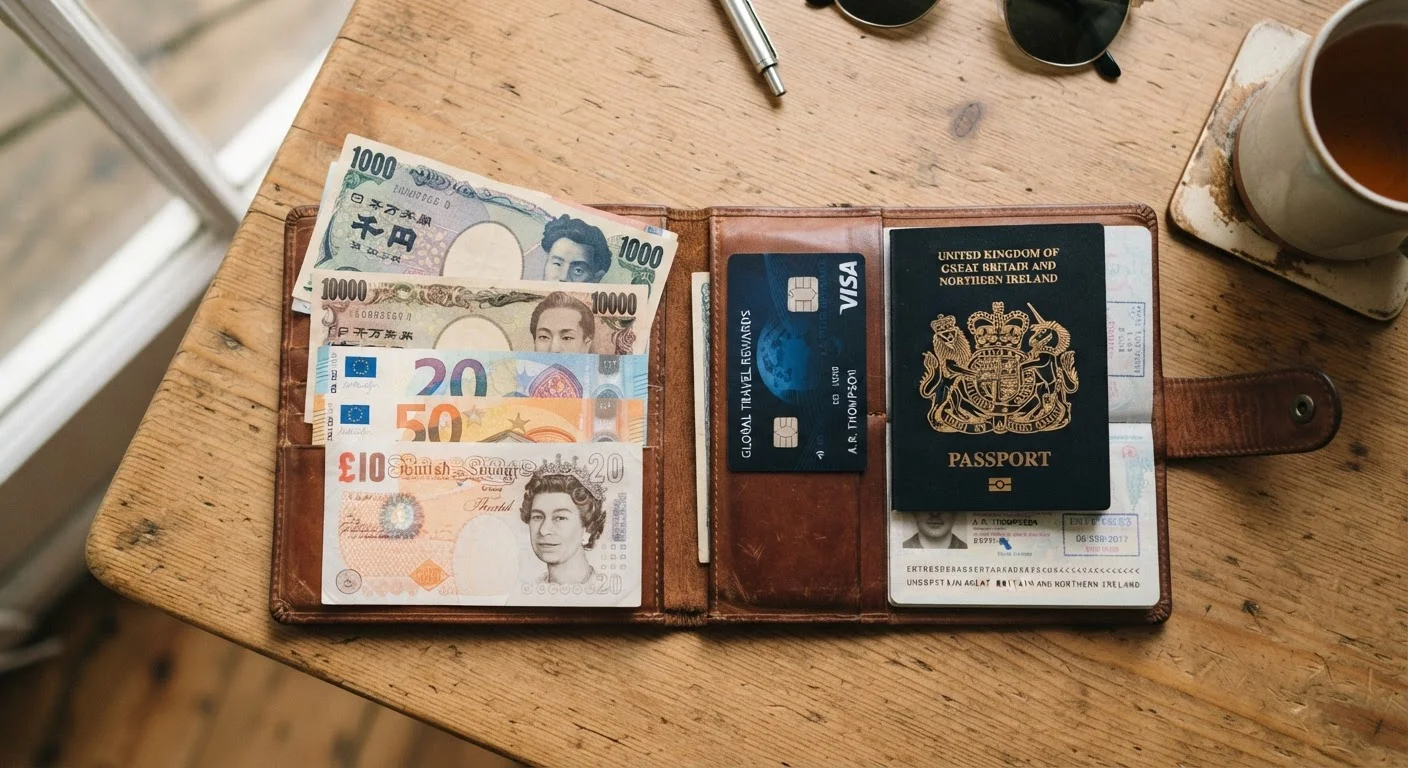
Most experienced travelers default to a hybrid approach — a modest amount of local cash for immediate needs, small vendors, and destinations with limited infrastructure, paired with one or two low-fee cards for larger purchases and withdrawals.
A few practical principles worth applying:
- Research your destination's payment norms before departure — not at the airport.
- Keep cash and cards in separate locations so a single theft doesn't wipe out all access to funds.
- Know your card's PIN: chip-and-PIN is still standard in many countries, and signature-only cards can cause problems at unstaffed terminals.
- Have a backup card stored separately, not in the same wallet or bag.
If you're traveling light — living out of a carry-on across Europe, for instance — wallet bulk matters too, and trimming to one card plus a small cash reserve is entirely workable in most Western European cities.
This article is for general informational purposes only. Exchange rates, bank policies, and ATM availability vary widely by destination and change over time. Always verify current entry requirements, fees, and financial access with your bank and official sources before traveling.
The content on this site is for informational purposes only and is not a substitute for professional advice. Always consult a qualified professional for guidance specific to your situation.