

Why Tokyo Rewards the Curious Walker
Tokyo is one of the world's most walkable megacities — and yet most itineraries compress it into a handful of crowded landmarks. The city's real texture lives in its shitamachi (old downtown) pockets, its creative micro-neighbourhoods, and the unmarked alleyways connecting them. If you've ever felt that a city gave you nothing beyond a checklist, slow your approach down and let a place reveal itself.
The neighbourhoods below reward exactly that kind of attention. Each is accessible by Tokyo's rail network, compact enough to explore in half a day, and distinctive enough that no two visits feel alike. Lace up comfortable shoes — here's where to begin.
Yanaka: Where Old Tokyo Endures
Yanaka escaped large-scale wartime bombing and post-war redevelopment, leaving behind a dense grid of wooden merchant houses, independent tofu shops, and family-run temples. The Yanaka Cemetery — far from morbid — doubles as a shaded promenade lined with cherry trees and stone lanterns. Yanaka Ginza, a short shopping street, sells pickles, sembei crackers, and handmade accessories from vendors who've been there for generations. Morning visits, before 10 a.m., offer near-solitude even in popular seasons.
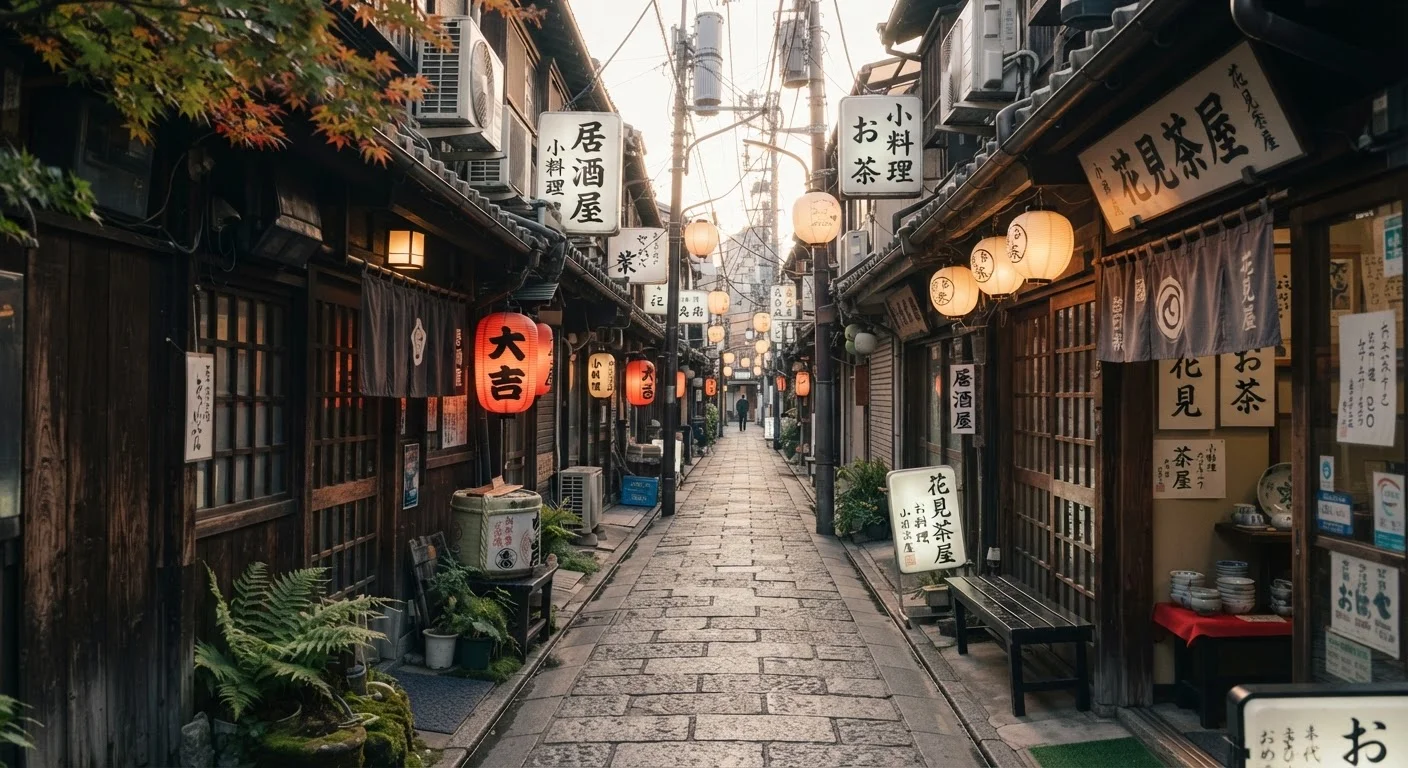
Yanaka's wooden merchant houses survive as a rare living record of pre-war Tokyo streetscapes.
Shimokitazawa: Tokyo's Creative Village
Shimokitazawa — locally called Shimokita — is a compact neighbourhood built around live music venues, used clothing stores, and independent theatre companies. It resists corporate homogenisation: chain stores are notably scarce. The streets are intentionally narrow and pedestrian-friendly, spilling into small plazas where buskers perform on weekend afternoons. A recent development, Bonus Track, converted a former train right-of-way into an outdoor corridor of small creative businesses and weekend food stalls — a good anchor point for first-time visitors getting their bearings.
Shimokitazawa's deliberate rejection of chain retail keeps its character genuinely local and surprising.
Koenji: Counterculture Alongside Quiet Shrines
Koenji sits on the Chuo line west of Shinjuku but feels a world apart. It built its identity around vintage record shops and second-hand fashion in the 1970s and has retained that energy without tipping into tourist-facing nostalgia. The area around Koenji-Hikawa Shrine — reached via narrow residential lanes — offers genuine calm a few minutes from the busiest commercial strips. The Awaodori dance festival, held each August, turns Koenji's main streets into one of Tokyo's most vibrant neighbourhood celebrations; verify local schedules through official sources before planning around it.
Koenji's counterculture reputation is earned — vintage vinyl shops and small live houses still define the streets.
Kagurazaka: French Inflections on a Japanese Lane
Kagurazaka's main slope is lined with French bakeries and bistros — a legacy of Japan's post-war cultural exchange with France and a long-established French community. Step off the main street, however, and you find a labyrinth of yokocho (side alleys) leading to traditional ryotei restaurants, small galleries, and a geisha district that still operates. The Bishamonten Zenkokuji Temple anchors the neighbourhood and provides a quiet courtyard for a mid-walk pause. Kagurazaka works particularly well for an evening stroll when lantern light softens the older lanes.
Kagurazaka's layered identity — French cafés beside active geisha lanes — makes it unlike anywhere else in Tokyo.
Kiyosumi-Shirakawa: Craft Coffee and Riverside Calm
Kiyosumi-Shirakawa drew international attention when a wave of specialty coffee roasters established themselves here, but the neighbourhood's appeal extends well beyond caffeine. The Kiyosumi Garden — a Meiji-era strolling garden — offers a composed landscape of stepping stones across a central pond, surrounded by carefully shaped trees. The surrounding streets mix warehouse conversions with modest residential blocks, and the Onagi River running nearby provides a flat, shaded walking route largely free of crowds. It's a practical half-day destination that pairs easily with neighbouring Monzen-Nakacho.
Kiyosumi-Shirakawa's combination of craft coffee culture and a classical Meiji garden is a genuinely rare pairing.
Nezu and Yanesen: The Triangle That Moves Slowly
Yanesen is a portmanteau locals use for the three adjacent neighbourhoods of Yanaka, Nezu, and Sendagi — a triangle of streets that collectively feel like Tokyo's most unhurried corner. Nezu Shrine's tunnel of torii gates is far less visited than Fushimi Inari in Kyoto yet offers a comparable visual experience. The Sendagi side is particularly good for small galleries and a concentration of kissaten (traditional Japanese coffee shops) that have operated for decades. Walking all three areas continuously takes two to three hours at a relaxed pace.
The Yanesen triangle rewards slow, continuous walking more than any single landmark within it.
Planning Your Walking Days
These districts are spread across Tokyo, so it pays to group geographically sensible pairs: Yanaka pairs well with nearby Nezu and Sendagi; Shimokitazawa connects logically to Sangenjaya. None requires a pre-booked guided tour — a detailed offline map and an open afternoon are enough.
Group Nearby Districts Into One Day
Yanaka, Nezu, and Sendagi form a walkable triangle that can be covered comfortably in three to four hours. Similarly, Koenji and Shimokitazawa are just a few stops apart on the Chuo and Keio lines respectively — pairing them saves travel time and lets you compare two distinct creative communities in a single outing.
One practical note on timing: if your visit coincides with cherry blossom season, even quieter neighbourhoods can see elevated foot traffic. Understand what sakura season actually means for travellers before building your itinerary around it — the crowds and unpredictability may change which areas feel serene versus saturated.
The content on this site is for informational purposes only and is not a substitute for professional advice. Always consult a qualified professional for guidance specific to your situation.