

Our Verdict
Biometric authentication offers genuine security and convenience advantages over traditional passwords, but those gains come with irreversible data risks and uneven legal protections. The technology is most trustworthy when data is processed on-device, storage practices are transparent, and you have meaningful control over opt-in and opt-out. It is not inherently unsafe, but it demands more informed scrutiny than a forgotten password ever did.
Best suited to users who prioritize seamless, daily-use authentication and are willing to carefully evaluate how each system stores and protects their biometric data.
What Biometric Authentication Actually Means
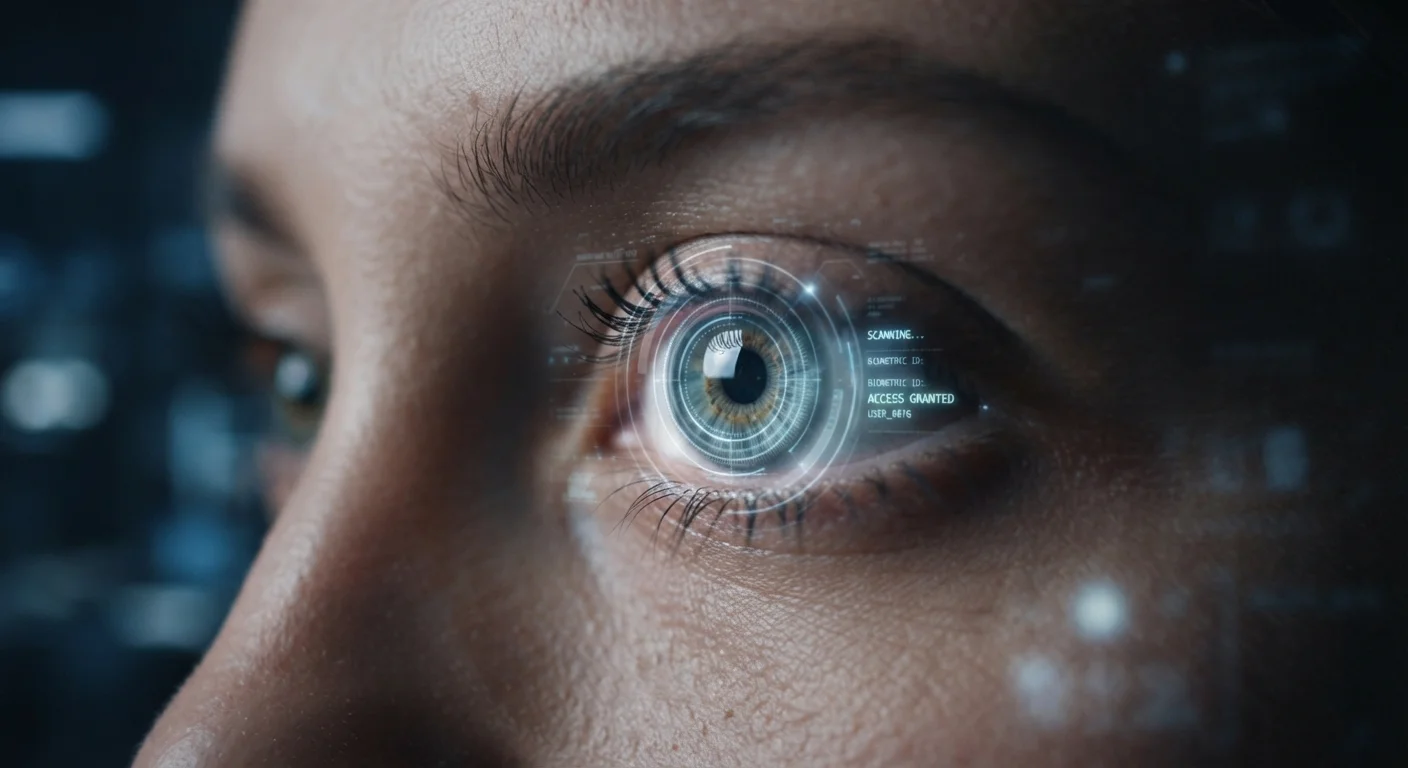
Biometric authentication uses measurable physical or behavioral characteristics — fingerprints, facial geometry, iris patterns, voice, or even gait — to verify identity. Instead of something you know (a password) or something you have (a token), it relies on something you are.
Most consumer implementations fall into two categories. On-device processing means your biometric data is converted into a mathematical template stored locally — on your phone's secure chip, for example — and never transmitted to a server. Cloud-based processing means templates or raw data travel to, and may be retained by, an external server. This distinction matters enormously for privacy risk, and it isn't always easy to determine which approach an app or service uses.
For context on how device-collected health and body data fits into a broader picture, see our article on wearable tech as a health tool.
The Case For: Real Benefits Worth Acknowledging
The appeal of biometrics is not marketing hype — there are substantive, practical advantages that explain widespread adoption.
Faster, frictionless daily authentication
A fingerprint or face unlock typically takes under a second, eliminating the need to recall and type complex credentials multiple times a day.
Harder to forget than passwords
Biometric factors are inherent to the user, removing the common problem of forgotten credentials and the support overhead that comes with password resets.
Resistant to credential-stuffing attacks
Because biometrics are not reusable strings of text, they cannot be harvested from one data breach and systematically tested against other accounts.
Can improve accessibility for some users
Touch or face-based authentication may be easier for users with motor or cognitive impairments who find password entry on small screens difficult.
On-device implementations minimize data exposure
When biometric templates are stored only on a device's secure enclave and never transmitted, the attack surface is substantially smaller than server-side credential storage.
Speed and reduced friction are the most immediate wins. Unlocking a phone with a glance or a tap is genuinely faster than typing a complex password dozens of times a day. For accessibility, biometrics can also lower barriers for users with motor impairments who struggle with keyboards or small touchscreen inputs.
From a security standpoint, biometrics eliminate a specific class of attack: credential stuffing, where stolen username-and-password combinations are tested across multiple sites. A fingerprint cannot be reused from a data breach at an unrelated service. Compare that to the risks outlined in our password and passphrase comparison.
The Case Against: Risks That Deserve Honest Attention
The downsides of biometric systems are structural, not merely theoretical, and some are difficult to remedy once they occur.
Compromised biometrics cannot be reset
Unlike a password, a fingerprint or facial geometry template cannot be reissued. A breach of biometric data creates a permanent, irremediable identity risk for affected individuals.
Legal protections are uneven across US states
Only a handful of states have enacted dedicated biometric privacy laws. Users in unprotected jurisdictions may have little recourse if their data is misused or improperly retained.
Cloud storage introduces significant third-party risk
When biometric templates are sent to and stored on external servers, users lose direct control over security practices, retention periods, and who may access the data in the future.
Spoofing and false-acceptance risks still exist
High-quality photographs, 3D-printed fingerprints, or recorded voice samples have been used in documented attacks against biometric systems, particularly lower-end implementations.
Coerced or contextual unlocking is possible
A fingerprint or face can be used to unlock a device without the owner's active cooperation in ways a memorized password cannot, raising concerns in certain legal and physical-coercion scenarios.
The irreversibility problem is the most significant. If a database of password hashes is breached, affected users can change their passwords. If a database of facial geometry templates is breached, affected users cannot change their faces. This asymmetry is not a minor inconvenience — it is a fundamental limitation of the technology that no software update can fix.
Legal coverage remains uneven. Several US states, including Illinois, Texas, and Washington, have enacted biometric privacy laws requiring informed consent and imposing limits on data retention. Many states have none. This means the protections available to you depend heavily on where you live and where the company collecting your data is incorporated. For a broader look at how personal data flows beyond your control, our piece on data brokers and personal profiles provides relevant context.
On-Device vs. Cloud Storage: A Key Distinction
Many consumers assume their biometric data stays on their phone, but this isn't always the case. Some third-party apps that request biometric login actually transmit and store templates remotely. Before enrolling, check the app's privacy policy specifically for language about biometric data storage location and retention limits. If that language is absent or vague, treat it as a meaningful warning sign.
Evaluating Any Biometric System Before You Opt In
A few practical questions can help you assess whether a specific implementation is worth the trade-off:
- Where is the data processed and stored? On-device is significantly lower risk than cloud-based. Look for explicit documentation, not vague reassurances.
- Can you delete your biometric data, and how? A legitimate service should offer a clear, documented deletion process.
- What happens if the company is acquired or goes bankrupt? Data retention policies can change with ownership.
- Is enrollment truly optional? Some services make biometric enrollment feel mandatory when alternatives exist.
These same evaluation habits apply whenever any app requests sensitive personal data. Our checklist for evaluating AI-powered apps before sharing personal information covers overlapping ground worth reviewing.
If you want a security layer that doesn't involve biometrics, two-factor authentication remains a well-supported alternative with its own trade-offs to weigh.
The content on this site is for informational purposes only and is not a substitute for professional advice. Always consult a qualified professional for guidance specific to your situation.