

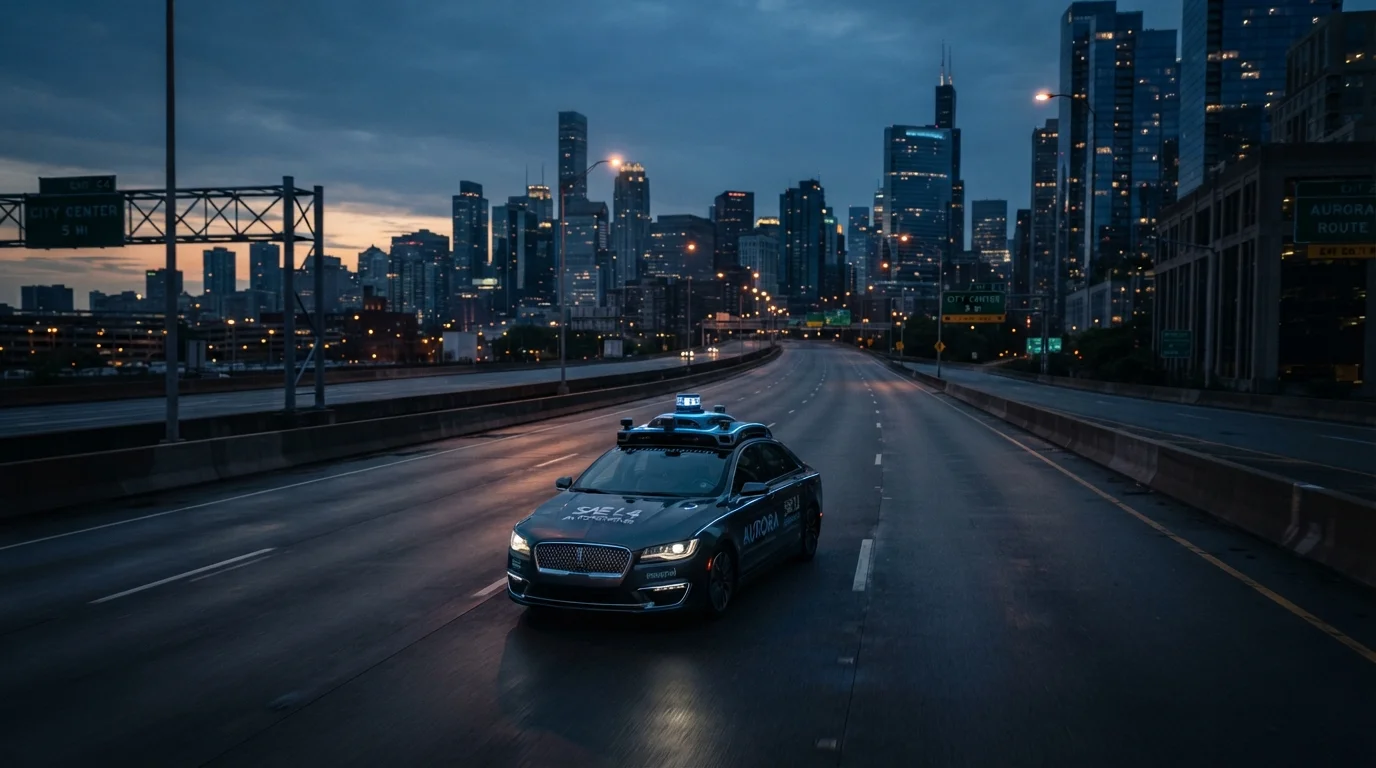
Why the Myths About Self-Driving Cars Persist
Few technologies generate as much confident misinformation as autonomous vehicles. Glossy product demos, breathless headlines, and blurry terminology have left most people holding a mental model of self-driving cars that doesn't match what's actually on the road today. Understanding what these systems genuinely can and cannot do matters — not just for tech enthusiasts, but for anyone sharing a highway with these vehicles or considering driver-assist features in their next car.
The misconceptions below are the most common ones the Tech & Gadgets Editorial Team encounters, corrected against the current state of the technology.
Myth
Cars advertised as 'self-driving' can operate entirely without human input.
Fact
No vehicle currently available to consumers is fully autonomous. All require a licensed, alert driver behind the wheel.
The SAE International autonomy scale runs from Level 0 (no automation) to Level 5 (full automation under all conditions). The vast majority of vehicles with driver-assist technology — including widely publicized systems — operate at Level 2: the system can handle steering and speed simultaneously, but the human driver must monitor the environment at all times and be ready to intervene instantly. Level 4 and Level 5 systems remain in limited testing or geofenced robotaxi deployments; they are not available for general consumer purchase.
Myth
Self-driving technology works reliably in all weather and road conditions.
Fact
Current autonomous and semi-autonomous systems have documented limitations in rain, snow, fog, and on poorly marked roads.
Cameras, radar, and lidar — the sensor suite most autonomous systems rely on — can be degraded by precipitation, glare, road spray, and sensor occlusion. Lane-keeping systems depend on visible lane markings; in snowstorms or on rural roads without clear markings, performance degrades significantly. Manufacturers typically disclose these limitations in their documentation, but marketing materials rarely emphasize them. Drivers should treat driver-assist features as unavailable or unreliable whenever conditions are less than ideal.
Myth
If a self-driving car is involved in a crash, the manufacturer is automatically liable.
Fact
Liability in autonomous vehicle crashes is legally complex, varies by jurisdiction, and is still being actively litigated and legislated.
As of this writing, no uniform federal framework governs autonomous vehicle liability in the United States. Some states have passed their own rules; others have not. Liability may fall on the manufacturer, the software developer, the vehicle operator, or some combination — depending on what the driver was doing, what mode the vehicle was in, and how the crash occurred. Anyone relying solely on the assumption that an automaker will bear responsibility may find themselves in a costly legal gray area. Always consult a qualified legal professional for guidance specific to your situation.
Myth
Autonomous vehicles are already statistically proven to be safer than human drivers.
Fact
Early data is cautiously encouraging, but the evidence base is still too limited to make definitive safety claims across all conditions.
Some studies, including research using Waymo's robotaxi fleet data, have found lower rates of certain crash types compared to human-driven baselines. However, autonomous vehicles have accumulated far fewer miles than the general driving population, have operated primarily in favorable conditions and mapped urban environments, and represent a narrow sample. Researchers and regulators widely agree that more comprehensive, long-term data is needed before broad safety conclusions can be drawn. The technology shows genuine promise — but the evidence is not yet definitive.
Myth
Once self-driving cars become mainstream, traffic accidents will essentially be eliminated.
Fact
Autonomous vehicles may reduce certain crash types but are unlikely to eliminate accidents entirely, and introduce new categories of risk.
Most traffic fatalities involve human error, which autonomous systems could theoretically address. However, infrastructure failures, edge-case scenarios the system wasn't trained for, sensor malfunctions, software bugs, and cybersecurity vulnerabilities create new risk vectors. A world of mixed traffic — human-driven and autonomous vehicles sharing roads — also creates interaction challenges that neither system is fully optimized for. Reduction in accidents is a plausible outcome; elimination is not a promise any credible engineer or researcher is making. For a parallel look at how technology myths develop and spread, see how AI-generated content differs from human work.
The Bigger Picture: What This Means for Drivers Today
These myths aren't harmless. Overconfidence in driver-assist systems has been directly linked to preventable crashes, according to investigations by the National Highway Traffic Safety Administration (NHTSA). When drivers misunderstand what a Level 2 system does, they disengage mentally — which is precisely when the system needs them most.
Hands-Off Doesn't Mean Mind-Off
Driver-assist systems that handle steering and acceleration can create a false sense of security. NHTSA investigations have documented crashes where drivers appeared to disengage from the task of driving while using semi-autonomous features. If your vehicle has a Level 2 system, you are legally and practically responsible for monitoring the road and being ready to take control at any moment. Treat these features as tools, not replacements for your attention.
Being a well-informed driver in the age of partial automation means understanding the boundaries of the technology in your specific vehicle. Your owner's manual and manufacturer guidance are the most reliable sources for what your system is and isn't designed to do. For a parallel look at how misinformation spreads about other emerging technologies, see our guide to spotting AI misinformation.
Level 2
Autonomy level of most consumer driver-assist systems
SAE International's 0–5 autonomy scale classifies most publicly available systems, including widely marketed ones, at Level 2 — requiring constant driver supervision.
94%
Of serious U.S. crashes involving human error
NHTSA research attributes approximately 94% of serious traffic crashes to human choice or error, the core problem autonomous technology aims to address.
The road to fully autonomous transportation is real, but it's longer and more complex than most headlines suggest. Staying grounded in what the technology can actually deliver — right now, in real conditions — is the foundation of safe driving in an era of rapid change.
The content on this site is for informational purposes only and is not a substitute for professional advice. Always consult a qualified professional for guidance specific to your situation.